
>> Continued From the Previous Page <<
Executives were forced to slash full year revenue guidance from $3.45 billion to $3.3 billion. Even worse, expected adjusted EBITDA was cut nearly in half, dropping from a projected $150 to $190 million down to just $70 to $110 million.
Shares immediately sank another 5.5 percent in premarket trading following the announcement. Since the August rebrand, Cracker Barrel’s stock has lost roughly half its value.

CEO Julie Masino admitted during the earnings call that “the past few months have been difficult” and the company has “more work to do to regain the trust and confidence” of customers.
That statement was as close as corporate America ever comes to admitting it alienated its base.
The August Decision That Sparked the Backlash
The trouble began in August when Cracker Barrel unveiled a $700 million rebranding campaign.
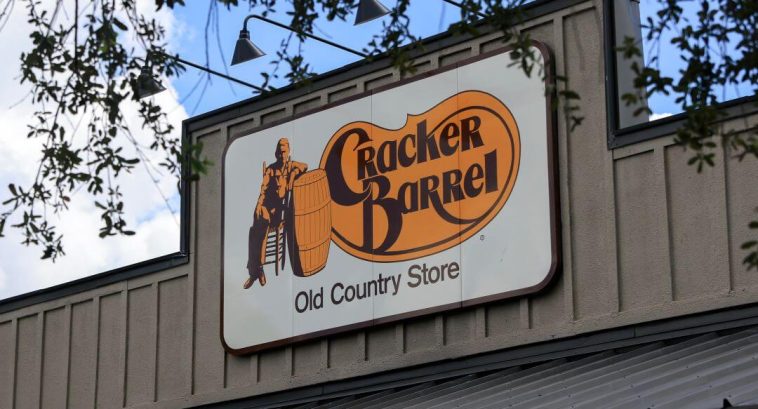
Executives removed Uncle Herschel, the beloved old time country figure who had represented the brand for decades. In his place came a sterile text based logo that stripped away nearly everything customers associated with the Cracker Barrel experience.
The warm country store aesthetic was replaced with corporate minimalism that looked interchangeable with any chain restaurant.
Conservatives immediately recognized what was happening. Cracker Barrel appeared to be chasing a younger urban audience while dismissing the rural and heartland families who made the company successful.
The backlash was swift. Social media erupted. President Trump publicly urged the company to reverse course.
Within a week, Cracker Barrel reinstated the original logo. But by then, the damage was already done.
You cannot insult loyal customers, tell them you are evolving past them, then expect them to return without consequences.
Analysts Call It Another Bud Light Moment
Wall Street analysts have openly compared Cracker Barrel’s crisis to Bud Light’s implosion.
That comparison is not exaggerated.
Bud Light partnered with transgender activist Dylan Mulvaney in 2023 and triggered a massive conservative boycott. Sales fell roughly 25 percent almost immediately and never recovered.
Nearly two years later, Bud Light sales remain down about 40 percent. The brand lost its decades long position as America’s top selling beer. Anheuser Busch lost more than $1 billion in US revenue while Modelo took the crown.
Piper Sandler analyst Brian Mullan observed that Cracker Barrel traffic was “better in the beginning of August, and then worse after that,” directly aligning with the rebranding controversy.
Traffic for the current quarter is already down 11 percent. The bleeding continues.
Food Changes Drove Away Loyal Customers
Branding was not the only issue.
Longtime customers have been vocal about declining food quality. Biscuits are now made in large batches and chilled instead of baked fresh throughout the day. Sides that were once cooked on stovetops are now oven prepared. Meals are reheated rather than made to order.
One customer summed up the frustration perfectly.
“I want pure syrup on pancakes, not that watered-down junk,” Craig Watkins said.
The 73 year old California customer now brings his own maple syrup to Cracker Barrel because the restaurant changed suppliers.
That is not brand loyalty. That is brand erosion.
Cracker Barrel also removed several popular menu items, sparking even more anger among regulars. Executives now claim they are restoring classics like Uncle Herschel’s Breakfast and Campfire Meals, but many customers believe it is too late.
Shareholders Are Connecting the Dots
The financial damage has been severe.
Cracker Barrel lost nearly $100 million in market value immediately after the August rebranding announcement. One board director, Gilbert Davila, resigned after shareholders rejected his reelection.
Davila ran a multicultural marketing firm that helped review Cracker Barrel’s advertising. Investors clearly drew a connection between activist driven branding decisions and shareholder losses.
CFO Craig Pommells warned recovery would be “slower than previously projected.” Masino tried to reassure investors that the company is “reassuring guests that the Cracker Barrel they love hasn’t gone anywhere.”
Customers disagree.
Cracker Barrel now joins Bud Light, Target, and Disney as another cautionary tale of what happens when corporations chase ESG approval instead of respecting their customers.
The pattern is undeniable.
Executives abandon their identity, insult their base, and then act shocked when sales collapse.
Cracker Barrel bet $700 million that modernizing meant rejecting its roots.
The earnings report proved just how wrong that bet was.

