
>> Continued From the Previous Page <<
The numbers he cited were striking. The top 10% of earners contribute roughly 72% of federal income taxes, while the bottom half accounts for just 3%. Meanwhile, federal revenues alone have surpassed $5 trillion annually. On top of that, there are approximately 80 means-tested welfare programs covering everything from housing and food to healthcare and disability assistance.
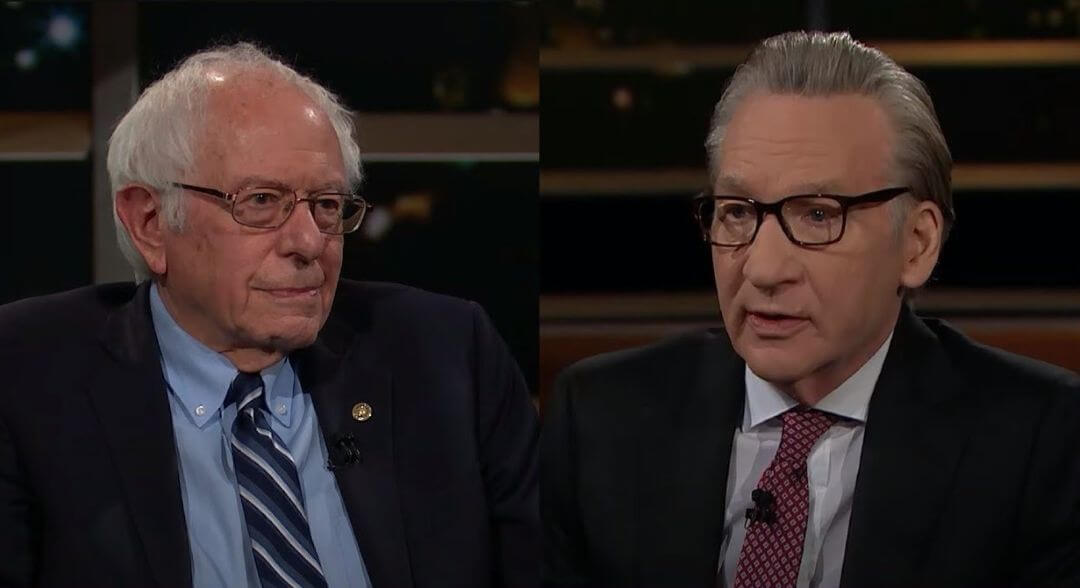
Maher’s challenge was straightforward but powerful: how can a system that collects so much from the wealthy still fail so many of the poor?

This isn’t a new dilemma. The roots of America’s anti-poverty efforts stretch back to 1964, when Lyndon B. Johnson launched the “War on Poverty.” Since then, government spending on these initiatives has ballooned to more than $22 trillion.
According to research from the Heritage Foundation, that staggering sum exceeds the cost of every war the United States has fought—from the Revolutionary War to today. Yet despite this massive investment, the poverty rate remains largely unchanged from where it stood six decades ago.
The Great Society programs created during that era expanded into a vast network of welfare initiatives. But critics argue these programs have consistently fallen short in achieving their stated goal: helping individuals become self-sufficient.
Maher pointed to a revealing example highlighted by 60 Minutes. The show revisited a Remote Area Medical clinic it had first covered in 2008. Nearly two decades later, the images were nearly identical—temporary tents, long lines of vehicles, and working Americans waiting for basic medical care they couldn’t otherwise afford.
After years of funding increases and policy promises, the reality on the ground appears unchanged.
The debate becomes even more pointed when examining proposals from lawmakers like Bernie Sanders. Sanders has advocated for a 5% annual wealth tax on billionaires, estimating it could generate $4.4 trillion over a decade.
However, early signs suggest such policies may have unintended consequences. In California, before a similar tax could even be put to a vote, several high-profile billionaires relocated to other states. Among them were Larry Page and Sergey Brin, who moved to Miami, along with Peter Thiel. Travis Kalanick headed to Texas, while Steven Spielberg chose New York.
Analysts at the Tax Foundation have observed similar patterns internationally. Many European countries that once experimented with wealth taxes have since abandoned them, citing minimal revenue gains and significant capital flight.
Maher summed up the issue bluntly: when taxes on the ultra-wealthy rise too high, those individuals often leave—taking their resources with them.
California reportedly saw an estimated $27 billion in projected tax revenue disappear before any new policy was enacted.
What made Maher’s critique especially notable was the reaction it received. His audience—largely composed of liberal-leaning viewers—responded with applause. This wasn’t a conservative rally; it was an HBO studio in Los Angeles.
That reaction underscores a broader reality: dissatisfaction with the current system is no longer confined to one side of the spectrum. Even longtime supporters of expansive government programs are beginning to question their effectiveness.
Sanders continues to push for increased funding and expanded programs, aiming to direct trillions more into the same structures. But as Maher pointed out, the core issue remains unresolved—why does so much spending fail to reach the people who need it most?
It’s a question that has lingered for decades, and one that still lacks a clear answer.

