
>> Continued From the Previous Page <<
Economists from major financial institutions, including Goldman Sachs Group Inc. and Wells Fargo & Co., are predicting that the government’s preliminary benchmark revisions, expected to be released on Wednesday, will show that payroll growth during this period was at least 600,000 jobs less than previously reported. In stark contrast, JPMorgan Chase & Co. forecasts a smaller but still significant decline of approximately 360,000 jobs. However, Goldman Sachs suggests the downward revision could reach an alarming figure of up to one million jobs.
These revisions, if confirmed, would represent the largest downward adjustment to employment numbers in 15 years, indicating that the U.S. labor market may have been cooling off for much longer—and more severely—than initially believed. The final, revised figures are expected to be released early next year.

The potential impact of these revised job numbers extends beyond mere statistics; they could heavily influence the tone and content of Federal Reserve Chair Jerome Powell’s upcoming speech at Jackson Hole, Wyoming, scheduled for later this week. Investors and economists alike are closely watching for insights into the Fed’s next moves regarding interest rates as inflation persists and the job market appears to falter.
Adding to the controversy, former President Donald Trump weighed in on the situation, expressing his outrage at the possibility that the jobs data under the Biden-Harris administration may have been manipulated. “There has been a report that the jobs numbers are fraudulent,” Trump remarked. “That’s a terrible insult to our economy.”
WATCH:

Further intensifying the debate, it has been revealed that the majority of jobs reportedly recovered under the Biden-Harris administration in the post-COVID era have gone to foreign-born workers, including those who may be in the country illegally. The Center for Immigration Studies has pointed out that all employment growth since 2019 has been attributed to foreign-born workers. Shockingly, 183,000 fewer U.S.-born Americans are employed compared to 2019, while the number of immigrants (both legal and illegal) in the workforce has surged by 2.9 million.
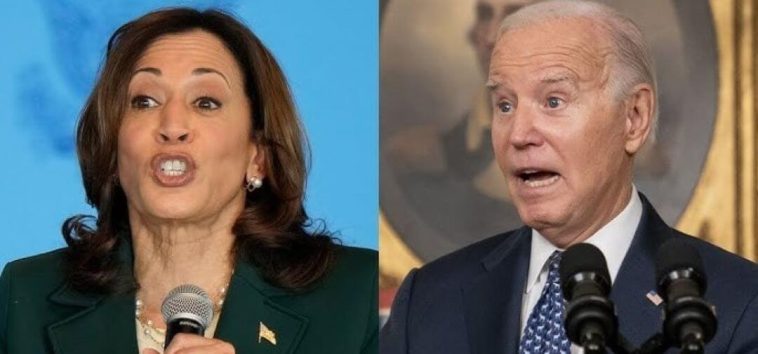
Critics of the Biden administration have been quick to label this economic strategy as “Kamalanomics,” accusing Vice President Kamala Harris of prioritizing foreign-born workers over American citizens and then attempting to cover it up with manipulated job reports.
Carry 46 rounds concealed? (comfortably)
The situation underscores the growing distrust and frustration among many Americans who feel that their concerns are being dismissed or outright ignored by the current administration. As these new job numbers come to light, the Biden-Harris administration will likely face increased scrutiny and pressure to address the perceived manipulation of economic data.
As the country awaits the final revised employment figures early next year, it remains to be seen how this revelation will affect the public’s confidence in the administration’s handling of the economy. Will these significant downward revisions mark a turning point in the Biden-Harris presidency, or will the administration manage to weather yet another storm of controversy? Only time will tell, but one thing is certain: the credibility of the administration’s economic policies is now under a much more intense spotlight.

