
>> Continued From the Previous Page <<
BlackRock CEO Larry Fink hailed the acquisition as a win for global investment, calling it a “powerful illustration of BlackRock and GIP’s combined platform and our ability to deliver differentiated investments for clients.”
The deal wasn’t just about Panama — it included 43 ports across 23 countries. According to industry analysts, about 5% of the world’s shipping traffic moves through those facilities.

But Beijing had other plans.
While Trump’s team celebrated, China was preparing to strike back — hard. Furious at the idea of a U.S.-led takeover, Chinese state media lashed out. The Communist mouthpiece Ta Kung Pao slammed CK Hutchison for “spineless groveling” and called the move a “betrayal of all Chinese people.”
Behind the bluster was a clear message from Beijing’s top leadership. President Xi Jinping was reportedly outraged that CK Hutchison didn’t clear the sale with Chinese authorities. The retaliation came swiftly: China’s powerful State Administration for Market Regulation launched an antitrust probe that froze the deal in its tracks.
The deadline to finalize the Panama component of the deal quietly passed. Then, on July 27, CK Hutchison confirmed that negotiations had collapsed.
But China wasn’t done yet.
In a move straight from Beijing’s strategic playbook, CK Hutchison announced it was “open to discussions with a view to inviting a major strategic investor from the People’s Republic of China to join as a significant member of the consortium.”
Multiple insiders confirmed that China now demands Cosco, its massive state-run shipping company, get an equal stake in any future deal.
“China will insist this be the quid pro quo: that the other global ports have Cosco participation,” said Dane Chamorro, a global risk analyst with Control Risks. If that happens, “Cosco would become far and away the dominant port owner and operator globally.”
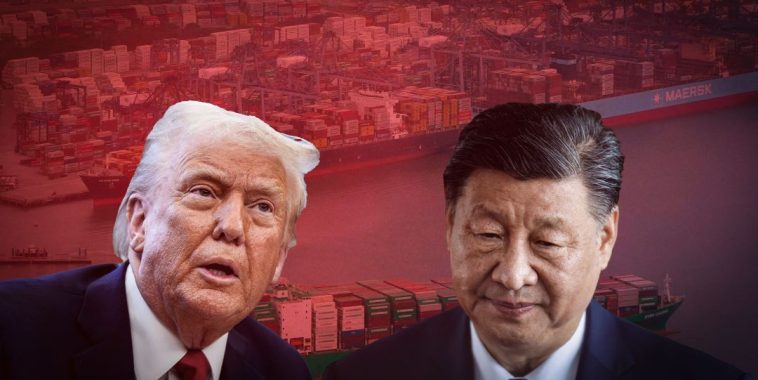
In short, Trump’s big win is now being held hostage by Beijing — and the options are grim.
Either Trump accepts a new deal where China’s grip tightens even further, or he rejects the Cosco clause and leaves the current Chinese control in place.
Cathy Seifert, an analyst at CFRA Research, predicted Trump won’t play along: “The bigger risk to the deal being consummated, in my opinion, is likely the Trump administration, which is likely to block a deal that would include China.”
Another strategist didn’t mince words, saying Trump would be “incandescent” if Cosco ends up in the final agreement.
Either way, the end result is the same: China wins.
While the White House insists “the US never ceded control of the canal to China,” the facts tell a different story. Panama might operate the canal itself, but the ports at either end — Balboa and Cristobal — have been under CK Hutchison’s control since 1997.
Those ports aren’t just symbolic. They handle roughly 4% of global maritime traffic and more than 40% of America’s container imports.
This debacle goes far beyond Panama. It exposes the flaws in Trump’s strategy to contain China economically. While his team relied on public pressure and media optics, Beijing used quiet regulatory force and long-term leverage to kill the deal behind the scenes.
China reminded the world that Hong Kong businesses, even global empires like Li Ka-shing’s, still answer to Beijing. And now, CK Hutchison is signaling that no future deal will move forward unless it includes a partner China approves — specifically, Cosco.
Cosco, for its part, isn’t just seeking a slice of the pie. According to reports, it wants veto power or “equivalent power” in any deal going forward — giving Beijing enormous influence over nearly 50 port terminals worldwide.
What started as Trump’s proof that American power could push back against China’s global expansion has turned into a nightmare.
Either Trump surrenders and allows China’s flagship shipping company into the deal, or the ports remain under current Chinese-friendly control — a lose-lose scenario.
This is not the “Art of the Deal.” This is the art of being outmaneuvered by a regime that knows how to play the long game.

