
>> Continued From the Previous Page <<
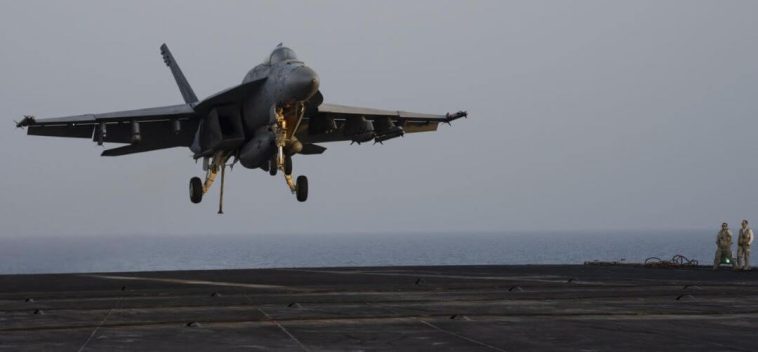
U.S. Central Command confirmed the friendly fire incident on Saturday, stating, “The guided missile cruiser USS Gettysburg, which is part of the USS Harry S. Truman Carrier Strike Group, mistakenly fired on and hit the F/A-18.” The misfire underscores the high-pressure environment in which U.S. forces are operating as they contend with constant threats in the region.
The two-seat F/A-18 Super Hornet was conducting routine operations when the cruiser’s missile locked onto it. Both pilots successfully ejected before the jet was struck, and rescue teams quickly recovered them from the water. One pilot sustained minor injuries but is expected to make a full recovery.

The U.S. military has initiated an investigation into the incident, aiming to determine how such a grave error occurred despite the sophisticated radar and communication networks linking ships and aircraft in the battle group.
Hours after the friendly fire mishap, the U.S. military launched a series of airstrikes against Houthi targets in Yemen. According to Central Command, the strikes targeted a “missile storage facility” and a “command-and-control facility” in the rebel-controlled capital of Sanaa. This marked an intensification of U.S. efforts to neutralize Houthi threats in the region.
Houthi forces, backed by Iran, have become increasingly aggressive, launching drones, cruise missiles, and other attacks on U.S. military assets and international shipping. Central Command announced that U.S. naval forces had intercepted and destroyed multiple Houthi drones and a cruise missile on the same day as the friendly fire incident.

KICK OUT The Cold and Say Hello to The Handyheater! Warming Any Spot INSTANTLY!
This mishap serves as a grim reminder of the dangers faced by U.S. forces in one of the world’s most volatile regions. With tensions escalating due to Iran’s involvement and Houthi aggression, the risk of further missteps or hostile encounters remains high.
The USS Harry S. Truman Carrier Strike Group had recently deployed to the region, signaling a renewed commitment to safeguarding international waters and deterring Houthi aggression. However, the friendly fire incident raises questions about the coordination and readiness of U.S. forces in such high-stakes environments.
As investigations continue, the incident highlights the precarious balance U.S. forces must maintain between vigilance and precision. The outcome of these inquiries will likely shape future protocols to prevent similar tragedies in an increasingly dangerous global theater.

