
>> Continued From the Previous Page <<
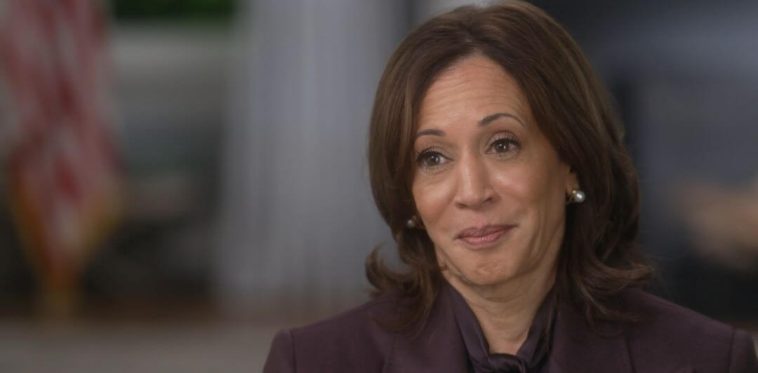
For example, during the exchange, 60 Minutes correspondent Bill Whitaker asked, “But it seems that Prime Minister Netanyahu is not listening?”
In the original response, Kamala reportedly answered, “Well, Bill, the work that we have done has resulted in a number of movements in that region by Israel that were very much prompted by or a result of many things, including our advocacy for what needs to happen in the region.”

However, what was aired on TV was drastically different. The edited version reportedly showed Harris saying, “We are not going to stop pursuing what is necessary for the United States to be clear about where we stand on the need for this war to end.”
The practice of editing interviews for time and clarity is not new, but when the edits fundamentally change the meaning of a person’s words, it steps into the territory of manipulation. In this case, the decision to splice together different responses has raised serious questions about the ethics of such edits.
Critics are accusing 60 Minutes of “mixing and matching questions and answers,” which they argue is not just sloppy journalism—it’s outright fraud. This practice misleads viewers and, in this case, potentially paints Kamala Harris in a much better light than the original interview might have.

Some are calling this outright election interference, stating that it is yet another attempt by mainstream media to cover for a struggling candidate. With such tactics, many believe the media is trying to control the narrative, shaping public perception in a way that favors the current administration.
This isn’t the first time 60 Minutes has been accused of manipulating facts or misleading the public. Back in 2017, host Lesley Stahl infamously told then-President Donald Trump that Barack Obama never spied on his campaign. Despite overwhelming evidence to the contrary, Stahl stood by her claim, leaving many to question the integrity of the program.
TRUMP LOVES IT: Get the Presidential Blanket FREE Today! Supplies Running Out – Grab Yours NOW! 🕒👇
To this day, Stahl has not apologized for her statement, which many view as a blatant attempt to protect the Obama administration while discrediting Trump. This latest incident with Kamala Harris is, in the eyes of critics, part of a broader pattern of deceit and manipulation by the mainstream media, aimed at influencing elections and swaying public opinion.
This latest revelation has sparked a fresh wave of distrust toward the mainstream media. For many, the Harris interview serves as yet another reminder that you can’t trust what you see on TV. If major outlets like 60 Minutes are willing to manipulate interviews to make political figures look better, what else are they willing to do?
The potential for this type of editing to influence public opinion cannot be understated. With the 2024 election looming, media manipulation could have serious implications. The decision to air a version of Kamala Harris that doesn’t exist in reality only adds to the perception that mainstream outlets are in the pocket of the current administration.
Perhaps the most damning accusation here is that Democrats are running a candidate who struggles to complete a sentence on her own. Critics argue that Kamala Harris’ incoherence in interviews like this one highlights a larger issue with the current administration—one that 60 Minutes and other mainstream outlets are working overtime to cover up.
As the controversy unfolds, one thing is clear: the public’s trust in media outlets like 60 Minutes is rapidly eroding. With every scandal like this, more people are questioning whether they can trust what they see on television and if the media is really giving them the full story.
This incident should serve as a wake-up call. The American people deserve the truth, not doctored interviews. Whether it’s Kamala Harris or any other public figure, the media’s role should be to inform, not to manipulate.

