
>> Continued From the Previous Page <<
However, the reality of the situation paints a more nuanced picture. Georgia’s abortion law at the time prohibited the procedure after six weeks, with exceptions for certain medical circumstances. Thurman, who had taken abortion pills, needed a procedure known as dilation and curettage (D&C) to remove the remaining fetal tissue from her body.
ProPublica’s report highlights how doctors were hesitant to perform the D&C due to confusion surrounding the law. Georgia’s restrictions allowed for the removal of a “dead unborn child” following naturally occurring events, such as miscarriages or stillbirths. But Thurman’s case was different—her abortion had been medically induced, not spontaneous. This legal gray area left doctors unsure of whether performing the necessary procedure was permissible under state law.

Despite this uncertainty, Georgia’s law did not explicitly prevent the D&C from being performed in such circumstances. A maternal mortality review committee later concluded that Thurman had a good chance of survival had the procedure been performed earlier.
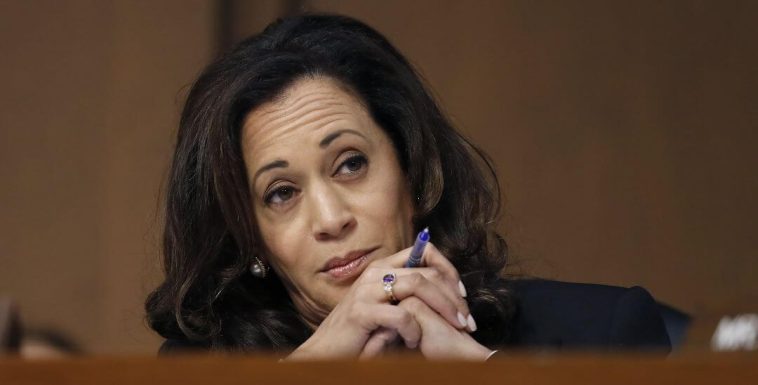
On Wednesday, Vice President Harris used Thurman’s tragic death as ammunition against former President Donald Trump, who is often credited with appointing the Supreme Court justices responsible for overturning Roe v. Wade in 2022. The Dobbs v. Jackson decision effectively returned abortion laws to the state level, resulting in Georgia’s restrictive six-week abortion ban.
Harris’s post condemned the former president’s role in shaping abortion policy, yet critics were quick to point out that she ignored the key detail—that Thurman’s death stemmed from complications related to abortion pills, not from Georgia’s abortion laws.
Conservative commentator Allie Beth Stuckey was among those who denounced Harris’s remarks, stating that the Vice President was spreading “malicious disinformation.” Stuckey further explained, “She [Thurman] tragically tried to abort her twins via a medication abortion. As is too often the case, parts of the baby were left inside her, which caused her to suffer from fatal sepsis.”
TRUMP LOVES IT: Get the Presidential Blanket FREE Today! Supplies Running Out – Grab Yours NOW! 🕒👇
Stuckey continued, “Yes, she should have received a D&C and antibiotics. But that is not the fault of any Georgia law, which fully permits a D&C when the baby has already passed. She died because of the abortion pills and because of the negligence of doctors. She did not die because of any pro-life law.”
The crux of the issue is that Harris’s post leaves out the pivotal fact that Thurman’s complications arose from a medication abortion. The Vice President’s narrative suggests that Georgia’s restrictive abortion laws were directly responsible for her death, but the reality appears far more complex.
Thurman made the tragic decision to terminate her pregnancy with abortion pills, which led to incomplete removal of the fetal tissue. Hospital staff hesitated to perform the necessary procedure, which may have been influenced by the legal confusion surrounding abortion laws, but it was not prohibited under Georgia’s legislation. The unfortunate outcome was likely the result of hospital incompetence and bureaucratic hurdles rather than the state’s abortion restrictions.
Harris’s decision not to provide a link to the full story or additional context has raised questions about her motives. Critics argue that she is deliberately misleading her audience, fueling outrage by omitting critical details about the case.
In a time when the national debate over abortion rights is more divisive than ever, Harris’s actions have ignited further polarization. Using Amber Nicole Thurman’s death as a political talking point without acknowledging the full context undermines the gravity of the situation and shifts the focus away from where it belongs—on the safety and well-being of women facing complex medical decisions.
As the country moves closer to the 2024 elections, Harris’s handling of this sensitive issue is likely to remain a topic of debate. Critics, including Stuckey, continue to label the Vice President’s post as “malicious disinformation,” accusing her of using a tragedy for political gain without acknowledging the true factors that led to Thurman’s death.
In the words of Stuckey, “She did not die because of any pro-life law.” This tragic case is a sobering reminder of the complexity surrounding abortion laws and the need for clarity in the medical and legal fields. However, using such a tragedy to score political points risks undermining the serious discourse that should accompany such sensitive issues.

