
>> Continued From the Previous Page <<
Challengers led by the Republican National Committee argue the law violates federal election statutes that establish a uniform Election Day for federal offices. Their position is that Congress intended a single, clear deadline—meaning ballots must physically arrive by Election Day to be counted in races for president, U.S. Senate, and the U.S. House.
Mississippi officials, however, maintain that states retain broad constitutional authority to regulate election procedures. They argue that ballots cast in accordance with Election Day deadlines should not be discarded simply because of minor postal delays.

The legal fight escalated after the Republican National Committee and other plaintiffs challenged the Mississippi law in federal court in 2024. A district court initially upheld the state’s policy, finding it consistent with existing law. But the Fifth Circuit Court of Appeals later reversed that decision, ruling that federal law preempts Mississippi’s extended ballot-receipt window.
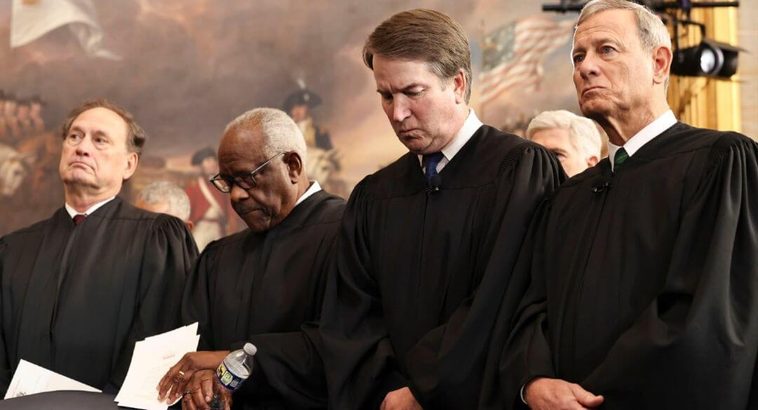
That ruling set the stage for Mississippi’s appeal to the nation’s highest court, which agreed to take up the case last year, placing the issue squarely before the Supreme Court.
While the dispute originated in one state, its implications stretch far beyond Mississippi’s borders. Election data shows that roughly 15 states, along with the District of Columbia, currently allow at least some ballots to be counted after Election Day if they were properly postmarked by the deadline.
That group includes states like California, where election rules permit mail ballots to be counted if they are postmarked on or before Election Day and received within a statutory window that extends several days afterward. Supporters of these systems say they help protect voters from delays in mail processing and ensure broader ballot access.
A ruling in favor of the challengers could force many states to tighten their deadlines and require that all ballots for federal elections be received by Election Day. Advocates of that stricter standard argue it would create uniformity nationwide, reduce confusion, and prevent drawn-out counting periods that sometimes stretch days or even weeks after Election Day.
Opponents of that approach warn that it could lead to legitimate ballots being rejected due to postal delays, especially in rural areas or regions with slower mail service. They argue that voters who act in good faith should not be penalized for logistical issues outside their control.
During oral arguments, several justices on the U.S. Supreme Court appeared particularly focused on interpreting federal statutes that define Election Day as a single national date. Much of the questioning centered on whether counting ballots received after that date aligns with Congress’s intent when it established uniform federal election timing.
Although no ruling has been issued yet, court observers say the decision could significantly alter how elections are run across the country. If the challengers prevail, states may be required to overhaul ballot-receipt rules for federal races, potentially shortening counting windows nationwide.
If Mississippi prevails, states would retain broader discretion to maintain current grace periods, preserving the status quo in many jurisdictions that have built extended mail ballot systems into their election procedures.
With the 2026 midterm elections approaching, election officials, political parties, and advocacy groups are closely monitoring the case. The outcome could determine whether America moves toward a stricter, more uniform Election Day standard—or continues allowing state-by-state flexibility in how mail ballots are processed.
Either way, the Supreme Court’s decision is poised to set a national precedent that will shape election administration and ballot-counting rules for years to come, even though the legal battle itself began with a single Mississippi law.

