
>> Continued From the Previous Page <<
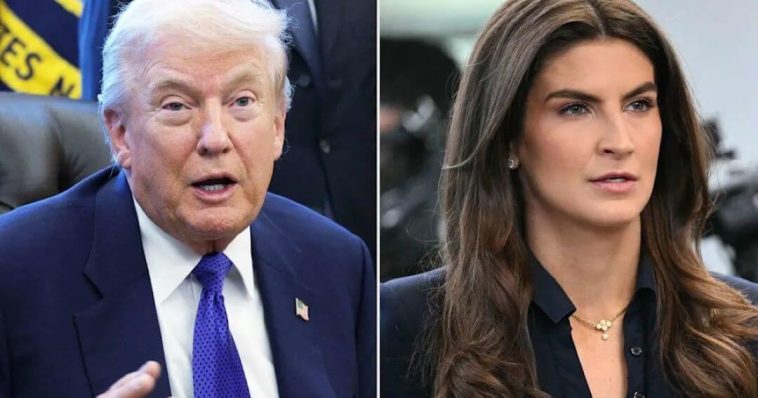
Collins remained standing in place as cameras captured the moment. Trump, however, was only getting started.
“I see her standing there with hatred in her eyes – like she has hatred because we have borders, because we have a strong military, because we cut our taxes, because we do things that everybody wanted and then we win our election in a massive landslide.”

The president then referenced Collins’ background before joining CNN.
“You used to be a conservative. She was a conservative from Alabama. Can you believe it?”
As Collins attempted to respond, Trump cut her off and instructed her to remain silent.
The exchange immediately generated headlines across the political spectrum, but what happened afterward may have revealed an even deeper divide between the White House and the national press corps.
The following day, Trump returned to the subject while speaking with reporters once again in the Oval Office.
“This country needs a fair press,” he declared. “And one thing I think that’s done is expose how corrupt our media is.”
The president’s remarks were clearly aimed at more than one reporter. They reflected years of frustration with media organizations that many conservatives believe have abandoned objective journalism in favor of political activism.
CNN quickly moved to defend Collins, issuing a statement praising her professionalism and journalistic abilities while reaffirming its confidence in her reporting.
Yet many Trump supporters viewed the network’s response as predictable.
To them, CNN’s defense represented another example of an institution protecting its own rather than addressing broader concerns about media credibility.
The controversy also reignited criticism of the mainstream press over several major stories that continue to divide Americans.
Conservatives frequently point to media coverage of the southern border, inflation, COVID-era policies, Hunter Biden’s laptop, and former President Joe Biden’s mental and physical fitness as examples of reporting they believe was misleading or incomplete.
Those concerns have fueled a dramatic decline in public trust toward major news organizations over the past decade.
Perhaps the most interesting detail to emerge from the incident came from Collins herself.
According to reports, she acknowledged that Trump launched into his criticism before she had even asked a question.
For Trump’s supporters, that fact reinforced their belief that the conflict was never really about a single exchange.
Instead, they argue it reflects years of accumulated distrust between the president and media figures whom he believes entered the room with predetermined narratives.
Whether Americans agree with Trump’s assessment or not, the confrontation highlighted a reality that is increasingly difficult to ignore.
Public confidence in traditional media institutions continues to erode.
Millions of voters no longer assume reporters are neutral observers. Instead, many view national journalists as political participants with ideological agendas.
That skepticism has become a defining feature of modern American politics.
As a result, Trump’s comments resonated with supporters who believe the press has spent years shaping narratives rather than simply reporting facts.
To critics, the Oval Office clash was another example of Trump attacking journalists.
To his supporters, it was something entirely different.
They saw a president willing to confront institutions they believe have repeatedly misled the public.
And when Trump delivered those criticisms with a CNN reporter standing only a few feet away, many conservatives felt they were watching more than a media dispute.
They believed they were witnessing a public challenge to an industry whose credibility has never been under greater scrutiny.


The First News, NewsMax, The Epoch Times, Imprimis and The Verdict Newsletters are fact based with evidence. C-Span seems to be mostly honest. Watched a couple times. Anyway, reject Socialism, Marxism, Communism, and radical Islam, as they all destroy societies and freedoms, including free speech. I wish college kids would do the research. Unfortunately, Mainstream Media knows how to manipulate people. It’s pretty sad they are on the wrong side. People should be able to trust. That is what most Democrats, Liberals, and some Republicans have done. Put themselves, and the crazy policies, that hurt Americans. Putting illegal immigrants as the priority. No. Not all of them are running from violence. Did anyone vet them? No. Just let them walk right in. Leadership, the Sin of Empathy, Hide Your Children, and just about any book on the Socialism, Marxism, Communism, and radical Islam that, like I said above. Only Jesus died for all.