
>> Continued From the Previous Page <<
A New Front in the Border Fight
Trump’s Executive Order 14406, titled “Restoring Integrity to America’s Financial System,” directs the Treasury Department to overhaul how federal agencies and financial institutions monitor accounts potentially connected to illegal activity.
Under the order, Treasury officials will work with banks and financial institutions to develop new guidance designed to identify suspicious accounts tied to human smuggling operations, drug cartels, illegal employment networks, and welfare fraud.

The administration argues that weak identification standards have allowed individuals without legal status to gain access to financial services that should be reserved for those legally present in the United States.
Trump summarized the administration’s position in straightforward terms.
“Access to our Nation’s Financial Systems must be limited to those who have a Legal Right to be here.”
The order also calls for a review of existing banking regulations, including customer verification requirements that critics say have become increasingly ineffective over the past two decades.
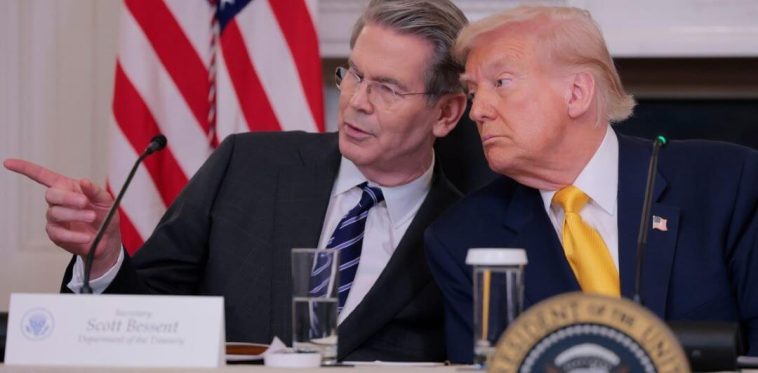
Scott Bessent’s Expanding Role
The executive order builds upon efforts Bessent has already launched since taking office.
Earlier this year, Bessent traveled to Minnesota as federal investigators examined allegations of large-scale fraud involving taxpayer-funded programs. Authorities have been investigating claims that enormous sums of public money were diverted through fraudulent schemes before being transferred through domestic and international financial channels.
During an appearance on Fox News, Bessent signaled that the administration intended to aggressively pursue individuals involved in those operations.
“We know that these rats will turn on each other,” Bessent told The Ingraham Angle.
He then announced a financial incentive program aimed at encouraging insiders to come forward.
“We are going to offer whistleblower payments to anyone who wants to tell us the who, what, when, where and how this fraud has been done,” Bessent said. “I think that that will give us a great leap forward on how to get it done.”
Supporters of the initiative believe whistleblowers could provide critical information that would help investigators uncover complex financial networks that have remained hidden for years.
Longstanding Concerns About Bank Access
The debate over identification requirements for opening bank accounts is not new.
Immigration watchdog groups have raised concerns for decades about the use of foreign-issued identification documents within the American banking system.
One document frequently cited is the Matrícula Consular, an identification card issued by the Mexican government. Critics have long argued that the card provides insufficient verification of legal immigration status while still allowing access to certain financial services.
Federal law enforcement agencies previously warned that such identification documents could be vulnerable to fraud or misuse, particularly when criminals seek to conceal their identities or establish multiple accounts under different names.
According to immigration policy advocates, these concerns have only intensified in recent years as millions of migrants entered the United States during the Biden administration.
Trump’s executive order directly addresses that issue.
“It is not ludicrous, but profoundly dangerous, that any Illegal Alien can simply present a Blue State Drivers License, or Biden Border Document, and have unrestricted access to the U.S. Financial System.”
Supporters of the order argue that financial institutions should not be placed in a position where they must determine immigration status using documents that may not provide sufficient verification.
A Major Political Battle Ahead
The administration’s opponents argue the new policy could create obstacles for immigrants seeking basic financial services and may lead to unintended consequences for communities with large migrant populations.
Trump supporters see the issue differently.
They argue that border security cannot succeed unless the financial incentives driving illegal immigration are addressed as well. In their view, limiting access to banking services for those unlawfully present in the country removes a critical support structure that has enabled illegal immigration to flourish.
Whether the initiative survives future legal challenges remains to be seen.
What is clear is that the administration has opened an entirely new front in the immigration debate. Rather than focusing solely on physical border enforcement, Trump’s team is now targeting the money flow that supporters believe fuels illegal immigration, welfare fraud, and transnational criminal organizations.
With Scott Bessent leading the effort and federal agencies preparing new enforcement guidelines, Washington could soon witness one of the most aggressive financial crackdowns tied to immigration policy in decades.

