
>> Continued From the Previous Page <<
At the time, Williams argued that the organization’s decision crossed a line that would never be tolerated if directed at other faith groups. He warned that celebrating an organization built around mocking Catholicism sent the wrong message to millions of Americans who take their religious beliefs seriously.
Williams stated that inviting the group “undermines the values of respect and inclusivity that should be upheld by any organization” and described the event as a “blatant and deeply offensive mockery” of his faith.

His comments earned praise from many religious Americans who believed professional athletes rarely speak openly about faith-related issues. Others criticized Williams, but the pitcher stood by his position and never backed away from his remarks.
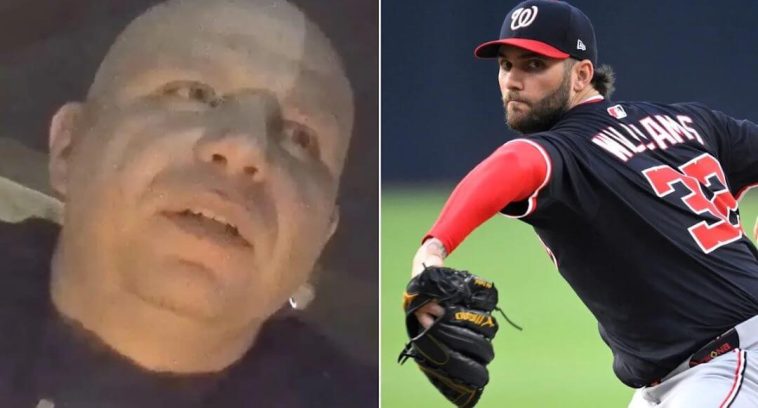
According to the undercover footage released this week, Hudson referenced Williams’ religious beliefs while discussing the pitcher.
In the recording, Hudson described Williams as “super Christian-Catholic, all these tattoos that mean a lot.”
The most explosive moment came when Hudson appeared to explain how Williams was treated internally after speaking out against the Dodgers controversy.
“Because of that, we don’t use him on social [media],” Hudson said.
Hudson went even further, reportedly claiming Williams was routinely left out of team promotional efforts, including social media campaigns and fan-engagement content such as team trivia segments.
The comments immediately ignited accusations of viewpoint discrimination and religious bias, with critics questioning whether a player had effectively been blackballed from certain organizational opportunities because of his Christian beliefs.
As public pressure intensified, the Nationals moved swiftly.
The organization announced that Hudson was no longer employed by the franchise, distancing itself from the statements made in the undercover recording.
During a Nationals.TV pregame broadcast, team president of business operations Jason Sinnarajah addressed the controversy and attempted to reassure both fans and Williams that the organization did not share the views expressed in the video.
Without mentioning Hudson by name, Sinnarajah confirmed that the employee involved was no longer with the club.
He also expressed concern that Williams had become the focus of a national controversy through no fault of his own.
Sinnarajah said the organization felt “awful that [Williams] has been dragged into this situation” and emphasized that the pitcher remains highly respected within the franchise.
He described Williams as “a valued member of the organization” and highlighted the team’s support for the veteran pitcher throughout his tenure in Washington, including recognizing him as the club’s Roberto Clemente Award nominee last season.
The Nationals also pushed back against the allegation that Williams had been systematically excluded from team content.
A team spokesperson noted that Williams has appeared in Nationals social media posts over recent seasons and stated that no formal policy or directive existed limiting his participation in promotional materials.
Still, the controversy has reignited a broader debate that extends well beyond baseball.
Many critics argue that athletes who express traditional Christian beliefs often face consequences that would never be imposed on players advocating other viewpoints. Supporters of Williams say the incident serves as another example of religious Americans being marginalized for voicing convictions that were once considered mainstream.
Whether the Nationals can fully move past the controversy remains to be seen. What is clear is that a secretly recorded conversation has cost one executive his career and reopened a national discussion about faith, free expression, and whether professional sports organizations truly embrace diversity of thought when that diversity includes traditional religious beliefs.

