
>> Continued From the Previous Page <<
At the center of AB2624 is Democratic Assembly member Mia Bonta, who also happens to be the wife of California Attorney General Rob Bonta. She introduced the legislation as part of a broader effort to expand protections under the state’s Safe At Home program, which has been in place for roughly three decades to shield individuals facing domestic violence, stalking, human trafficking, and other threats.
Under AB2624, the Safe At Home program would be expanded to include immigrant service providers, along with their employees and volunteers. The bill also restricts the online sharing of photographs or personal data involving these individuals when such activity is considered harassment. Supporters argue the intent is to protect vulnerable workers from doxing and targeted harassment campaigns.

Explaining the measure, Bonta stated, “AB2624 enables California’s Safe At Home program to include immigrant service providers, their employees and volunteers,” Bonta explained.
She further clarified the practical effect of the program expansion, saying, “It allows participants to use a substitute address designated by the secretary of state, keeping their home, work and school addresses out of public records, while still allowing them to safely receive mail and legal documents through the state,” Bonta said.
Bonta also argued that individuals working in these roles have faced increasing online targeting. “Bonta said employees at immigrant service providers have been doxed and targeted online.”

She added, “The bill gives them a critical layer of protection and privacy in an environment where their personal safety is increasingly at risk,” she said.
Co-sponsoring the legislation is Democratic Assembly member Christopher M. Ward, who defended the bill during Tuesday’s vote. Ward emphasized that the state has a responsibility to safeguard those who may be singled out for their work or identity, stating that California “has a responsibility to be able to help protect” people who are “targeted because of who they are or the work they do.”
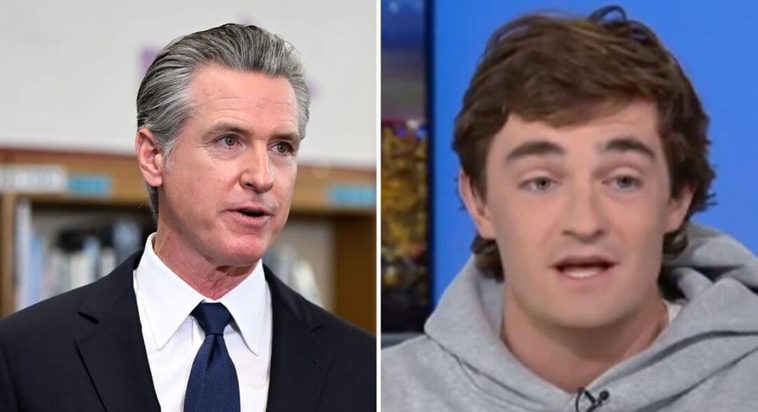
However, the measure has sparked sharp backlash from Republican lawmakers and free speech advocates who argue the bill could be used to shield government-funded programs from legitimate scrutiny. Critics say the timing of the legislation raises concerns, pointing to its introduction shortly after Shirley’s investigations into alleged fraud were released and widely shared online.
Opponents also argue that the bill could have First Amendment implications, particularly regarding the ability of journalists and citizens to document public-facing organizations that receive taxpayer funds.
WATCH:
Assembly member Carl DeMaio voiced some of the strongest objections during debate, reading directly from the bill’s text: “A person shall not publicly post or display on the internet the image of a designated immigrant support services provider.”
He then illustrated how he believes the law could be applied in practice.
“So let me give you an example,” he said.
“Nick Shirley shows up with his camera crew to the Somali Learning Center — or maybe one of the 90 fake hospices operating in a building in Los Angeles that was highlighted by CBS News — shows up doing the work of a citizen watchdog journalist,” DeMaio continued.
“This is something we should promote. We should want an extra set of eyes,” he added.
“People have a right to go out there and kick the tires and find out what these organizations are doing with our taxpayer funds,” DeMaio said.
He urged colleagues to reject the measure outright.
“I am urging you to uphold the First Amendment and to protect the rights of Nick Shirley and others to do the work that they’ve been doing,” said the GOP lawmaker.
“They’ve been exposing fraud. This is fraud that taxpayers ought to know about,” he said.
As the bill moves to the California State Senate, it is expected to remain a major point of contention, with supporters framing it as a privacy and safety measure, while opponents warn it could chill investigative journalism and limit public oversight of taxpayer-funded programs.

