
>> Continued From the Previous Page <<
What emerged stunned researchers.
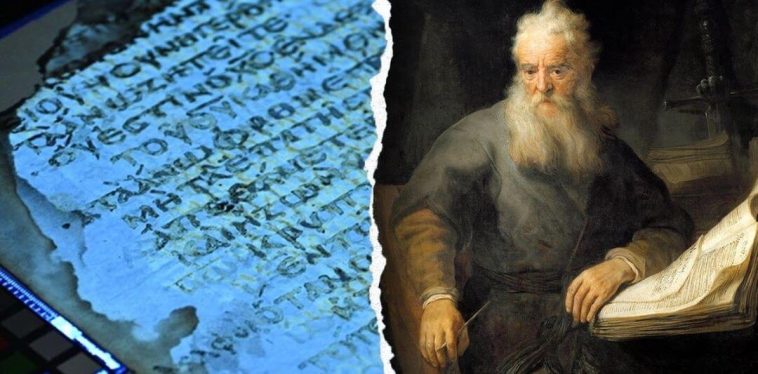
Rather than sloppy copying practices, the manuscript revealed a careful process of correction and comparison. Scholars identified more than 70 edits made by an ancient scribe who appeared determined to ensure the wording matched another trusted manuscript. Far from carelessly changing Scripture, the evidence showed scribes working meticulously to preserve it.

The discovery also revealed traces of generations of readers who interacted with the text over centuries. Marginal notes, prayers, grammatical observations, and annotations from multiple hands painted a vivid picture of Christians who treated these writings with reverence and precision.
“This process makes me optimistic that many ancient manuscripts still have much more to tell us about the people who made and used them,” University of Glasgow professor Garrick Allen explained.
The history of the manuscript itself sounds almost unbelievable.
Codex H was used for centuries at the famous Megisti Lavra monastery on Mount Athos, one of the oldest monastic communities in the Christian world. By the Middle Ages, the book had deteriorated badly. Because parchment was enormously expensive, monks dismantled portions of the aging manuscript and reused the pages as reinforcement material inside the bindings of other books.
That decision may have saved the text from disappearing forever.
Over time, fragments of the manuscript spread across European collections, with some eventually ending up in Scotland. Researchers later discovered that portions of the original text remained hidden underneath later ink. Using advanced imaging equipment capable of detecting wavelengths beyond human vision, scientists successfully recovered 42 pages that had been unreadable for centuries.
The implications are enormous.
For years, critics claimed the centuries between the original writings of the New Testament and later medieval manuscripts represented a dark period where the text supposedly spiraled into corruption. Yet Codex H provides physical evidence that scribes during this very era were actively comparing manuscripts, correcting discrepancies, and preserving accuracy with extraordinary care.
“It’s an important witness to the text of Paul’s Letters in a period where we don’t have that many manuscripts,” Allen said.
That statement cuts directly against the argument that the biblical text was recklessly altered over time.
Even many mainstream scholars acknowledge that the overwhelming number of surviving New Testament manuscripts makes it possible to reconstruct the original wording with remarkable confidence. The New Testament exists in more than 5,800 Greek manuscripts, in addition to thousands of early translations and quotations from church leaders.
Compared to other ancient works, the evidence is staggering. Many famous classical texts survive in fewer than a dozen copies. Yet skeptics rarely question the authenticity of those writings with the same intensity directed at the Bible.
What Codex H reveals is not a reckless chain of errors but a culture of preservation. Ancient scribes did not treat Scripture casually. They handled it like something sacred, worth protecting line by line.
Even Ehrman himself has admitted that the textual differences found in manuscripts do not overturn core Christian doctrines. His former mentor, renowned scholar Bruce Metzger, maintained throughout his career that the original New Testament text had overwhelmingly been preserved through the manuscript tradition.
The rediscovery of Codex H is more than an archaeological curiosity. It is a direct challenge to decades of sensational claims designed to undermine confidence in the Bible.
And researchers believe this may only be the beginning.
Libraries around the world contain damaged and overwritten manuscripts that have never been fully analyzed with modern technology. Hidden beneath faded ink and centuries of wear may be countless additional fragments waiting to reveal how carefully ancient Christians preserved the text they believed carried the Word of God.
For critics who spent years insisting Scripture could not be trusted, discoveries like this are becoming increasingly difficult to explain away.

