
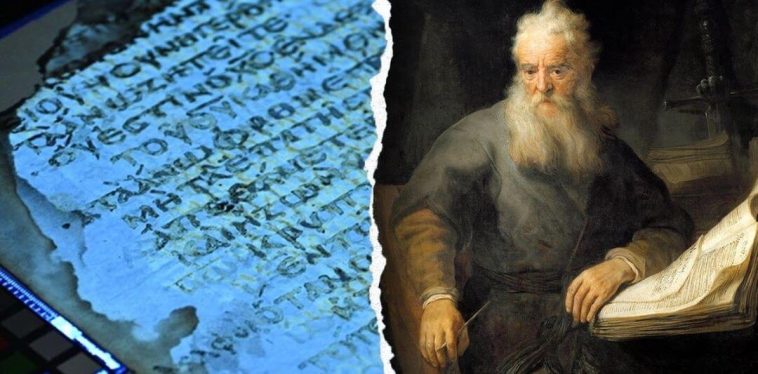
For years, critics of Christianity have claimed the Bible was hopelessly corrupted by centuries of copying mistakes, political edits, and human error. Now, an extraordinary discovery involving a 1,500-year-old biblical manuscript is turning that narrative on its head and delivering a devastating blow to one of the most popular attacks on Scripture.
A team of researchers using cutting-edge imaging technology recently uncovered hidden text buried inside an ancient New Testament manuscript known as Codex H, or Codex Hierosolymitanus. What they found was not evidence of chaos or corruption. Instead, they uncovered something that modern skeptics rarely admit existed in the ancient world: an obsessive commitment to preserving biblical accuracy.
For decades, critics like Bart Ehrman argued that the Bible passed through history like a distorted game of telephone, with scribes introducing errors until the original message was supposedly lost forever. Ehrman’s bestselling book Misquoting Jesus became a cultural phenomenon and was embraced by secular media outlets eager to cast doubt on the reliability of Christianity.

But the rediscovery of hidden pages from Codex H tells a very different story.
The manuscript dates back to the sixth century and contains portions of the letters written by the Apostle Paul. Researchers from the University of Glasgow used multispectral imaging technology to recover text invisible to the human eye. The pages had been overwritten centuries ago as monks attempted to preserve and reuse valuable parchment.
>> Click Here To Continue Reading <<

