
>> Continued From the Previous Page <<
In exchange, the Biden-era sanctions regime that crippled Iran’s economy could begin to unwind under President Donald Trump’s administration. Frozen Iranian assets held abroad may also be released gradually if Tehran complies with the conditions laid out by negotiators.
The mere possibility of a diplomatic breakthrough immediately sent shockwaves through global energy markets.

Oil prices plunged after reports surfaced that both sides were inching toward a compromise that could reduce the risk of a wider regional war and stabilize critical shipping lanes.
NBC News reported that traders reacted swiftly after hearing about the negotiations.
“Markets had reacted swiftly to the initial report, sending the price of U.S. crude oil plunging by as much as 15% to $88 per barrel and international Brent crude oil down as much as 11% to $96 per barrel,” the outlet reported.

The dramatic market reaction underscores how nervous investors have remained since the conflict began. The Strait of Hormuz — one of the world’s most critical oil transit routes — has remained under constant threat due to Iranian military activity and repeated warnings directed at commercial shipping vessels.
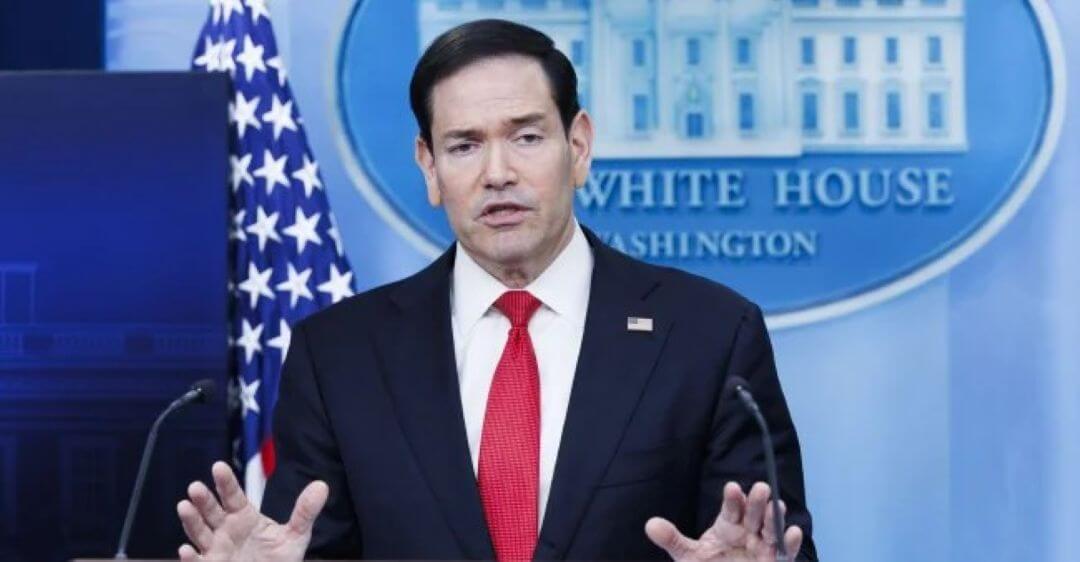
During Tuesday’s White House press briefing, Secretary of State Marco Rubio struck a cautiously hopeful tone while discussing the negotiations.
Rubio stressed that simply claiming not to want nuclear weapons would no longer be enough for the Iranian regime. Instead, he argued, Tehran must prove its intentions through concrete actions.
“So they have an opportunity here to agree to something that will make it clear that they are not interested in a — one thing is to say we don’t want a nuclear weapon,” Rubio said, according to a White House transcript.
“Another thing is to do the things that prove you don’t want a nuclear weapon… They’re acting like they want a military nuclear program. That’s unacceptable,” he added.
Rubio also acknowledged the complexity of the negotiations, making clear that the current stage is focused more on establishing broad areas of agreement than drafting a final treaty line-by-line.
“So that’s the process we’re engaged in now to create — that’s the object of this diplomacy is to come up with some level of understanding about what are the topics that they’ve agreed to negotiate on. We don’t have to have the actual agreement written out in one day. This is highly complex and highly technical,” Rubio continued.
“But we have to have a diplomatic solution that is very clear about the topics that they are willing to negotiate on and the extent and the concessions they are willing to make at the front end in order to make those talks worthwhile.”
Meanwhile, President Donald Trump announced a temporary suspension of a U.S. military escort mission protecting commercial ships traveling through the Strait of Hormuz.
That operation had become increasingly necessary after Iranian threats and military maneuvers created chaos for international shipping traffic in the region. Thousands of vessels reportedly faced delays or rerouting due to fears of possible attacks.
Now, the future of the conflict may depend entirely on whether Iran’s leadership is willing to make concessions that American negotiators believe are necessary for long-term stability.
Rubio did not hide his frustration with Tehran’s leadership during his remarks.
“So look, the time has come for Iran to make a sensible choice, and it’s not easy for them to do that, obviously, because they have a fracture in their own leadership system,” he said in a statement opening the briefing.
“And apart from that, I mean, the top people in that government are — to say the least, they’re insane in the brain. And so we need to address that, and it’s difficult because it’s hard to get past that in their system. But it’s important for them to make a sensible choice and the one that’s right for their people.”
For now, the world is watching closely as negotiators attempt to turn a fragile framework into a full-scale agreement before the conflict spirals once again into open warfare.

