
>> Continued From the Previous Page <<
Unlike the empty promises Americans heard for years from Washington bureaucrats, the investments tied to AI are already translating into real-world construction projects and manufacturing expansion. Chipmaker Micron Technology announced a staggering $200 billion commitment toward U.S.-based manufacturing and research operations. The massive undertaking is expected to create roughly 90,000 American jobs over time, delivering a huge boost to skilled labor and domestic production.
Meanwhile, industrial giant Siemens poured another $285 million into expanding U.S. manufacturing operations and AI-focused infrastructure. The company says the investment will support hundreds of high-paying skilled manufacturing positions.

Perhaps the clearest sign that Trump’s vision is already becoming reality is the launch of the Stargate initiative, a massive AI infrastructure partnership unveiled during the opening days of his new administration. The project, involving OpenAI, SoftBank Group, and Oracle Corporation, carries an estimated value of $500 billion and has already begun construction in Texas.
Oracle executives described the project as a cornerstone for long-term American AI leadership, saying it will create hundreds of thousands of jobs while generating economic growth that spreads far beyond the tech sector itself.
Commerce Secretary Howard Lutnick summed up Trump’s strategy in simple terms during an appearance on Fox News. Lutnick explained that Trump’s economic agenda is centered on reopening factories, expanding industrial capacity, and putting Americans back to work building the future.
The numbers already support that argument.
More than 110,000 construction jobs in 2024 alone were tied directly to the rapid expansion of data centers and AI-related facilities throughout the United States. Industry analysts say the pace of growth has only intensified in 2025 as companies scramble to secure infrastructure before global competitors catch up.
Critics warning about AI-driven unemployment may want to revisit history before sounding the alarm.
Americans heard the same predictions during nearly every major technological breakthrough of the past two centuries. Opponents once claimed steam engines would destroy employment opportunities. Later, critics insisted electricity would eliminate workers. The rise of computers and the internet triggered another wave of panic about permanent economic decline.
Yet every one of those revolutions ultimately produced more opportunity, more wealth, and entirely new industries.
Economists at Morgan Stanley studied multiple major innovation eras throughout American history and found a consistent pattern: transformative technology reshaped labor markets, but overall employment continued to expand as productivity and economic output surged.
Even industries already adopting AI at large scale are seeing workforce growth instead of collapse. Financial firms integrating AI systems have reportedly increased hiring as efficiency gains boosted profits and expanded operations.
Jensen Huang described the transition clearly when he stated, “New jobs will be created, some jobs will be lost, every job will be changed.”
That statement is not evidence of catastrophe. It is the reality of technological progress — the same process that transformed America into the strongest economy on earth.
The World Economic Forum estimates AI adoption could generate 170 million new jobs worldwide by 2030 while displacing 92 million, resulting in a significant net increase overall.
Trump also warned that America cannot afford to slow down because China is aggressively attempting to erase America’s lead in artificial intelligence and semiconductor technology.
That battle is already underway.
After facing restrictions on advanced chip imports, Chinese firms accelerated efforts to build domestic alternatives. Telecom giant Huawei Technologies has invested heavily in developing its own AI chip ecosystem in hopes of challenging Nvidia’s dominance.
But despite Beijing’s aggressive push, major obstacles remain. China still lacks access to the advanced extreme ultraviolet lithography machines necessary to manufacture the world’s most advanced chips. Those critical systems are produced by Dutch company ASML Holding and remain restricted under export controls aligned with U.S. national security interests.
At the same time, America’s private sector continues widening the gap.
Tech giants including Meta Platforms, Alphabet Inc., Microsoft, Amazon, and Oracle are expected to pour more than $450 billion into AI-related spending in 2026 alone.
That level of investment rivals some of the largest government-led initiatives in American history, but this time it is being driven by private industry responding to enormous market demand.
The results are already visible. America’s economy received a major boost from the AI explosion during the first half of 2025, with analysts estimating a significant rise in GDP growth tied directly to AI-related expansion.
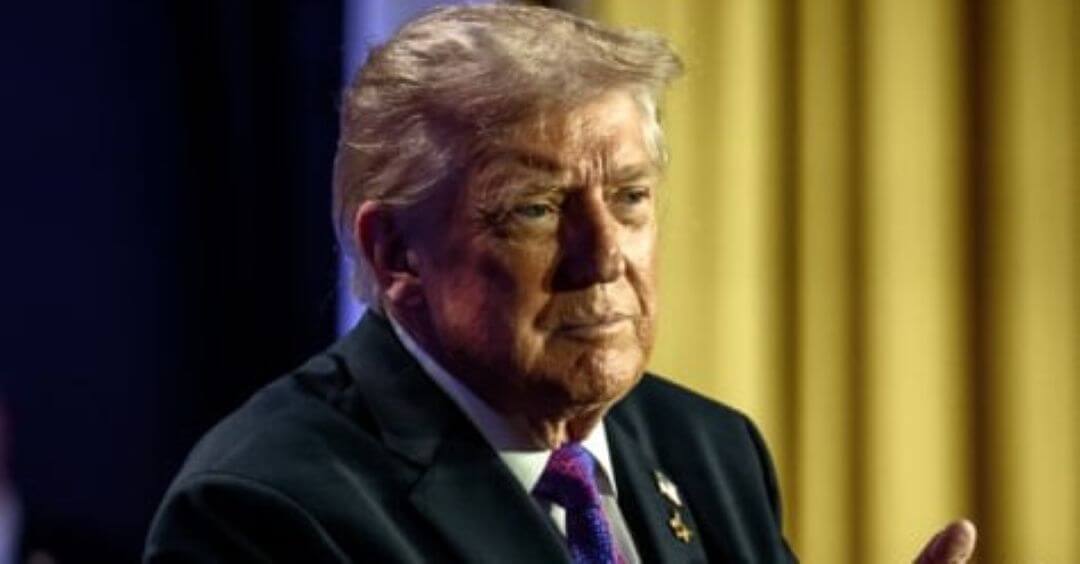
The message from Trump is becoming increasingly clear: artificial intelligence is not the economic apocalypse Democrats predicted. Instead, it may become the next great engine of American manufacturing, construction, innovation, and job creation.
And judging by the factories rising across the country, the United States is not merely competing in the AI race — it is pulling away from the rest of the world.

