
>> Continued From the Previous Page <<
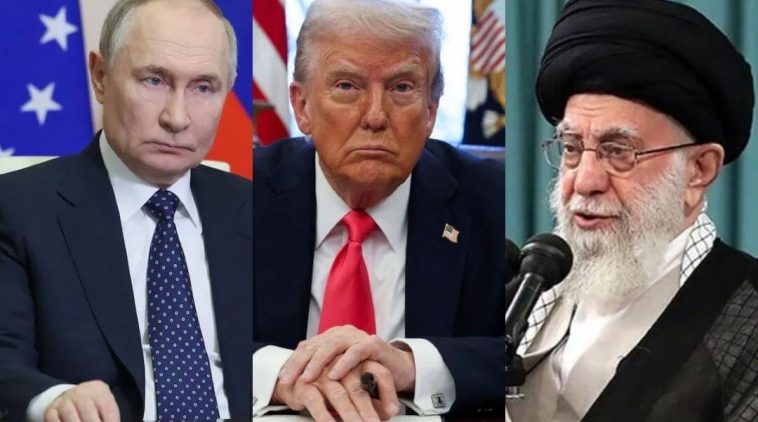
White House Press Secretary Karoline Leavitt dismissed the significance of Moscow’s alleged assistance when reporters pressed her about the situation.
“It clearly is not making any difference with respect to the military operations in Iran because we are completely decimating them,” Leavitt said.

Her comments reflect growing confidence inside the administration that the U.S.-led operation is succeeding in its core objective of dismantling Iran’s military capabilities.
Officials believe coalition forces are rapidly gaining control of the skies over Iran, a key milestone that military planners say will determine how quickly the campaign can move toward its final objectives. The White House has indicated that the United States may be able to achieve its primary operational goals within four to six weeks.
President Donald Trump has also adopted an increasingly aggressive public stance toward Tehran. As the military campaign enters its second week, the president has demanded what he described as Iran’s “unconditional surrender,” signaling that Washington is prepared to push the conflict further if necessary.
Meanwhile, questions are beginning to swirl about whether Russia’s actions could complicate diplomatic efforts elsewhere, particularly regarding the ongoing war between Russia and Ukraine.
When reporters asked whether the intelligence-sharing revelation had damaged Trump’s trust in Russian President Vladimir Putin, Leavitt avoided offering a direct answer. She instead emphasized that negotiations aimed at ending the Ukraine war remain possible and ongoing.
The Kremlin, however, offered a response that raised even more questions.
Russian officials stopped short of denying the accusations outright. Kremlin spokesman Dmitry Peskov acknowledged that Moscow remains in constant communication with Iranian leadership but refused to clarify whether Russia had provided intelligence or military assistance since the conflict began.
“We are in dialogue with the Iranian side, with representatives of the Iranian leadership, and will certainly continue this dialogue,” Peskov said Friday.
That carefully worded statement has only fueled speculation about the depth of the partnership between the two countries.
Over the past several years, Russia and Iran have steadily strengthened their military relationship. Their cooperation accelerated after Moscow sought assistance from Tehran during its war in Ukraine. U.S. intelligence agencies previously revealed that Iran supplied Russia with attack drones and helped the Kremlin expand its drone production capabilities.
The Biden administration had also accused Tehran of transferring short-range ballistic missiles to Russia, further cementing the alliance between the two governments.
Given that history, analysts say the new allegations about intelligence-sharing would represent the next logical step in a growing military partnership between the two anti-Western powers.
At the same time, the humanitarian toll inside Iran continues to mount as the war intensifies.
According to Reuters, Iran’s ambassador to the United Nations reported that at least 1,332 civilians have been killed since the conflict began. The figure highlights the scale of the destruction now unfolding across the country.
Additional reporting from Al Jazeera described widespread bombardment in Tehran on Friday, with several residential neighborhoods reportedly struck during the latest round of attacks.
The violence has also begun spilling across borders. Israeli airstrikes reportedly struck targets in Lebanon as part of the broader campaign against Iran and its regional allies.
With the war expanding and new players potentially entering the battlefield, the report that Russia may be providing intelligence to Iran adds another volatile element to an already dangerous global situation.
If confirmed, the development could signal that the conflict is no longer just a regional war but the early stages of a much larger geopolitical confrontation between rival world powers.

