
>> Continued From the Previous Page <<
That kind of reach changes political behavior.
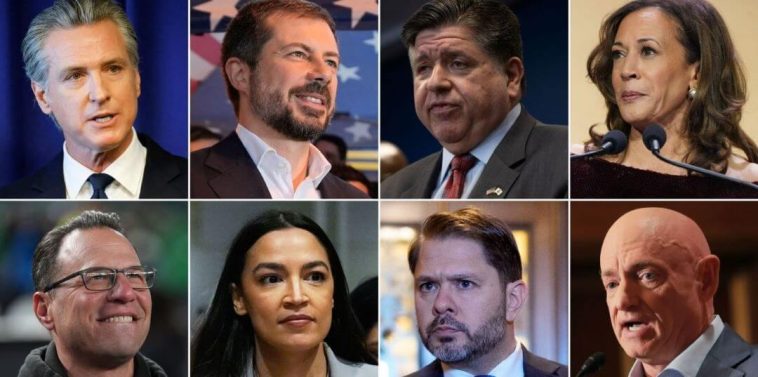
California Governor Gavin Newsom has appeared. Maryland Governor Wes Moore has appeared. Illinois Governor JB Pritzker has appeared. Kentucky Governor Andy Beshear has appeared. New York Governor Kathy Hochul, Los Angeles Mayor Karen Bass, and House Minority Leader Hakeem Jeffries have all made the trip. Even former President Barack Obama sat down with her. Kamala Harris appeared while she was still vice president.

“Jennifer Welch is almost certainly being positioned as a key influencer in the Democratic Party for 2028,” NewsBusters managing editor Curtis Houck told Fox News Digital.
“If you’re anyone on the left, and you want to be somebody – even if you’re not running for president – Welch is going to be someone you’ll not only have to appear with, but support, along with ABC’s Jimmy Kimmel.”
That is a stunning shift.

Since 2024, Democrats have tried to engineer their own version of Joe Rogan. The Democratic National Committee reportedly launched a multimillion-dollar effort to build a “liberal Joe Rogan.” The result failed to gain traction. Other high-profile Democrats launched podcasts that struggled to attract even modest audiences.
Meanwhile, outside groups like Chorus have funneled money through The Sixteen Thirty Fund to subsidize influencers with monthly payments reportedly reaching $8,000 to amplify Democratic messaging.
But audiences can smell something forced.
“Audiences flock to YouTube and TikTok and podcasts in order to be entertained,” Democratic strategist Max Burns wrote in The Hill.
“If Democrats want to build a media empire to rival MAGA’s digital dominance, they need to stop funding projects that only serve the interests of their creators.”
Welch, by contrast, thrives on unpredictability and outrage.
She called former Chicago Mayor Rahm Emanuel’s views on transgender issues “bulls—” to his face. She accused Senator Cory Booker of “capitulation” and compared Democratic leadership to Neville Chamberlain. She refers to Trump as a “teeny-weeny mushroom c— piece of s—” and called White House senior advisor Stephen Miller a “Nazi Jew.”
This is not accidental rhetoric. It is branding.
As traditional Democratic media figures lose influence — with Stephen Colbert reportedly exiting his CBS show in May and cable networks like CNN and MSNBC struggling with ratings — candidates are bypassing legacy gatekeepers and courting online personalities who command loyal, digital-first audiences.
Mainstream outlets are amplifying the shift. The Washington Post labeled “I’ve Had It” a “powerhouse” with an audience strategists “can never quite manufacture.” CNN described the program as “profane and on point.” The New Yorker highlighted Welch as one of the left’s most “provocative” voices.
Houck warned the trend may grow even stronger.
“With CBS’s Stephen Colbert set to lose his show in May, the influence of Kimmel and Welch will only grow,” he said.
Not everyone is convinced she represents staying power.
“There will be no ‘left’s Joe Rogan’ – and honestly, Joe Rogan isn’t a right-winger – he’s a man with common sense who has been labeled ‘right wing’ because he’s right of the 1% of insane leftists in this country, like Jennifer Welch,” Heritage Foundation media fellow Tim Young told Fox News Digital.
“Ultimately, she’s just an overhyped pundit who, when the Democrat party fails, will be blamed for said failure and pushed aside.”
Welch’s commentary frequently targets conservatives in harsh and deeply personal terms. She has called White Evangelical Christians “the worst people in the country, a cancer and a cult” and “the most racist, most dips— of human beings imaginable.” She referred to conservative activist Riley Gaines as an “insufferable t—” and a “dumb b—-.” She claimed the 2024 assassination attempt on Trump was “totally staged.” She has also accused Charlie Kirk of “justifying” his own death and labeled his widow an “opportunistic grifter.”
These remarks are not isolated moments. They are central to her appeal.
Yet Democratic leaders continue lining up for airtime.
The Washington Post recently noted that Welch has grown “more overtly critical of the Democratic Party,” particularly over corporate influence and Gaza policy. That suggests she may push the party even further left at a time when its voter registration numbers have declined by millions since 2020.
The Democratic Party once emphasized decorum, expertise, and institutional authority. Today, its rising digital gatekeeper is a podcast host known for profanity-laced tirades.
For a party facing falling trust, voter losses, and internal leadership turmoil, elevating a viral ranter as a 2028 power broker may energize some activists. But it also underscores a deeper strategic panic.
When viral moments replace vision, and rage substitutes for persuasion, it signals something larger than a media pivot.
It signals a party scrambling for relevance in an era it no longer controls.

