
>> Continued From the Previous Page <<
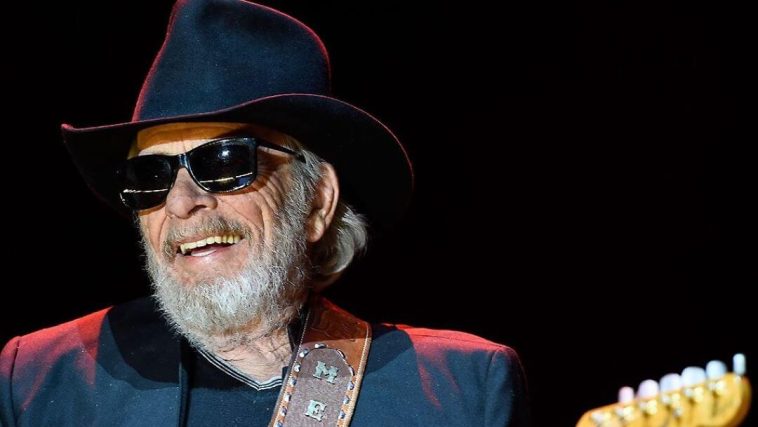
When Merle and Benson entered Blackburn’s office, the A&R chief Larry Hamby was already there.² Merle didn’t waste time.
“How come you only gave me $500,000 and not the $1 million I wanted?” Merle asked.²

Blackburn’s reply was blunt: *”Because your last album didn’t sell shit.”*²
Merle shot back immediately: *”Kern River didn’t sell shit because you didn’t promote it.”*²
Blackburn then crossed a line: *”Well, Merle, it didn’t sell because the songs were lousy.”*²
Benson remembers the tension. The exchange could have turned violent, but it didn’t—though Merle made his point clear.
“And who the f** are you to tell me that?”* Merle shouted.²
He didn’t stop there. Despite Blackburn’s physical disability, Haggard wasn’t holding back: *”I’ll kick your fing crippled a with one arm tied behind my f**ing back!”*²
The confrontation ended without punches, but Blackburn never forgot it. Benson later called it *”one of the great moments in country music.”*²
This story isn’t just entertaining—it’s a lesson about corporate Nashville. Blackburn personified the industry’s cold, profit-driven side. Two years later, in 1986, he dropped Johnny Cash from Columbia Records after 26 years.³
“This is the hardest decision I’ve ever had to make in my life,” Blackburn told the press.³
But make it anyway he did, proving that corporate executives often discard legends if they aren’t profitable.
From 1980 to 1987, Blackburn helped launch careers like Ricky Skaggs and Rosanne Cash⁴—but his willingness to toss aside icons like Cash shows what happens when money outweighs artistry. That same dynamic exists today. Modern Nashville churns out pop-country hits while ignoring artists who deliver authentic music.
Merle refused to compromise. He eventually bought out his contract with Epic Records, rejecting the executives who treated legends like yesterday’s news. He signed with Curb Records in 1990, prioritizing real music over commercial approval—even if the success wasn’t as massive as his earlier work.
Johnny Cash found a similar redemption with Rick Rubin at American Recordings, creating some of his most powerful late-career work—proof that suits are often wrong about true talent.
Merle Haggard died on April 6, 2016, his 79th birthday, leaving behind over 70 studio albums and nearly 40 #1 hits.⁵ Rick Blackburn passed in 2012.⁴
But the story of Haggard confronting a record executive lives on. It’s a vivid reminder of what real country music was built on—artists with backbone who refused to bend for corporate cowards. That’s the kind of man your granddad admired. That’s the kind of artist Nashville needs again.


You know! I am sick and tired of all this fraud stuff and sneaking reporting that’s going on in this country! I really hope they take care of Governor Walz sneaking moves as a leader in government! I can just imagine what he would be doing if he was VP of the United States? Anyway, I hope it all shows up in the wash! We need to get to the bottom of all this crime that’s going on!