
>> Continued From the Previous Page <<
According to Brown’s account, Steve Wynn, a renowned casino magnate, had advised Trump that if he wanted to succeed in California, he should speak to Brown. Wynn allegedly told Trump, “If I was doing anything in California, I’d talk to Willie Brown because anybody else will take your money and do nothing.”
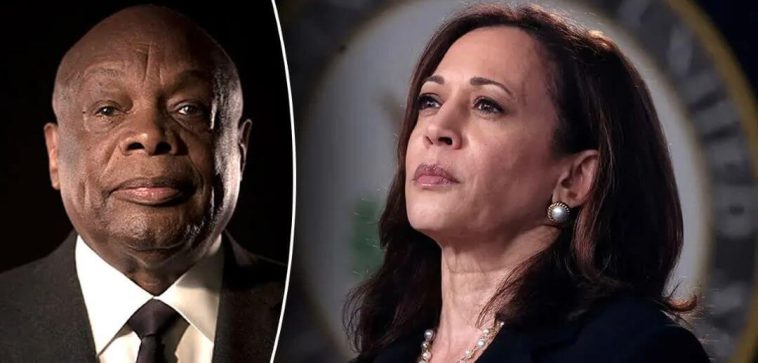
Taking this advice, Trump arranged for Brown and his entourage to fly from a speaking engagement in Cambridge, Massachusetts, to Teterboro, New Jersey, on Trump’s private jet. Among those accompanying Brown was Kamala Harris. In this context, Harris’ role appears to have been more of a companion than a participant in any serious business discussions.

Brown’s narrative paints a picture of Harris as a young woman riding along on Trump’s private plane, part of the entourage needed to smooth Trump’s dealings with California’s political landscape. Brown even mentioned having a photograph from that trip, smiling as he spoke with Martin about the memory.
It’s worth noting that Harris was not part of the actual meeting between Trump and Brown in New Jersey. Martin’s account clarifies that Harris’ presence was more akin to being a part of the entourage rather than a decision-maker. As Martin writes, “Politics is no different than a rock concert, where the place for girlfriends and groupies is backstage or in the stands.”
Politico’s report offers a neutral recounting of the events, staying true to its reputation for detailed political analysis, even though some critics argue that the publication often leans left in its coverage.
This story serves as a reminder of Harris’ early days in politics, where her association with Willie Brown provided her with significant advantages. Their relationship ended in 1995, but Brown remained an influential figure in her career, supporting her campaign for San Francisco district attorney in 2003, during his tenure as the city’s mayor.
Brutal “Pocket Weapon” Stops Hearts (discounted for next 78)
Furthermore, the narrative highlights Harris’ political pragmatism and the complexities of her relationship with Trump. Despite her current political stance and criticism of Trump, Harris did not hesitate to accept campaign contributions from him in 2011 and 2013, as reported by The Daily Beast. For Trump, donating to politicians across the spectrum was simply a cost of doing business.
For Harris, however, this historical association with Trump raises questions about the nature of political power and influence. Her willingness to accept Trump’s contributions, despite later vilifying him, might seem contradictory to some. Yet, for a politician who navigated the complexities of California’s political landscape, such decisions were likely strategic.
In reflecting on Harris’ rise, the story underscores the challenges she faced and the alliances she formed along the way. As her political career evolved, her relationship with Brown became a stepping stone, albeit a controversial one, in her ascent to national prominence.
The mention of a photograph depicting a young Harris aboard Trump’s private plane offers a striking visual that could resurface in political discourse. Such imagery, if circulated, might pose challenges for Harris, particularly as she navigates her role as vice president and potentially as a future presidential candidate.
Ultimately, the anecdote serves as a reminder of the intricate and often scrutinized paths that political figures navigate. Harris’ early associations and the choices she made along her journey highlight the complexities of political life and the enduring impact of past decisions on present realities. As she continues to forge her path in American politics, stories like these offer a glimpse into the multifaceted nature of her ascent to power.

