
>> Continued From the Previous Page <<
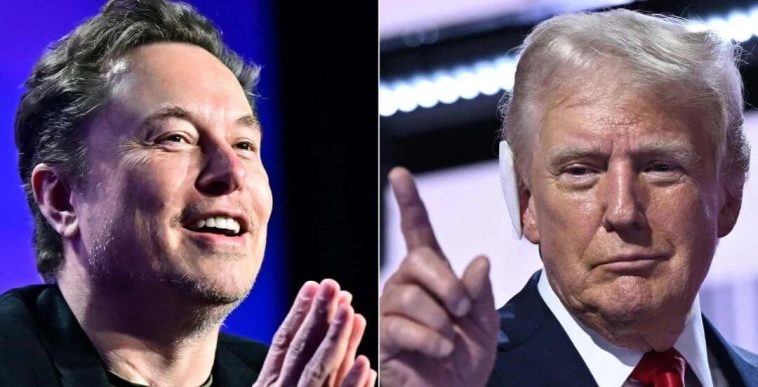
The conversation between Trump and Musk, which lasted over two hours, stands as a monumental moment in recent history, symbolizing a triumph of freedom over the oppressive tendencies of authoritarian elites. The timing of the event was particularly significant, as it followed a chilling letter from European Union bureaucrat Thierry Breton to Musk earlier in the day. Breton’s letter urged Musk to take “all proportionate and effective mitigation measures” against what he described as “the amplification of harmful content.” Essentially, Breton was calling for the censorship of Trump.
Such a demand, coming from a high-ranking European official, raises serious concerns about the state of free speech in the West. Veterans of World War II, who fought valiantly for freedom, would likely be appalled by such an authoritarian stance from today’s European leaders.

Musk’s response to Breton’s letter was characteristically defiant, embodying the spirit of free expression that many Americans hold dear. However, as the Trump-Musk conversation was about to begin, X faced a severe cyberattack, likely aimed at disrupting the event. “There appears to be a massive DDOS attack on 𝕏. Working on shutting it down. Worst case, we will proceed with a smaller number of live listeners and post the conversation later,” Musk informed users.
Despite this attack, X managed to overcome the cyber onslaught, and the conversation continued as planned, breaking records and capturing the attention of millions. The significance of the event was so profound that it overshadowed other major occurrences of the day, including Trump’s return to posting on X for the first time in nearly a year—a post that garnered over 200 million impressions.
The historic nature of the Trump-Musk event was not lost on observers. Collin Rugg of Trending Politics aptly described it as a “Legendary day.” The event’s success was a clear signal to the establishment media, which has long been seen as a mouthpiece for the Democratic Party and globalist interests, that their grip on public discourse is weakening. These media entities, often accused of spreading propaganda and stifling dissent, are now facing a growing backlash from a public that is increasingly skeptical of their narratives.

In contrast to the totalitarian regimes of the 20th century, which openly declared their contempt for freedom, the tyrants of today cloak their authoritarianism in the language of democracy. Yet, the people are beginning to see through this facade. Many of those who tuned into the Trump-Musk conversation felt a deep connection to the values of their freedom-loving ancestors, drawing inspiration from a time when open dialogue and free speech were truly cherished.
Carry 46 rounds concealed? (comfortably)
One particularly poignant moment from the event was the circulation of an old black-and-white photo on X, depicting a family gathered around a radio. The caption read, “[Q]uiet now children, president Trump is coming on,” evoking a sense of nostalgia for simpler times. Jack Posobiec of Human Events captured the sentiment perfectly with his response: “We actually did this tonight.”
In conclusion, the Trump-Musk conversation on X was not just a historic event in its own right; it was a powerful statement against the forces of censorship and authoritarianism that threaten to silence dissent. The staggering viewership numbers serve as undeniable proof that the public is hungry for unfiltered, authentic dialogue—no matter how much the establishment media tries to suppress it.

