
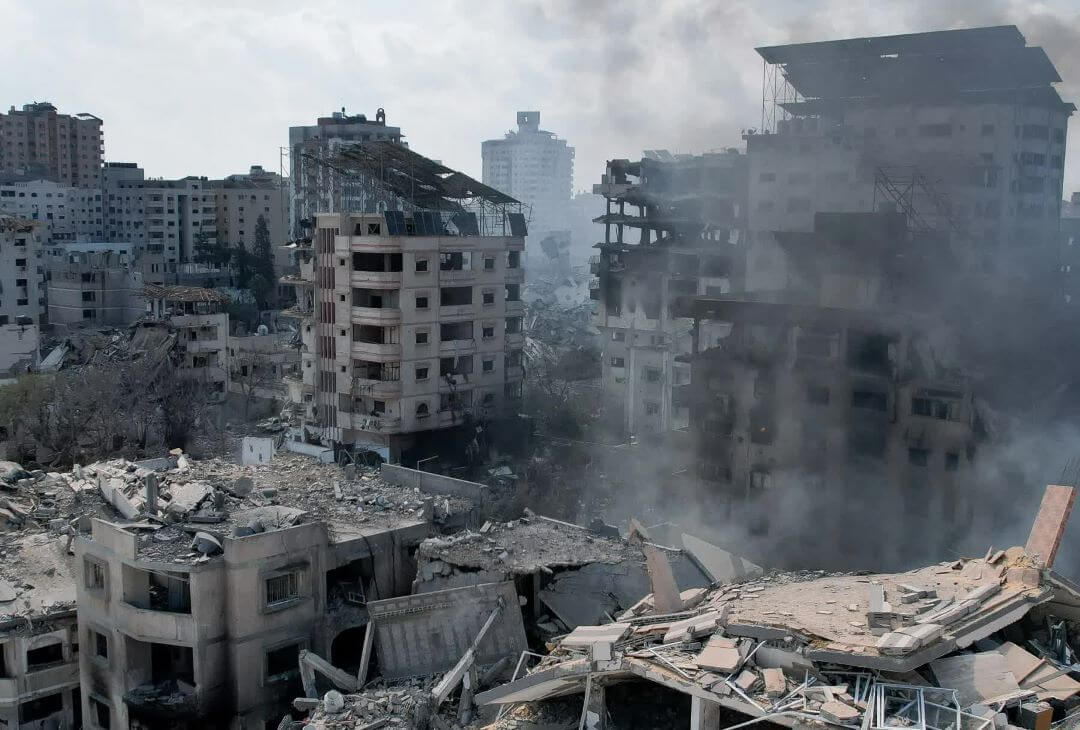
In the shadow of an escalating conflict, a recent barrage launched from the Gaza Strip signifies a critical juncture in the Israeli-Palestinian dispute. This event marked a significant escalation, described by Israeli authorities as an unprecedented attack by Palestinian militants, infiltrating Israel from the besieged Gaza Strip through various means. The offensive’s magnitude has pushed the longstanding conflict into a new phase, necessitating a reevaluation of response strategies.
Critics argue that calls for moderation and a proportional Israeli response are shortsighted, potentially setting the stage for a perpetual cycle of conflict. Voices advocating for restraint are met with skepticism, as many see these measures as merely temporary solutions that fail to address the root cause of the hostility. The continuation of Hamas’ existence, according to some, spells an unending conflict, where temporary ceasefires merely precede further violence. The concern is that any ceasefire would inadvertently bolster Hamas through international developmental aid, without deterring future aggressions against Israel.
Don’t miss this! Carry faith with you everywhere with the Exclusive National Prayer Coin!

At the heart of the contention is the foundational ideology of Hamas, as outlined in its Covenant, which explicitly calls for the destruction of the State of Israel and the eradication of the Jewish population. Established as the Islamic Resistance Movement, Hamas’ charter not only aims at eliminating Israel from Gaza but also seeks to extend its ideology across the entire region, including areas outside its control. The Covenant’s content, particularly Article 7, is seen as a clear incitement to violence against Jews, rendering any form of negotiation or peaceful coexistence virtually impossible under its current doctrine.
>> Click Here To Continue Reading <<

