
>> Continued From the Previous Page <<
Those tariffs were enacted under the International Emergency Economic Powers Act and were justified as a response to unfair trade practices and global threats to American supply chains.
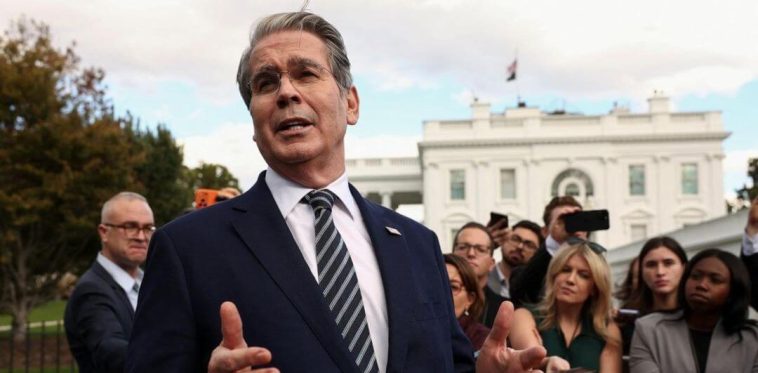
Bessent framed the issue in unmistakable terms.

“Economic security is national security,” Bessent told Maria Bartiromo. “So this ruling is really a national security ruling and if they rule against the administration, they will be ruling against national security.”
That statement alone reframes the entire debate. This is not a technical trade dispute. It is about whether America can defend itself economically in an increasingly hostile global marketplace.
Billions Collected While Jobs Were Protected
Two companies, an educational toy manufacturer and a wine importer, have pushed the case to the highest court in the land. Their argument is simple. They do not want to pay tariffs.
What they ignore is the undeniable result of Trump’s policy.
The tariffs have already generated $215.2 billion in revenue during fiscal year 2025, with another $71 billion collected since October. That money flowed directly into American coffers while discouraging foreign dumping and protecting domestic industries.
Manufacturers adjusted. Suppliers cut prices. Jobs were preserved.
Yet now, a small group of businesses wants the Court to undo years of economic progress.
Administration Prepares for Judicial Interference
Bessent confirmed the Treasury Department is preparing for a worst case scenario if the Supreme Court sides with the challengers.
He revealed that officials have “plenty of revenue alternatives” available if the Court blocks the current tariff framework.
Those alternatives include invoking Section 232 of the Trade Expansion Act to impose tariffs on national security grounds, using Section 301 of the Trade Act to counter unfair trade practices, or applying Section 122 of the Trade Act, though that option would only last 150 days without congressional approval.
In other words, the administration is ready to fight back.
Judges Override Voters While Workers Pay the Price
What makes the situation especially infuriating to Trump supporters is the blatant disconnect between the courts and the voters.
President Trump campaigned explicitly on using tariffs to reverse decades of disastrous trade deals. He won the presidency with that message. More than 77 million Americans supported his agenda.
Now unelected judges may attempt to override that mandate on behalf of importers seeking refunds.
If refunds are ordered, Bessent raised a critical question. Who benefits?
The answer is not American workers. The answer is importers who already adjusted their pricing models while workers face renewed outsourcing and layoffs.
Fentanyl Crisis Proves National Emergency Exists
Bessent also pointed to one of the most compelling examples of why these tariffs matter.
“We had fentanyl tariffs. And what is more of an emergency than hundreds of thousands of Americans dying every year?” Bessent said. “No one had been able to get the Chinese to the table with these precursor drugs.”
The tariffs forced China to finally address fentanyl precursor chemicals entering the United States. That outcome alone demonstrates the real world power of economic leverage.
It saved lives.
Bigger Than Trade Policy
Beyond tariffs, Bessent revealed that President Trump is also moving closer to selecting a new Federal Reserve chairman as Jerome Powell’s term ends in May 2026.
Kevin Hassett and Kevin Warsh are leading candidates. Both favor lower interest rates and pro growth policies.
But none of that matters if the Supreme Court strips the presidency of its authority to act decisively.
This moment represents a larger struggle. It is about whether elected leaders can defend national interests or whether power will be handed back to a Congress that created the problem in the first place.
Trump promised to restore American manufacturing.
Voters approved that mission.
Now nine justices will decide whether that promise can be kept.

