
Last week, President Trump delivered a highly anticipated address in which he revisited several allegations related to the 2020 election. During his remarks, Trump called for federal authorities to revisit the Michigan voter registration investigation and determine whether criminal conduct occurred.
“Tonight, I’m asking the FBI Director to ensure that the matter is fully investigated and to work with the Department of Justice to prosecute those responsible for any crimes,” President Trump told viewers.
That statement immediately placed the Michigan investigation back in the national spotlight and renewed interest in evidence that has circulated among election integrity advocates for years.

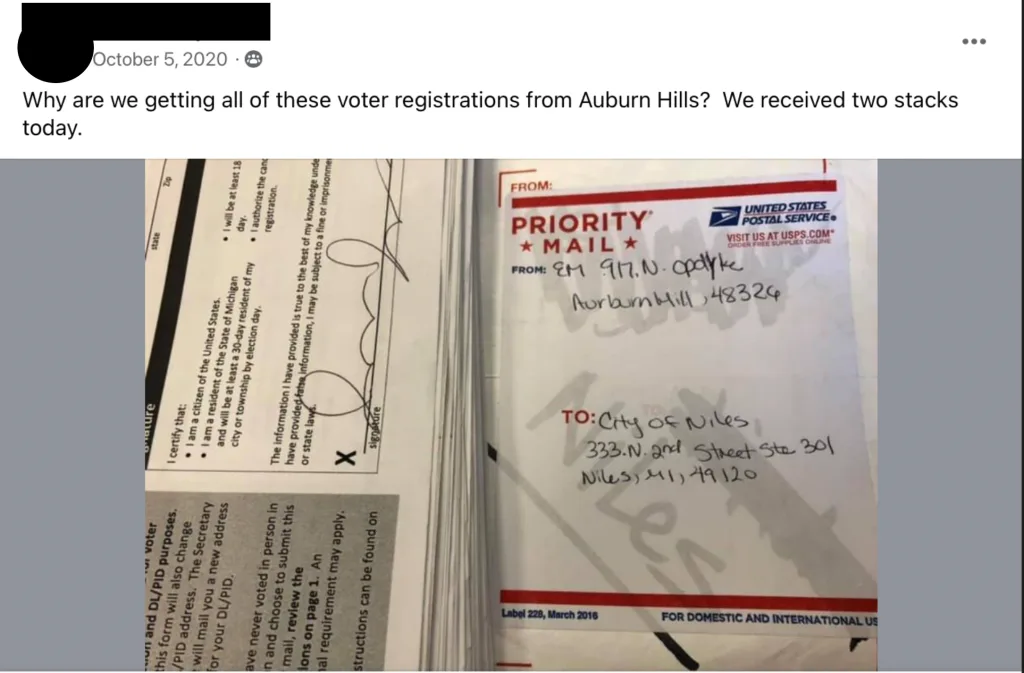
One of the most significant aspects of the controversy involves reports from local election clerks across Michigan. According to accounts shared by multiple clerks in 2020, election offices received large batches of voter registration applications originating from Auburn Hills, Michigan. Several packages reportedly contained return labels displaying the initials “EM,” which critics believe referred to Empower Michigan.
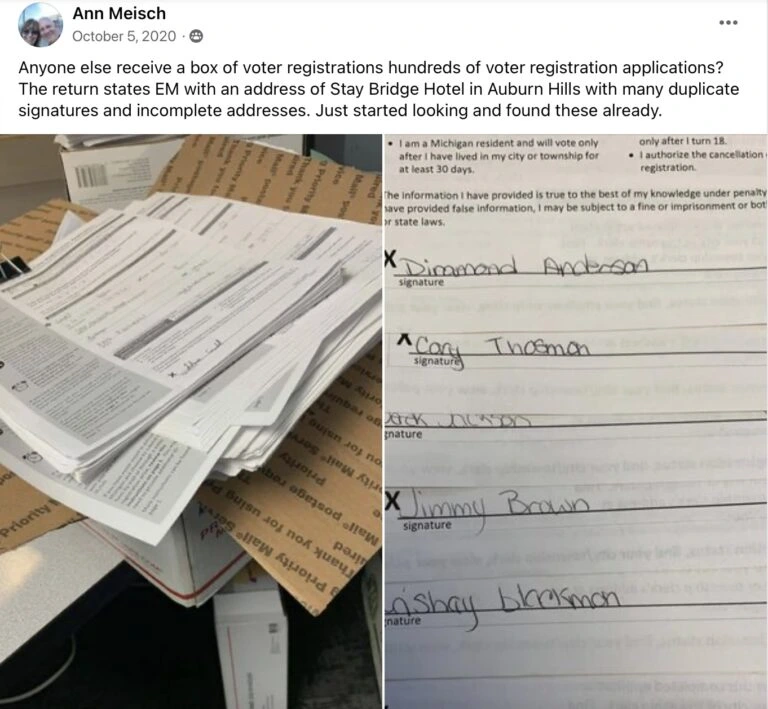
Images of online discussions among clerks revealed growing concern over the registrations arriving in their offices. Some clerks reportedly questioned why so many applications were being sent from the same location, while others described forms that appeared suspicious or incomplete.
One clerk reportedly asked fellow election officials, “Why are we getting all these voter registrations from Auburn Hills?” while noting that multiple stacks had arrived in a single day.
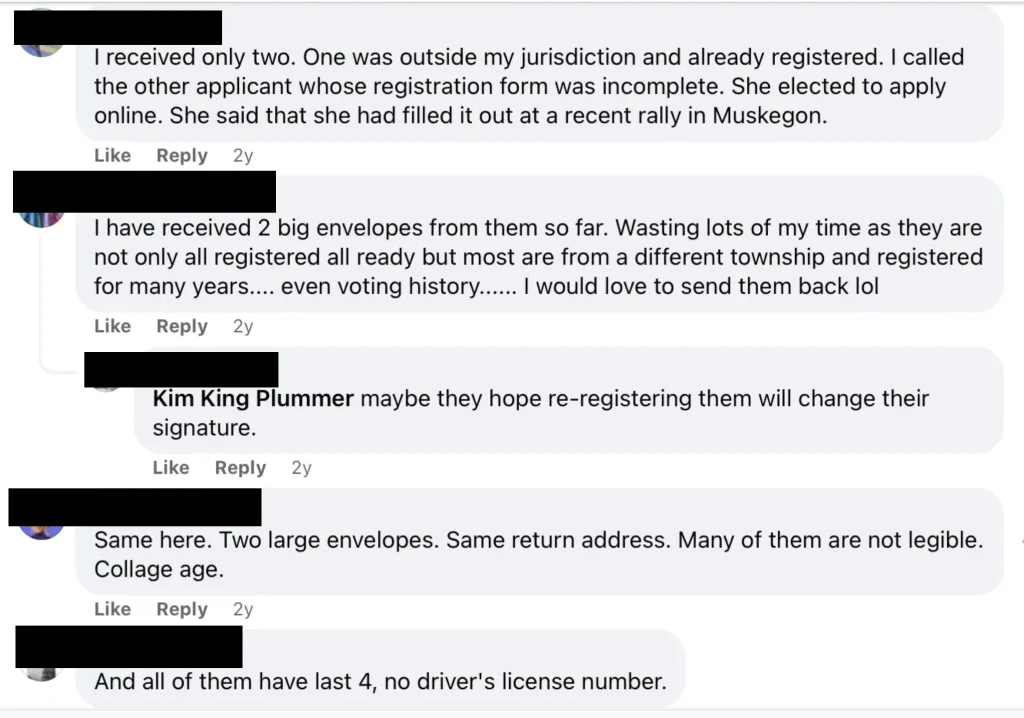
Another clerk responded that she had received similar submissions, describing some of them as questionable. Additional comments suggested that some applicants were already registered voters, while other forms allegedly contained incorrect information or appeared difficult to verify.
The concerns extended beyond a single community. Election officials from various parts of Michigan reportedly discussed receiving comparable packages and encountering similar issues. Some clerks claimed that registrations were incomplete, illegible, or duplicated. Others reported discovering that individuals listed on the forms were already registered elsewhere.
Perhaps most striking was the concern expressed by clerks regarding the apparent similarities among certain applications. One election official allegedly observed that multiple forms appeared to contain handwriting that looked nearly identical.
“Looks like the same person wrote the address label on mine,” one clerk reportedly commented before asking a question many observers continue to raise today: “Who do we report this to?”
Critics argue that this question highlights a larger issue. While clerks discussed their concerns internally, many conservatives believe stronger action should have been taken at the time, including immediate referrals to law enforcement agencies for further investigation.
The controversy has also fueled criticism of Michigan election officials, including Secretary of State Jocelyn Benson and Attorney General Dana Nessel. Opponents argue that voters deserved greater transparency regarding the scope of the investigation and the findings that emerged from it.
Adding to the controversy, investigators interviewed individuals connected to GBI Strategies during the course of the probe. According to records reviewed by election integrity advocates, investigators sought answers about the source of funding, operational practices, and the handling of voter registration forms submitted throughout the state.
Despite years of debate surrounding the case, no sweeping criminal prosecutions emerged from the investigation. That outcome continues to frustrate conservatives who believe serious questions remain unanswered.
The issue resurfaced again in 2025 when a group of Michigan lawmakers urged federal authorities to investigate whether tax-exempt organizations may have improperly financed partisan voter registration activities. Their concerns centered on relationships between nonprofit organizations and voter registration efforts linked to GBI Strategies.
Lawmakers argued that if nonprofit entities classified under federal tax law engaged in partisan election activity, it could represent a violation of IRS regulations governing tax-exempt organizations.
Supporters of a new federal investigation maintain that the public deserves definitive answers regarding what occurred in Michigan during the 2020 election cycle. They argue that confidence in elections depends on transparency, accountability, and a willingness to investigate credible allegations regardless of political consequences.
For many Americans following the debate, Muskegon remains more than just a local story. To critics of Michigan’s election system, it represents the starting point of a much larger controversy—one they believe warrants renewed examination by federal authorities.
Whether the FBI and Department of Justice ultimately pursue additional action remains to be seen. But with President Trump now publicly calling for further investigation, a case many assumed was closed has once again become a major national political issue.

