
>> Continued From the Previous Page <<
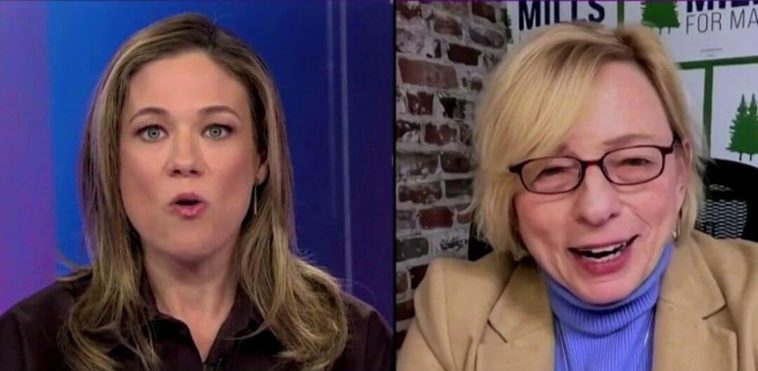
The contradiction came to a head when MSNBC host Elise Jordan confronted Mills directly. Reading both her public praise and private concerns back to her on air, Jordan asked the question many voters are now asking: “Why should voters trust your judgment now when you had one opinion privately that was very impactful on the fate of our country, and then publicly said the opposite?”
Mills didn’t deny it. Instead, she laughed.

Then came her explanation: “I wasn’t going to kick the guy when he was down, honestly.”
That remark may have been intended as a defense of personal loyalty, but critics argue it highlights something far more troubling—a willingness to shield political allies at the expense of transparency with voters. While Mills says she chose not to “kick” Biden, many Americans are now questioning whether they were the ones left in the dark.
As Mills campaigns for higher office, the controversy comes at a time when broader scrutiny is falling on Democratic leadership during the 2024 election cycle. House Speaker Mike Johnson released a lengthy video in July 2025 outlining what he described as a coordinated effort by top Democrats to publicly defend Biden while privately harboring serious concerns.
The pattern appears to extend beyond Mills. Josh Shapiro told CNN in 2024 that he had “not at all” any concerns about Biden’s cognitive condition. Yet months later, he admitted to Politico that he had been “very frank with the president during his campaign about what I saw were some of the shortcomings.”
Similarly, Jaime Harrison publicly declared Biden to be “mentally sharp, fully engaged, and deeply committed.” Later, Harrison suggested the party should have stood by Biden regardless, emphasizing party loyalty over public concern.
Meanwhile, findings from the House Oversight Committee added fuel to the fire. Their report detailed what it described as extraordinary steps taken by Biden’s inner circle to manage public perception. It also pointed to the June 2024 debate as a calculated attempt to counter earlier concerns raised by Special Counsel Robert Hur, who had described Biden as an “elderly man with a poor memory.”
Committee Chairman James Comer didn’t mince words, calling the situation one of the most significant political scandals in modern history.
Now, Mills faces her own set of questions—not just about Biden, but about her own readiness for office. If elected, she would enter the Senate at age 79, making her the oldest freshman senator in U.S. history—older than Biden was when he first took the oath of office.
When asked about her health and transparency, Mills declined to release her medical records unless both her primary challenger and incumbent Senator Susan Collins did the same. Critics note that the strategy mirrors the approach taken by Biden’s team—deflecting scrutiny rather than addressing it head-on.
Mills insisted during her MSNBC appearance that she is “not hiding” and claimed “no one’s questioning” her capability.
But clearly, someone is.
The larger issue now facing voters isn’t just about one candidate or one election cycle. It’s about credibility. Maine voters watched as Mills publicly supported a president she privately doubted. They are now being asked to trust her judgment once again—this time for a six-year term in the United States Senate.
For many, the question isn’t going away: if leaders knew the truth behind closed doors, why didn’t they share it when it mattered most?
As Mills continues her Senate bid, that question may ultimately define her campaign—and shape how voters view not just her, but the broader Democratic establishment.
Because for critics, this doesn’t look like a new chapter.
It looks like the same story—just with a different name on the cover.

