
>> Continued From the Previous Page <<
The assassination follows a string of violent events, including Hamas’s October 7 attack on Israel, which resulted in the deaths of 1,200 Israelis and the taking of approximately 250 hostages. Israel’s subsequent military actions in Gaza have claimed over 39,360 Palestinian lives and injured more than 90,900, according to the Gaza Health Ministry. The Biden administration has been advocating for a ceasefire and a hostage release deal, but has yet to respond to Haniyeh’s death.
In the days preceding the assassination, Israel also targeted Beirut, killing Hezbollah military commander Fouad Shukur. Israel blamed Shukur for a recent rocket attack that killed 12 in the Golan Heights, though Hezbollah denied involvement. This strike on Beirut also resulted in civilian casualties, further escalating tensions.

The targeted killing of adversaries on foreign soil is not unprecedented. The U.S. has executed similar operations, notably the elimination of al-Qaeda leader Osama Bin Laden in Pakistan in 2011 and Iranian General Qassem Soleimani in Iraq in 2020. These actions, while aimed at neutralizing threats, often have significant geopolitical repercussions.
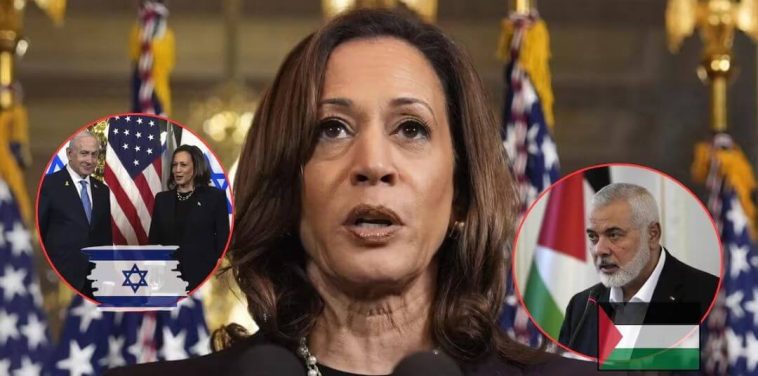
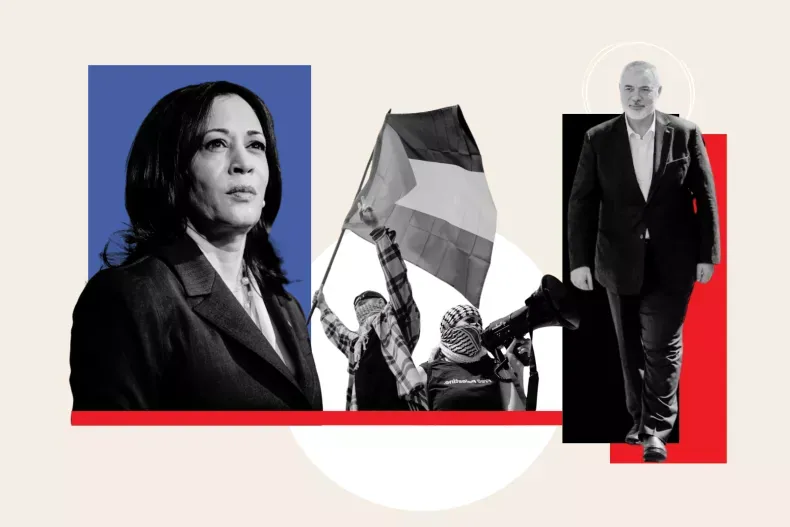
Harris’s diplomatic balancing act is being tested from both sides of the political spectrum. Republicans criticize her for not providing unequivocal support to Israel, while advocates for the Palestinian cause, including factions within her own party, accuse her of complicity in Israel’s offensive. This dual pressure is particularly pronounced in key battleground states, where voter sentiment could be pivotal in the upcoming election.
The Democratic National Convention, scheduled for August 19-22 in Chicago, is expected to be a flashpoint. Harris will likely face protests from groups like the ANSWER Coalition, which has vowed to demonstrate against what they describe as genocide in Gaza. “We plan on mobilizing to join protests during the DNC to demand an end to the genocide in Gaza,” said ANSWER Coalition’s media coordinator, Walter Smolarek.
This controversy comes at a critical juncture for Harris’s campaign. The vice president’s need to navigate this volatile situation without fracturing her party further underscores the complexities she faces. Andrew Payne, a lecturer in foreign policy and security at City, University of London, commented on the situation, noting that Harris’s task is to balance Biden’s longstanding support for Israel with the more critical stance of younger progressives within the Democratic Party.
Brutal “Pocket Weapon” Stops Hearts (discounted for next 78)
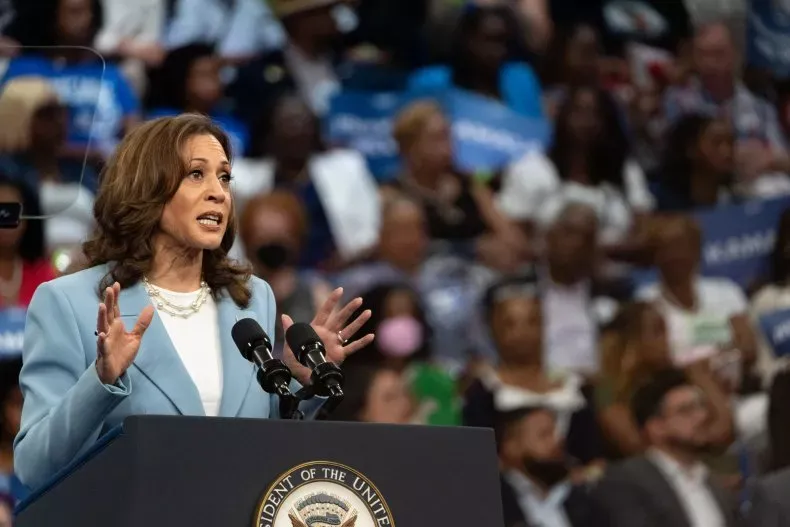
Protests and internal divisions threaten to overshadow Harris’s confirmation as the Democratic nominee. The planned demonstrations, as highlighted by Thomas Gift, an associate professor of political science at University College London, present significant political risks. “Even if they don’t escalate to a fracas on the level of 1968, the chance of viral moments through the spread of social media makes any disturbance take on heightened salience,” Gift noted.
Harris has condemned violent protests against Netanyahu’s visit, denouncing “Pro-Hamas graffiti and rhetoric” and the burning of American flags as “abhorrent.” This condemnation aims to draw a clear line between peaceful protest and actions she deems unacceptable.
The political landscape remains fraught as Harris continues to address her critics and navigate the complex dynamics of international conflict. Her campaign’s focus has shifted from attacking Republican opponents to addressing the escalating situation in Gaza, a challenge that could significantly impact her bid for the presidency.

