
>> Continued From the Previous Page <<
But internal documents later revealed a very different story.
Records made public in 2015 showed that within hours of the attack, senior officials understood it to be a coordinated terrorist operation. On the very night of the assault, Hillary Clinton emailed her daughter Chelsea describing it as the work of “an Al Qaeda-like group.”

Despite that private acknowledgment, the public messaging took a sharply different turn.
On September 16, then-U.N. Ambassador Susan Rice appeared on five Sunday talk shows and blamed a YouTube video for the violence. Days later, on September 25, President Obama addressed the United Nations and echoed the claim that the attack grew out of anger over the film.
To critics, that disconnect between private knowledge and public statements was more than a communications error—it was a deliberate effort to shape a political narrative in the heat of a presidential election season.
Meanwhile, grieving families were left searching for clarity.
President Obama later insisted his administration did “everything we could.” Yet questions lingered over why additional military assets, including fighter jets and rapid response teams stationed in Europe, were not deployed in time to assist those under siege.
While Washington debated talking points, four Americans were gone.
“We’re Coming for You Now”
Fast forward to today, and the tone from federal officials sounds dramatically different.
Jeanine Pirro, now serving as U.S. Attorney for Washington, D.C., drew a sharp contrast during an appearance on Fox & Friends Weekend.
“The American cavalry never came, to our disappointment, in 2012,” she said.
“We’re coming for you now.”
Those words signaled a shift in posture—one focused on pursuit and prosecution, no matter how much time has passed.
Hillary Clinton once asked Congress during heated testimony: “What difference, at this point, does it make?”
For many Americans, the answer is clear: it makes all the difference.
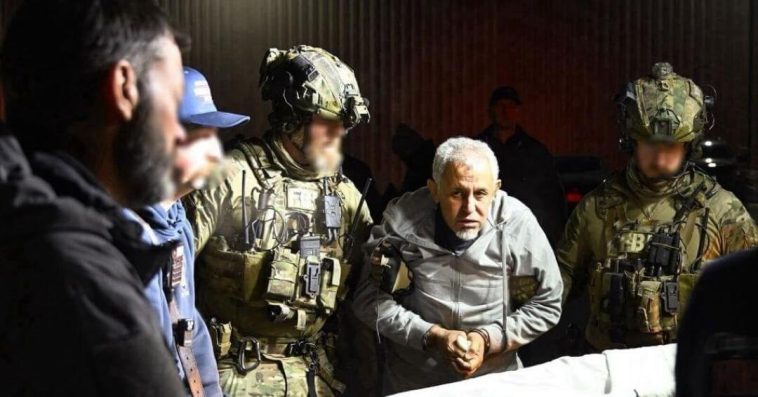
Under President Trump’s leadership, the Justice Department moved to unseal long-dormant charges against Al-Bakoush. The criminal complaint, first filed under seal in 2015, remained hidden for years. According to officials, renewed efforts led by Attorney General Pam Bondi and FBI Director Kash Patel helped secure his capture with the assistance of international partners.
“If you commit a crime against the American people anywhere in this world, President Trump’s Justice Department will find you,” Bondi said.
The message was unmistakable—time does not erase accountability.
Inside the Federal Charges
The newly unsealed eight-count indictment paints a chilling picture.
Prosecutors allege Al-Bakoush was among approximately 20 armed militants who stormed the U.S. compound on the night of September 11, 2012. Court filings claim he arrived armed with assault rifles and explosive devices and entered the mission compound at approximately 10:01 p.m.
Authorities say he conducted surveillance, attempted to break into official vehicles, and helped ignite fires that engulfed the compound. Those flames ultimately claimed the lives of Ambassador Stevens and Sean Smith.
He is also charged in connection with the attempted murder of State Department Special Agent Scott Wickland.
During his initial court appearance Friday, Al-Bakoush—wearing a gray sweatsuit and seated in a wheelchair—addressed the court through an interpreter.
“I have complete trust in the court and the jury. They will not be unjust.”
If convicted, he faces life behind bars in federal prison.
A Long Road to Justice
Al-Bakoush is the third suspect connected to Benghazi to face American justice.
Ahmed Abu Khattala was apprehended in 2014 and ultimately sentenced to 28 years in prison after an appeals court found his original sentence too light. Mustafa al-Imam was captured in 2017 and received a 19-year sentence.
But this latest arrest marks the first Benghazi-related capture in nearly a decade.
FBI Director Patel credited renewed counterterrorism focus and expanded international coordination for the breakthrough. Officials insist the investigation remains active.
For the families of Stevens, Smith, Woods, and Doherty, the wheels of justice have turned slowly—but they are finally turning again.
Fourteen years after that tragic night, the message from Washington is no longer about videos or shifting explanations. It is about consequences.
The administration that once faced accusations of burying the truth is long gone.
Now, federal prosecutors say they are determined to ensure that those responsible for the deaths of four Americans answer for their actions in an American courtroom.
For the families who waited more than a decade, that day has finally begun to arrive.

