
Johnson comfortably secured reelection in Louisiana’s 4th Congressional District, defeating four challengers to retain the northwest Louisiana seat he has held since 2017. The Associated Press called the race for Johnson, who faced competition from two Democratic candidates and two Republicans.
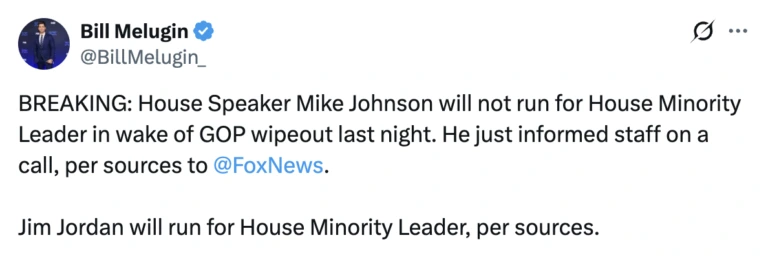
His victory ensures that he will remain in Congress for another two years, even as he prepares to step away from the leadership position that has defined much of his political career.
The contrast is striking: Johnson managed to maintain the confidence of voters back home, but the broader Republican electoral defeat has fundamentally changed the political landscape in Washington.

A Battle for the Next Republican Leader Is Already Taking Shape
With Johnson removing himself from consideration, attention is quickly shifting toward potential replacements.
Two prominent Republicans are emerging as possible contenders: House Majority Leader Steve Scalise of Louisiana and House Judiciary Committee Chairman Jim Jordan of Ohio.
Both lawmakers have established themselves as influential figures within the Republican conference, although the coming leadership contest could reveal significant divisions over the party’s direction following its latest electoral setback.
According to ABC News, Jordan has indicated to allies that he is expected to pursue the minority leader position.
Republicans are scheduled to conduct their leadership elections on November 10. Candidates must formally declare their intentions by noon on November 6, leaving lawmakers little time to organize their campaigns and secure support.
The upcoming contest will be particularly important as Republicans attempt to regroup, reassess their political strategy, and prepare to challenge a Democratic-controlled House.
Johnson Changes Course After Previously Signaling He Would Stay
Johnson’s announcement represents a significant departure from his earlier public position.
Before Election Day, the speaker had indicated that he intended to remain at the helm of the Republican conference even if voters stripped the party of its House majority.
That position suggested he was prepared to lead Republicans through another period in the political wilderness.
However, the election results appear to have changed those calculations.
During the final weeks of the campaign, Johnson traveled across the country, appearing alongside Republican candidates and making the case for maintaining GOP control of Congress. His efforts were part of a broader push to protect the party’s narrow majority.
Ultimately, those campaign appearances were not enough to prevent Democrats from reclaiming the House.
Republicans must now confront an uncomfortable reality: their legislative agenda will face significant resistance, their ability to shape congressional priorities will be diminished, and Democrats will once again control the chamber’s powerful committees.
Johnson’s decision to step aside removes one major question from the equation, but it creates another: Who can unite Republicans and provide the leadership necessary to challenge the incoming Democratic majority?
A Political Career That Took an Unexpected Path to the Speaker’s Office
Johnson’s departure will mark the conclusion of a particularly turbulent period in House Republican leadership.
His rise to the speakership was anything but conventional.
In October 2023, House Republicans were thrown into chaos after former Speaker Kevin McCarthy was removed from the position. The unprecedented development triggered weeks of internal negotiations, competing leadership bids, and frustration within the Republican conference.
After several candidates failed to secure sufficient support, Johnson emerged as the compromise choice.
His unexpected elevation to speaker placed him in one of the most powerful positions in American government, making him responsible for managing a deeply divided Republican conference while navigating contentious legislative battles in Washington.
Now, approximately three years after that dramatic ascent, Johnson finds himself preparing to relinquish the leadership position.
His decision also presents Republicans with another defining moment. The party must determine whether to maintain its current leadership structure or embrace a different approach as it prepares for life under a Democratic-controlled House.
For Johnson, Tuesday’s victory means he will continue representing his Louisiana constituents. But his time leading House Republicans appears to be approaching its end.
The November 10 leadership election will offer the first major indication of who Republicans believe can guide the conference through the next chapter of its political fight in Washington.

