
>> Continued From the Previous Page <<
According to reports, the speaker’s remarks referenced recent military losses tied to Operation Epic Fury, where multiple U.S. service members lost their lives in hostile engagements and an aircraft crash. Instead of honoring those sacrifices, the rhetoric at the rally appeared to mock them, deepening the sense of outrage among viewers.
“Until we have done everything in our power to bring the United States to its knees, let us not lose sight of the enemy,” the speaker said. “For every U.S. military base that crumbles and for every U.S. soldier who returns home in a casket, we cheer. Hamas, Hezbollah, Ansar Allah, all of the resistance forces we celebrate, these popular forces on the ground spend every waking moment in direct confrontation with Zionism, and they rely on a strong Iranian state to maintain their fighting capacity.”

The shocking exchange didn’t end there. When confronted directly by the person filming, the speaker responded with open hostility. Asked a simple question about their stance toward America, the individual lashed out with a chilling remark: “May a Hamas rocket blow up your family’s home.”
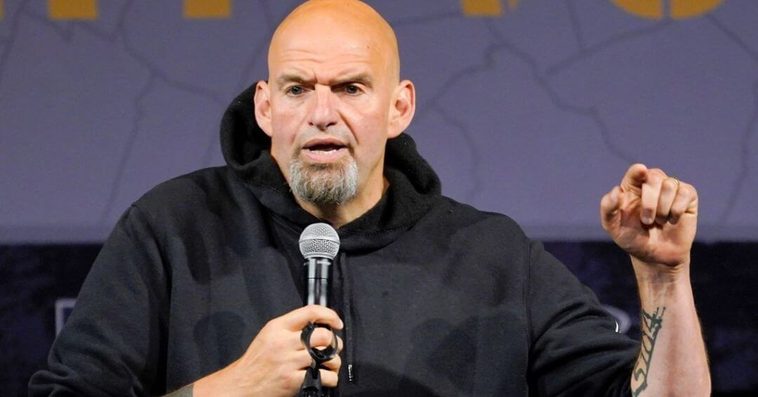
The footage quickly made its way across social media, drawing strong reactions—including from Senator Fetterman himself. The Pennsylvania Democrat, known for occasionally breaking with his party, did not hold back in condemning what he saw.
“Here in Philadelphia. Truly appalling… chanting for the death of our servicemembers,” Fetterman said. “Where’s the Dem outrage and condemnation?”
His comments highlight a growing divide, as critics argue that many on the political left have been slow—or unwilling—to call out extreme rhetoric within activist circles. For many Americans, the idea that such statements could be made publicly, let alone cheered, raises serious concerns about the direction of political discourse.
The controversy comes amid heightened tensions overseas. Earlier this year, President Trump announced coordinated strikes involving U.S. and Israeli forces targeting Iranian positions after diplomatic efforts over nuclear and missile programs collapsed. The situation escalated further following claims from U.S. officials that Iran had continued advancing its nuclear capabilities.
Adding another layer to the geopolitical backdrop, Hamas itself issued a statement addressing Iran’s recent military actions in the region. While expressing support for Iran’s right to respond militarily, the group also urged restraint when it comes to neighboring countries.
“While the movement affirms the right of the Islamic Republic of Iran to respond to this aggression by all available means in accordance with international norms and laws, it calls on its brothers in Iran not to target neighboring countries,” the terrorist group said.
As tensions continue to rise both at home and abroad, the Philadelphia protest has become a flashpoint in a broader debate—one centered on national loyalty, political extremism, and the limits of free speech. For many, the question now is not just about what was said—but why such rhetoric appears to be gaining traction in the first place.

