
>> Continued From the Previous Page <<
In its statement, the IRGC declared:
“Since Israel’s withdrawal from Lebanon, the complete lifting of the naval blockade, and the withdrawal of American terrorist forces from the Persian Gulf and the region are among the main conditions of the agreement between Iran and the United States, the Strait of Hormuz will remain closed until these conditions are met.”

The statement continued:
“All ships are requested, for the sake of their security and safety, not to approach the Strait of Hormuz. Any vessel that defies this directive will be targeted.”
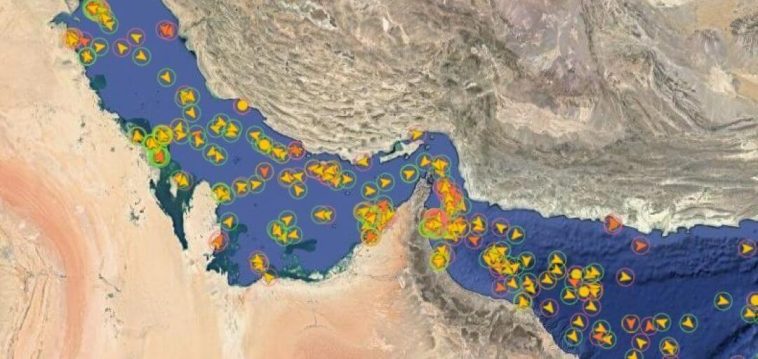
The threat immediately raised alarms throughout the international community. Any disruption to shipping through the Strait of Hormuz could have dramatic consequences for global energy supplies, transportation costs, and economic stability.
The move was particularly surprising because U.S. Central Command had already announced that it had formally lifted its two-month blockade of Iranian ports. Tehran, however, now claims that the process has not been completed to its satisfaction.
Meanwhile, confusion surrounding the broader regional situation only deepened.
Shortly after Iran’s announcement, reports surfaced that Israel and Hezbollah had agreed to a cease-fire. However, Israeli Prime Minister Benjamin Netanyahu appeared to signal a different reality on the ground.
Speaking Thursday, Netanyahu made it clear that Israeli operations would continue.
“We will restore security and prosperity to northern towns,” Netanyahu said. “That requires maintaining the security zone in southern Lebanon.”
Adding to the uncertainty, the Israel Defense Forces released maps showing troops positioned well inside Lebanese territory, including areas north of the Litani River.
Those developments have created new questions about the agreement signed between Washington and Tehran. The memorandum reportedly called on both sides and their allies to respect Lebanon’s sovereignty and work toward ending hostilities in the region.
Analysts say Iran may be exploiting language within the agreement to create leverage.
Simcha Brodsky, president of OSINT613, believes Tehran is taking advantage of the phased implementation process built into the deal.
“What we’re seeing is a direct result of the wording in the US-Iran MoU. The deal lifts the US blockade in phases (‘fully within 30 days’), so the US is mid-process by design,” he explained.
He continued:
“Iran is using that gap: It says the strait stays closed until the blockade is ‘completely lifted,’ so it can claim the lift isn’t done and call this a re-closure.”
Brodsky also warned that Iran appears to be connecting unrelated conflicts to justify abandoning the agreement.
“Iran has now bolted the Israel-Lebanon fighting onto that pretext to hard-stop the whole deal, roping Israel into an agreement it never approved or negotiated.”
The timing could not be worse for diplomatic efforts.
The first round of nuclear negotiations scheduled under the new framework was abruptly canceled Friday. No official explanation has been provided by the United States regarding the postponement.
At the same time, Tehran is expanding its control over the strategic waterway.
Iran’s newly established Persian Gulf Strait Authority released a new set of regulations requiring ships to obtain government permits before entering the Strait of Hormuz. Critics argue the authority was created specifically to increase Tehran’s control over international commerce and potentially generate future revenue through transit fees.
For decades, vessels have operated through the strait under established international maritime norms. The new permit requirement represents a significant departure from that practice.
For President Trump, the sudden reversal represents an early challenge to his effort to negotiate a more stable relationship with Iran while maintaining pressure on the regime.
Supporters of the administration argue the agreement offered a pathway toward reduced tensions. Critics, however, contend that Tehran has once again demonstrated its willingness to use technicalities, regional conflicts, and threats to global shipping as bargaining chips.
Whether this latest crisis can be contained remains to be seen. What is clear is that one of the world’s most dangerous flashpoints has once again become the center of international attention.

