
>> Continued From the Previous Page <<
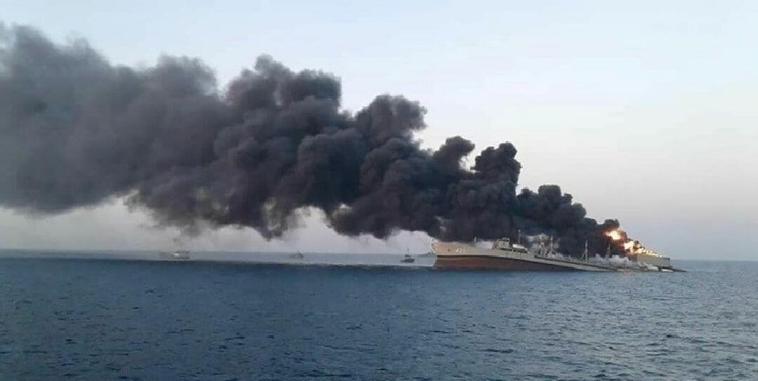
But when Sri Lankan forces reached the location, there was no ship left to save.
“There was no sign of the ship, only some oil patches and life rafts,” navy spokesman Cmdr. Buddhika Sampath said. “We found people floating on the water.”

Search-and-rescue teams quickly began pulling survivors from the ocean while also recovering the dead. Officials later confirmed that 87 bodies had been retrieved from the water. Another 32 individuals were rescued alive from the debris field.
The survivors were transported to medical facilities in the southern coastal city of Galle, where doctors immediately began treating injuries sustained during the ordeal. Health officials said the condition of several rescued sailors varied widely.
According to medical authorities, one survivor remained in critical condition while seven others required urgent emergency treatment. Additional survivors were treated for less severe injuries before being stabilized. Authorities also confirmed that recovery operations were continuing as crews searched the surrounding waters for more victims.
The tragic scene unfolded only hours after a stunning announcement from U.S. leadership about the fate of the Iranian vessel.
U.S. Secretary of War Pete Hegseth confirmed that the United States Navy had deliberately sunk the IRIS Dena as part of a broader military campaign targeting Iranian forces. The strike, he said, was conducted under the expanding military initiative known as Operation Epic Fury.
Hegseth described the Iranian vessel as a valuable naval asset for Tehran and emphasized the significance of the strike.
“An American submarine sunk an Iranian warship that thought it was safe in international waters,” Hegseth said. “Instead, it was sunk by a torpedo. Quiet death. The first sinking of an enemy ship by a torpedo since World War II. Like in that war, back when we were still the War Department. We are fighting to win.”
Military officials later provided additional details about how the attack was carried out. Chairman of the Joint Chiefs of Staff Dan Caine said the strike involved a single torpedo fired from a U.S. Navy submarine.
According to Caine, the weapon used was a powerful Mark 48 torpedo, deployed during what he described as a “fast attack.” The torpedo reportedly struck the Iranian warship with devastating effectiveness, sending the vessel to the bottom of the ocean within moments.
The incident marks a dramatic escalation in the growing maritime conflict involving Iran. U.S. officials have long argued that Tehran’s naval forces and missile platforms represent a serious threat to global shipping lanes and regional stability.
American leaders have repeatedly accused Iran of using its naval capabilities to intimidate commercial vessels, disrupt energy routes, and expand its influence through proxy forces across the Middle East.
Hegseth indicated that the IRIS Dena was not the only Iranian vessel targeted by U.S. forces during the recent operations.
He revealed that another Iranian warship had also been destroyed in a separate engagement closer to Iranian territory. According to the secretary, U.S. naval forces sank the missile vessel known as the IRIS Soleimani while it was operating in the strategically critical Strait of Hormuz.
“The Iranian navy rests at the bottom of the Persian Gulf. Combat ineffective, decimated, destroyed, defeated. Pick your adjective,” Hegseth said. “In fact, last night we sunk their prize ship, the Soleimani. Looks like POTUS got him twice. Their navy, not a factor. Pick your adjective. It is no more.”
With tensions escalating rapidly and military actions spreading beyond the Middle East, the events unfolding in the Indian Ocean signal that the conflict is expanding into new and potentially volatile waters. For Sri Lankan rescuers who responded to the distress call, the aftermath offered a stark reminder that modern naval warfare can leave devastation far beyond the battlefield itself.

