
>> Continued From the Previous Page <<
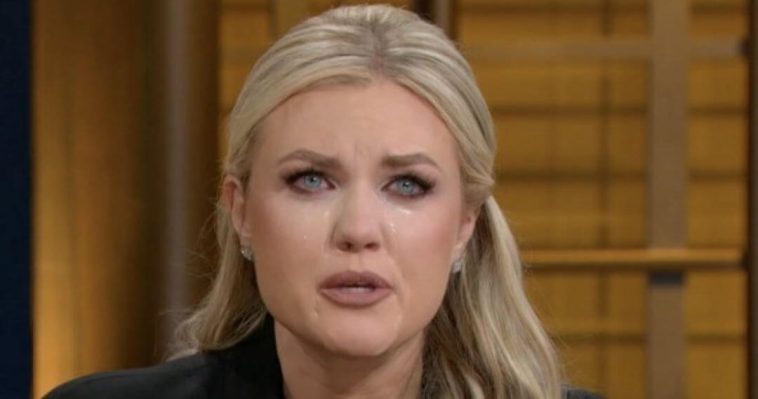
“You want to watch in high-res the video of my husband being murdered, and laugh, and say he deserves it? There’s something very sick in your soul, and I’m praying that God saves you. I pray because that is what is so wrong….” she said.
The moment underscored a central theme of the night: how modern media and digital platforms have fueled a culture where outrage replaces humanity. Kirk framed the issue not as partisan, but moral, warning that constant exposure to anger and extremism warps the conscience.

Tensions escalated further when the final audience question was posed by Utah Valley University student Hunter Kozak, who described himself as a “progressive.” Kozak said he was standing just five to ten feet away from Charlie Kirk during the incident he referenced and used his opportunity to challenge Erika Kirk directly.
Rather than asking about her personal experience or message, Kozak pivoted to President Donald Trump, attempting to link broader political rhetoric to violence.
“Will you condemn the violent rhetoric of Donald Trump, the most powerful and influential person on earth?” Hunter Kozak asked Erika Kirk.
The question immediately drew attention as a clear “gotcha” moment—redirecting a deeply personal conversation into a partisan confrontation. Erika Kirk, however, refused to take the bait.
Remaining calm and composed, she declined to single out President Trump or any individual political figure, instead insisting the problem runs far deeper than one politician or party.
“You can choose to have evil in your heart, or you can choose to have light,” Erika Kirk said. “What you consume and what you absorb from the outside world will manifest itself.”
Her response shifted the focus back to personal responsibility and moral choice, drawing a sharp contrast between her approach and the accusatory tone of the question.
Moderator Bari Weiss then followed up, broadening the scope of the discussion by asking whether political leaders should do more to reduce tensions nationwide.
“Do you think our political leaders have a responsibility to turn the temperature down right now?” Bari Weiss asked.
Kirk’s reply once again avoided political grandstanding. Instead, she emphasized individual accountability over performative outrage.
“Well, I think everyone has a responsibility to do that, and I’m doing my part. I’m not in control of other people,” Erika Kirk said.
WATCH:
The exchange served as a revealing snapshot of America’s fractured political climate—where even moments of grief and reflection are quickly pulled into partisan battles. For many viewers, the town hall highlighted how attempts to score political points often overshadow genuine conversations about decency, empathy, and restraint.
Rather than escalating rhetoric, Erika Kirk used her platform to call for reflection, self-examination, and a return to basic human compassion—values increasingly absent from modern political discourse.
Whether CBS intended it or not, the town hall became a powerful reminder that behind every headline, viral clip, and political argument are real people—and real consequences.


Our forefathers intended our country to be based on Christian values. But how is that accomplished when the law of the land says not to mix religion and politics? The Bible certainly presents examples of conflict between the laws of God, the laws of men, and common sense! Any law whether moral or physical, exercised without some degree of common sense can become a weapon of destruction in the hand of anyone anxious to cause harm. Rules and laws from God were meant to accomplish good, not destroy it! But some of us seem bent on proving that it’s possible to take ANY good thing, even the DESIRE to be good, and turn it around so that even the most innocent among us looks stupid! And to what end? When the Sun gets in your eyes, do you curse the Sun? Do you look for a way to extinguish it? And what would happen if you could!?