

>> Continued From the Previous Page <<
Chapin’s exit marks the end of an era. She first joined NPR in 2012 and stepped into the editor-in-chief role in 2023. Prior to that, she spent a quarter-century climbing the ranks at CNN, another media outlet often accused of leftist bias.
In a revealing interview with NPR’s own David Folkenflik, Chapin explained the timing of her resignation: “I have had two big executive jobs for two years and I want to take a break. I want to make sure my performance is always top-notch for the company.”

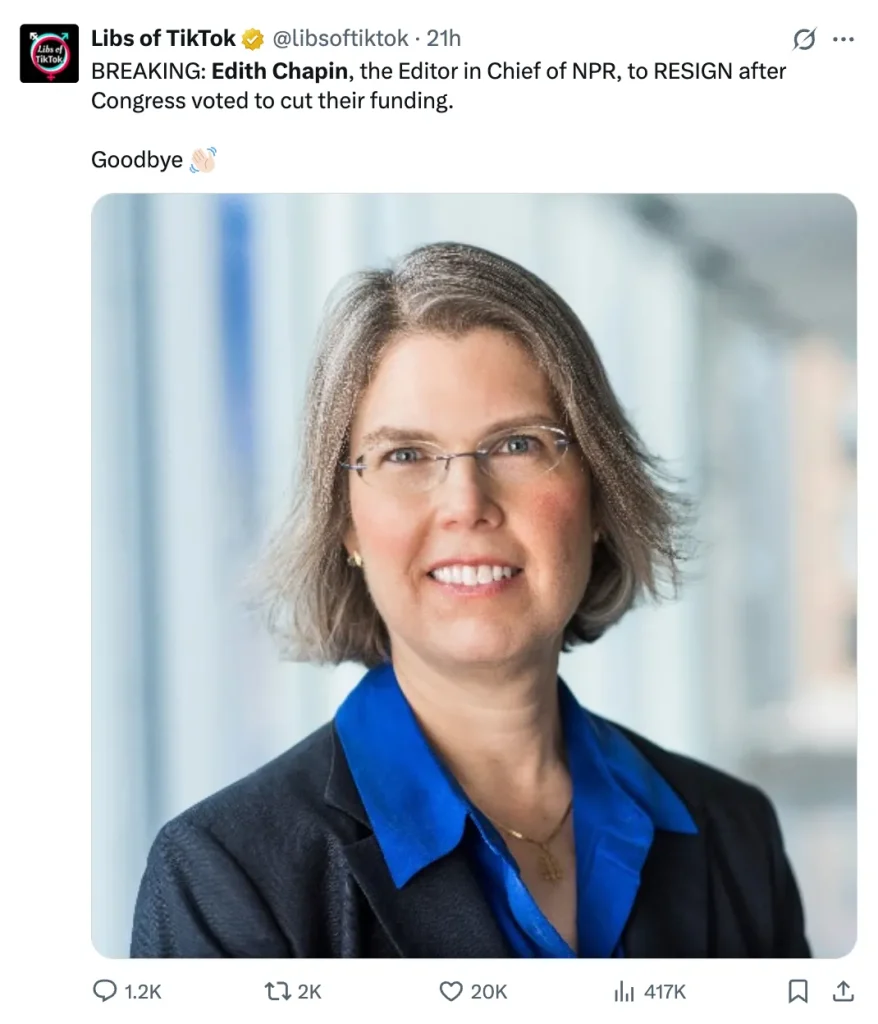
But timing is everything, and this resignation comes at a moment when NPR is already on the defensive. Under President Trump’s second term, the administration has taken direct aim at NPR, fulfilling a long-standing pledge to eliminate federal subsidies for what many on the right view as an ideologically slanted news organization.
Back in March, Maher found herself under the spotlight on Capitol Hill, facing tough questions about political bias. She even offered a rare admission of fault regarding NPR’s lack of coverage on the Hunter Biden laptop scandal—something conservative outlets had been reporting extensively.
“I do want to say that NPR acknowledges we were mistaken in failing to cover the Hunter Biden laptop story more aggressively or sooner,” Maher testified before Congress. She added, “We recognize our reporting at the time, but we recognize that the new CIA evidence is worthy of coverage and have covered it.”
When grilled about a former NPR editor’s claim that 99% of the staff are registered Democrats, Maher dismissed the concern. “We don’t track voter registration,” she responded, sidestepping what many see as a major credibility issue.
President Trump has never minced words about NPR. He recently called its executives “radical left monsters” and issued an executive order in March aimed squarely at pulling the plug on taxpayer subsidies. “Unlike in 1967, when the [Corporation for Public Broadcasting] was established, today the media landscape is filled with abundant, diverse and innovative news options,” the order said. “Government funding of news media in this environment is not only outdated and unnecessary but corrosive to the appearance of journalistic independence.”
Public broadcasting leaders are pushing back hard. Paula Kerger, the CEO of PBS, blasted the move and accused Congress of betraying the public trust.
“These cuts will significantly impact all of our stations but will be especially devastating to smaller stations and those serving large rural areas,” Kerger warned. “Many of our stations which provide access to free unique local programming and emergency alerts will now be forced to make hard decisions in the weeks and months ahead.”
Still, the writing appears to be on the wall for NPR. Without taxpayer money to cushion its budget, the network now faces a harsh financial reality—and the exodus of top leadership suggests they know it.
This could be a turning point in dismantling the left-leaning media machine that for too long has operated with taxpayer support and zero accountability.

