

>> Continued From the Previous Page <<
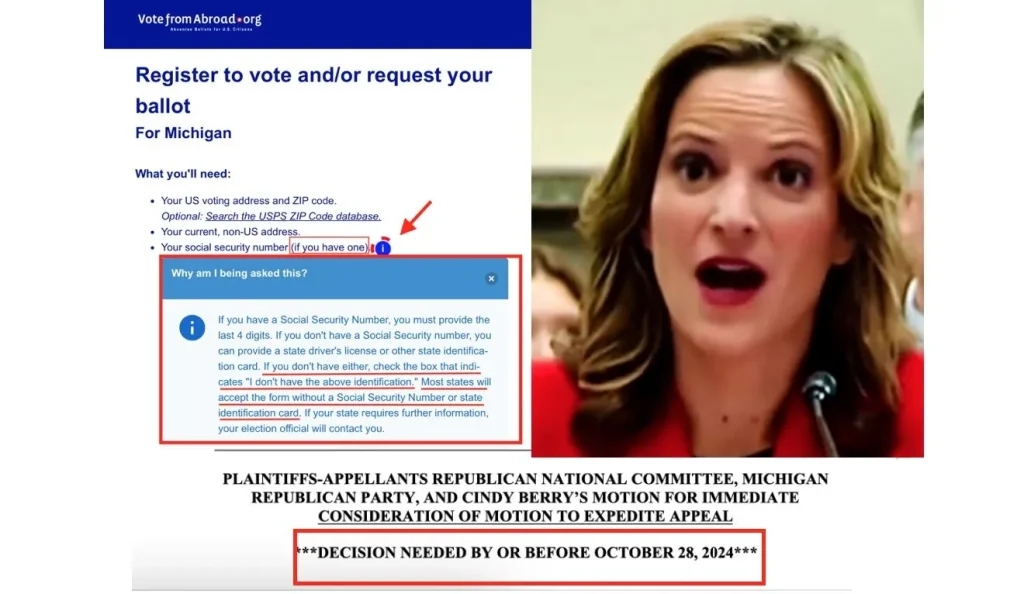
This isn’t the first time Benson’s election policies have raised red flags. Weeks before the 2024 election, The Gateway Pundit warned of a Democrat scheme to push through potentially hundreds of thousands of illegitimate overseas ballots — specifically from non-military UOCAVA voters. Under federal rules, these applicants don’t have to provide ID when registering online, and in Michigan, they can still vote even if they’ve never set foot in the United States. All they have to do is claim a connection to a Michigan address.
One month before the election, the RNC and Michigan GOP sued Benson and Director of Elections Jonathan Brater over this loophole. The lawsuit argued that Benson’s guidance allowed non-citizens and people with no real ties to Michigan to vote in a key swing state. Judge Sima Patel — a Democrat appointed by Governor Gretchen Whitmer — dismissed the case, and last week, the Michigan Court of Appeals upheld that decision, claiming the RNC had filed “too late.”

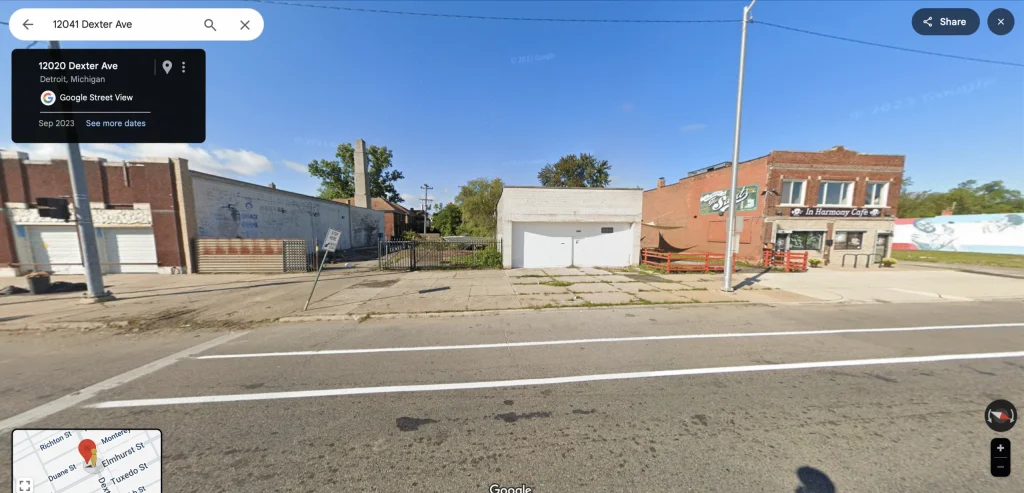
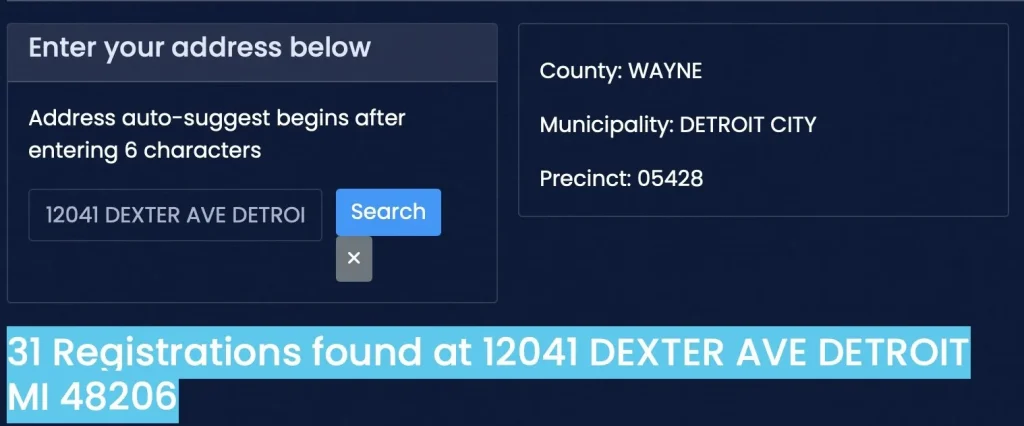
But here’s the twist — when the lawsuit was first filed, Republicans didn’t know about 31 voters with Yiddish names all registered at the same Detroit coffee shop, 12041 Dexter Ave., located in one of the city’s most crime-ridden neighborhoods.
Investigators with Check My Vote uncovered hundreds of duplicate voters, including three separate voter IDs for women named “Leah,” all born in 2000, all registered to the same address, and all listing their gender as “U” for unidentified.
Digging deeper revealed an even bigger bombshell: 13 newly registered voters with Israeli mailing addresses — 12 of whom also listed their gender as “U” — were tied to the same Detroit coffee shop. Three of them actually voted in the 2024 election. When an investigator traveled to Israel to check these addresses, none of the supposed “Michigan voters” could be found.



Even more outrageous — all 13 have now been reclassified as “permanent absentee voters” in Michigan without any proof they moved back to the state, despite federal UOCAVA rules requiring re-registration each year.
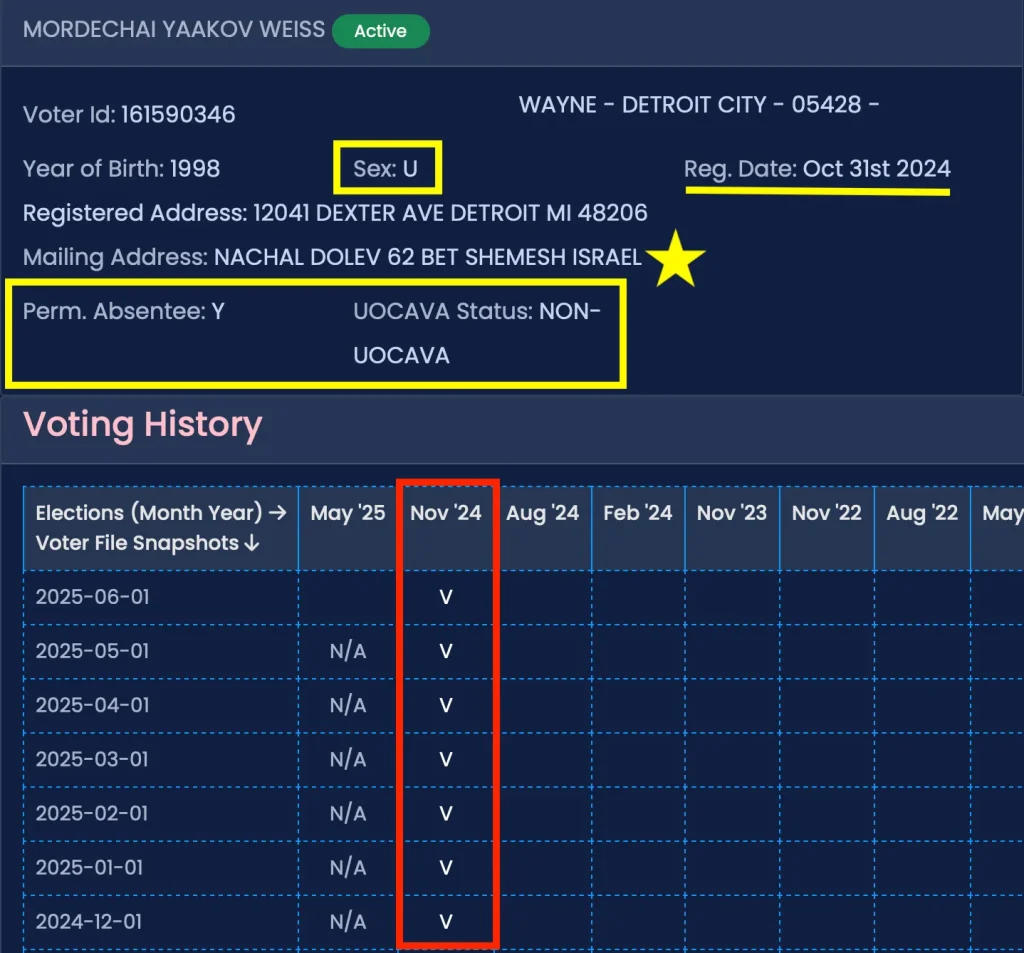
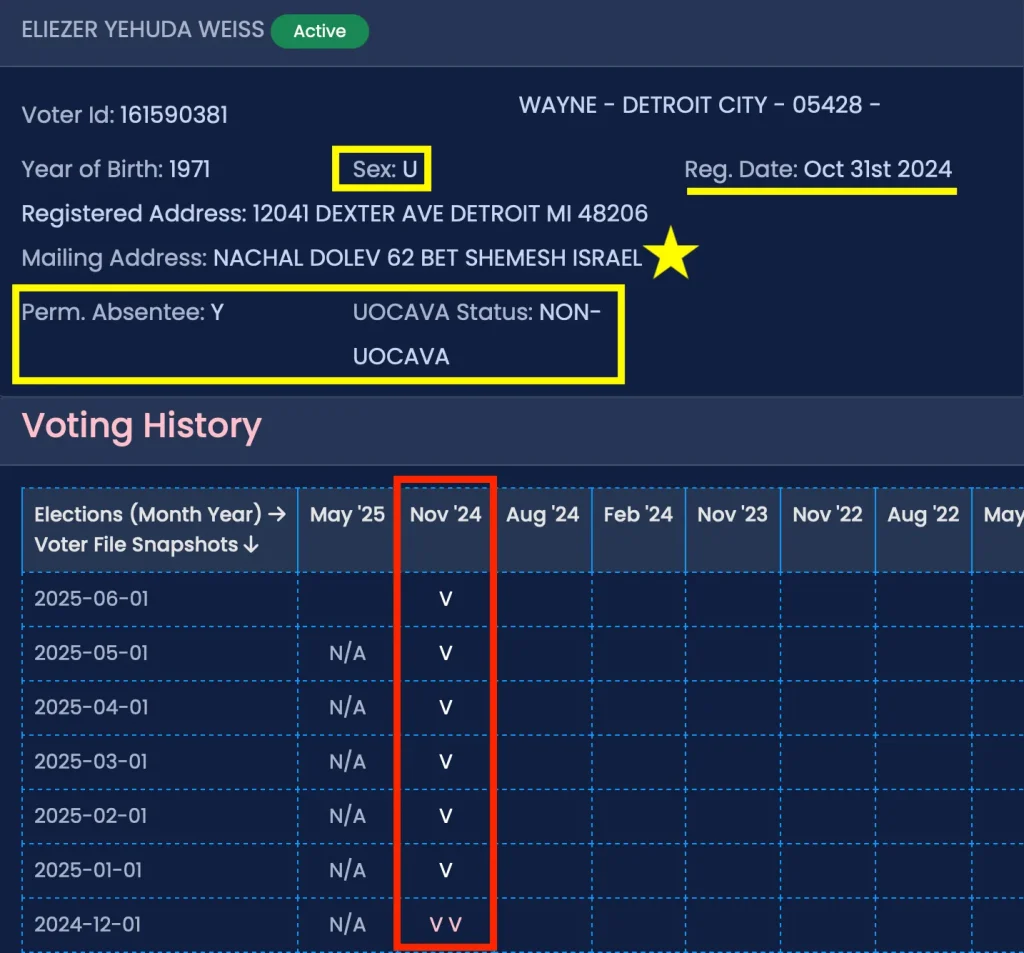
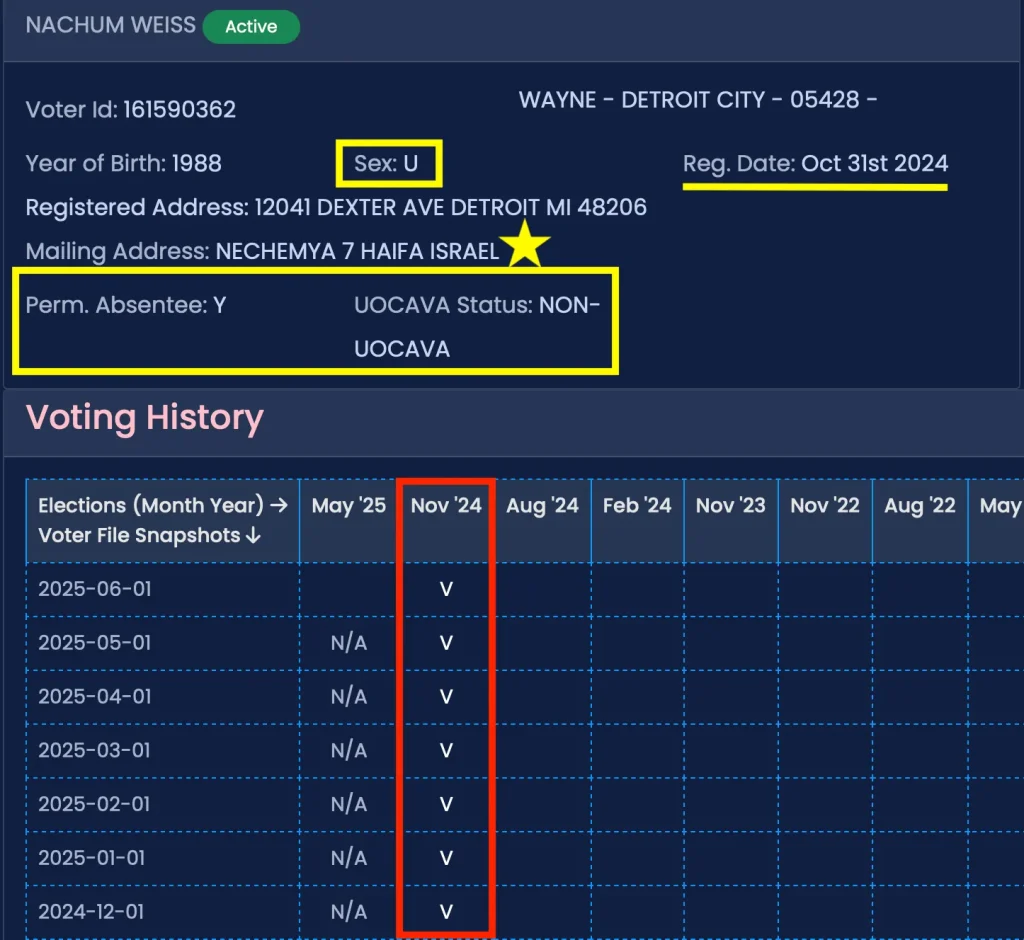
And it’s not just the coffee shop. Records show that the apartments above the shop are listed as vacant, making it highly unlikely that 31 people — let alone all of voting age — are living there. Michigan election law requires voters in apartments to list a unit number, but none of these registrations do.
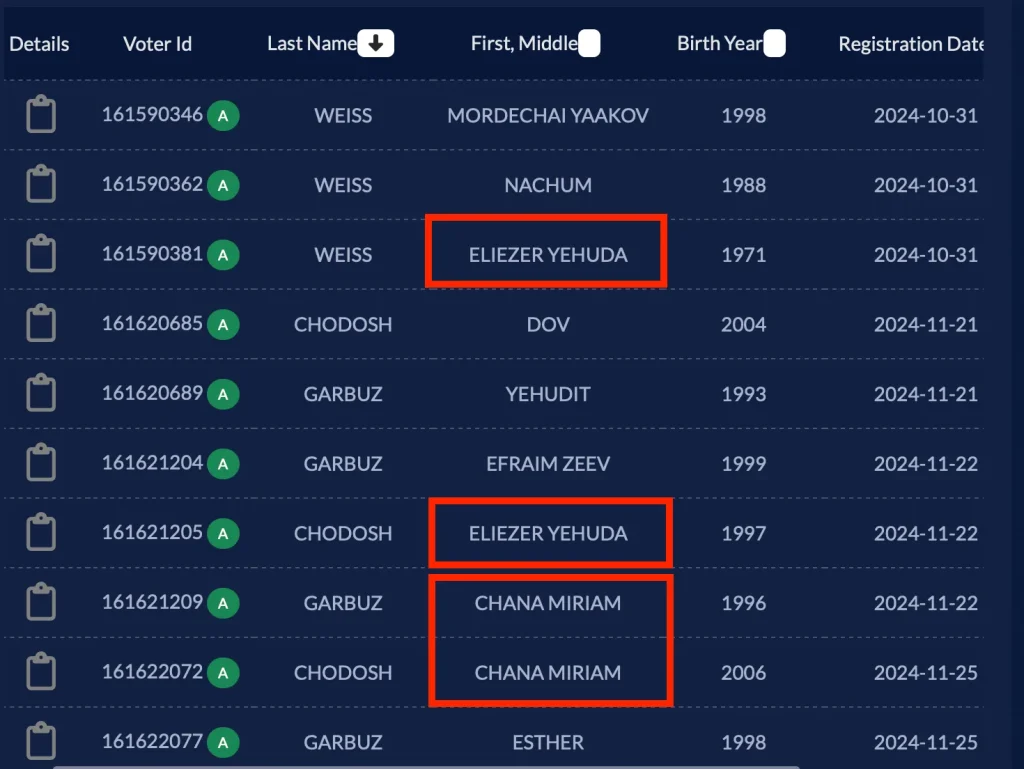
The backstory of the building is also curious. Before the current owner, it was home to Eleos Coffee House, run by a Kansas City nonprofit that openly solicited donations to help people obtain birth certificates and IDs. While no evidence directly links Eleos to fraudulent registrations, the overlap raises serious questions.
Adding to the intrigue, newly elected Democrat Senator Elissa Slotkin — a former CIA analyst — visited the coffee shop for a photo op, despite its location in one of Detroit’s most dangerous zip codes.
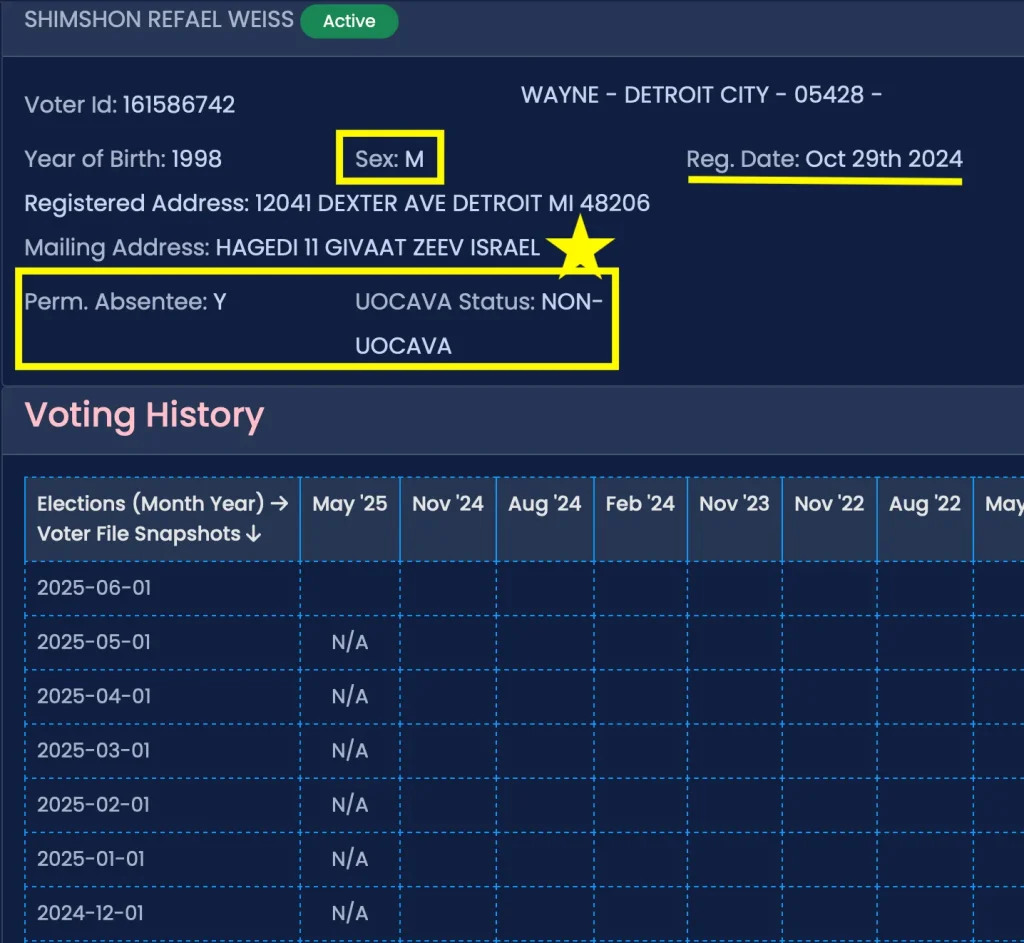
The pattern is clear: inflated voter rolls, loopholes for non-residents, and partisan judges blocking efforts to enforce Michigan’s own Constitution.
Colbeck says the DOJ demanded Benson explain a long list of alarming stats — from Michigan’s 95% voter registration rate (far above the national average) to its failure to assign unique IDs to voters. He reminded Benson that under President Trump’s Executive Order 14248, her refusal to cooperate could put Michigan “at the top of the DoJ election fraud investigation list.”
The real question now: will the DOJ finally hold Jocelyn Benson accountable, or will Michigan’s elections remain a model for fraud?

