
>> Continued From the Previous Page <<
As it stands, the national debt is nearing $35 trillion, increasing by approximately $1 trillion every 100 days. The annual cost of servicing this debt is also rising sharply, with debt interest payments surpassing $1 trillion as of last October, Business Insider reported. Furthermore, the U.S. debt-to-GDP ratio has escalated to 129 percent, placing it ninth-highest globally, which contrasts sharply with economically healthy benchmarks.
Amidst this fiscal turmoil, the White House has pointed fingers at former President Donald Trump. White House spokesman Michael Kikukawa stated, “The Trump tax cuts added $2 trillion to the debt with unpaid giveaways skewed to the wealthy and big corporations, and now Congressional Republicans are proposing another $5.5 trillion in tax cuts skewed to the rich, while raising taxes on millions of middle-class families.”

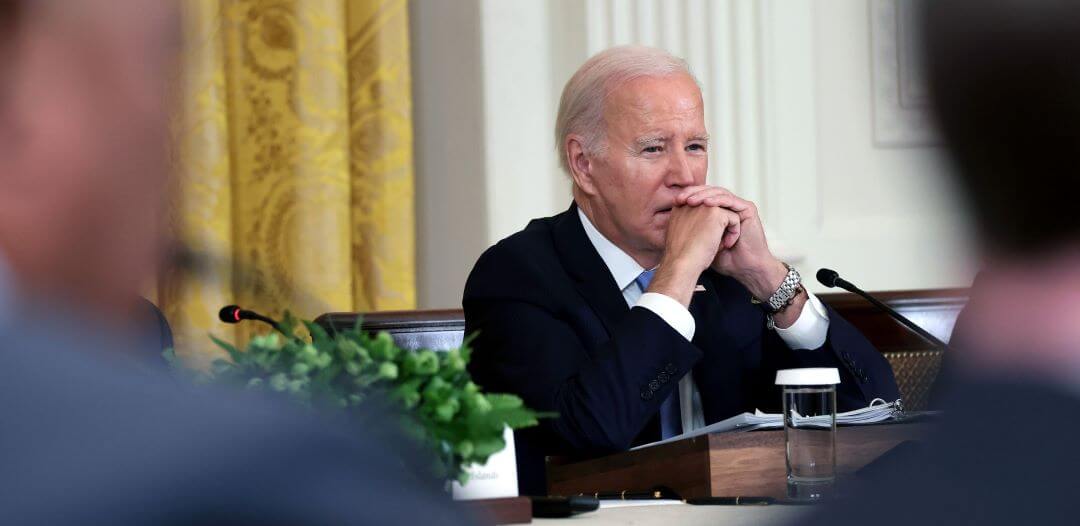
In response, President Biden has proposed increasing taxes, including a corporate tax rate hike to 28 percent, and a new minimum tax rate for billionaires. This aligns with his push to enact $7.4 billion in student-loan debt cancellation, which follows an unsuccessful attempt thwarted by the Supreme Court last year.
Critics argue that Biden’s fiscal strategies are not setting the U.S. on a path to economic prosperity. With only 28 percent of Americans rating the current economic conditions as excellent or good, according to a January Pew poll, and inflation rates exceeding forecasts, the urgency for fiscal prudence is clear.
The Biden administration’s solution, however, seems to lean towards extracting more from American taxpayers rather than curbing government spending. This approach, many argue, could stifle economic growth and drive investment out of the country.
Echoing sentiments from Ronald Reagan’s 1981 inaugural address, where he declared, “government is not the solution to our problem; government is the problem,” it seems more imperative than ever that the U.S. government reconsiders its expansive fiscal policies.
ALERT! Major Water Restrictions In Effect!
As the IMF has ominously noted, “something will have to give.” If current trends continue, the long-term economic stability of the U.S., and by extension the global economy, could be at risk. Reducing government spending and reining in fiscal excess is not just advisable; it is essential.

