
>> Continued From the Previous Page <<
That legacy is now under strain.
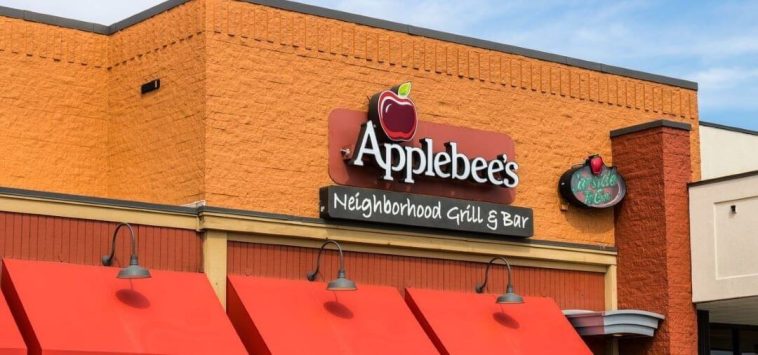
Two restaurants in Evansville, Indiana, each operating for more than three decades, recently shut their doors. Employees were seen removing signage while a printed notice thanked customers for years of loyalty.

In Glenville, New York, another location is scheduled to close on April 12. Columbia, Missouri has already lost its Applebee’s after roughly 30 years in operation.
These are not brand-new experiments that failed. These are long-standing community staples disappearing almost overnight.
The Numbers Paint a Grim Picture
In 2025, franchise operators for Applebee’s and IHOP opened 73 new locations but closed 110. That is a net contraction at a time when many Americans are already tightening their budgets.
Company guidance now projects between five and fifteen fewer domestic restaurants in 2026.
Supporters of the current economic policy framework may argue this is routine business fluctuation. But the scale of contraction across the full-service dining sector suggests something deeper is at play.
The Real Pressure: Costs Soaring Across the Board
Since 2019, menu prices at restaurants have risen roughly 34 percent. For working and middle-class families, that increase has forced tough decisions. Nights out became special occasions rather than routine treats.
According to the National Restaurant Association, combined expenses for food, labor, rent, and supplies climbed approximately 35 percent between 2020 and 2025.
That cost pressure does not disappear. It either gets passed to customers or absorbed by already-thin margins. Many operators attempted price hikes. Customers responded by staying home.
The result has been brutal.
Romano’s Macaroni Grill joined the growing list of struggling chains. TGI Fridays saw its U.S. footprint shrink dramatically. Red Lobster closed hundreds of restaurants after filing for bankruptcy.
Industry data shows the full-service restaurant segment is nearly 18 percent smaller than it was in 2019. That is not a minor correction. That is a structural contraction.
Corporate Response Sparks Frustration
Applebee’s president John Peyton addressed the closures publicly and sought to calm concerns.
“Restaurant closures are a normal part of running a mature national system,” he said.
For corporate balance sheets, that may be technically accurate.
For families in Evansville watching a 30-year institution disappear, it feels anything but normal. For employees in Glenville who were informed their restaurant is shutting down due to rising food, utility, and labor costs, it does not feel routine.
The contrast between executive language and community impact has fueled frustration among customers who feel squeezed from every direction.
Some Chains Thrive by Holding the Line
Not every casual dining chain is shrinking. Texas Roadhouse reported 7.7 percent sales growth while maintaining value-focused pricing. Chili’s delivered three consecutive quarters of double-digit growth.
The difference appears to be pricing discipline and perceived value. Customers are still willing to dine out, but they are increasingly selective.
When families feel their dollar stretches further, they return. When prices climb while quality slips, loyalty evaporates.
A Broader Economic Signal
The closure of neighborhood restaurants is not merely about corporate strategy. It reflects broader economic stress. Casual dining thrives when disposable income is stable and confidence is strong.
When inflation erodes purchasing power, optional spending is often the first casualty.
Applebee’s may not be disappearing tomorrow, but the trend line is clear. Communities that supported these restaurants for decades are now confronting empty parking lots and darkened dining rooms.
For millions of Americans, the story is not abstract. It is personal. It is the birthday spot that vanished. It is the first job that no longer exists. It is the quiet realization that even simple pleasures now cost more than many families can justify.
And as more locations close, the question grows louder: if this is “normal,” what does abnormal look like?

