
>> Continued From the Previous Page <<
She continued, attempting to clarify her position.
“And we want to make sure that we are moving all of our economic research and global positions to avoid any such confrontation and for that question to even arise,” she said.

Clips of the exchange spread rapidly online, with critics arguing that her halting delivery underscored what they describe as a lack of preparedness on critical foreign policy matters. Supporters, however, countered that careful pauses demonstrate thoughtfulness rather than weakness.
The controversy didn’t stop there.
Ocasio-Cortez also drew scrutiny after incorrectly stating that Venezuela sits below the equator — a geographic misstep that critics quickly seized upon. In another moment that sparked debate, she accused Secretary of State Marco Rubio of racism over remarks he made referencing the historical origins of cowboys in Spain. That accusation ignited yet another online firestorm, with commentators accusing her of injecting identity politics into historical discussion.
As the backlash intensified, Ocasio-Cortez turned her frustration toward the press — particularly The New York Times — for what she characterized as trivial and misleading coverage.
“This reporter came up to me and was like, ‘Is Munich the new New Hampshire?’ And I cannot say enough how out of touch and missing the point, genuinely, that is,” AOC whined during the interview with the Times.
She broadened her criticism, framing the moment as part of a much larger global struggle.
“Global democracies are on fire the world over, and established parties are falling to right-wing populist movements.”
The congresswoman also expressed frustration with short video clips circulating on social media, suggesting they distort her message.
“Any five-to-10-second thing” only serves to “distract from the substance of what I am saying.”
Still, critics argue that viral moments are often born from unscripted candor — and that clarity matters when discussing war, peace, and America’s role on the world stage.
The controversy spilled onto Instagram, where Ocasio-Cortez addressed the criticism directly. In an emotional video, her voice trembling at times, she defended her credentials against claims that she lacks depth in foreign policy.
“If you think that I don’t understand foreign policy because, out of hours of discourse about international affairs, I pause to think about one of the most sensitive geopolitical issues that currently exists on Earth, I’m afraid the issue is not my understanding, but rather that perhaps you’ve grown accustomed to a president who never thinks before he speaks.”
WATCH:
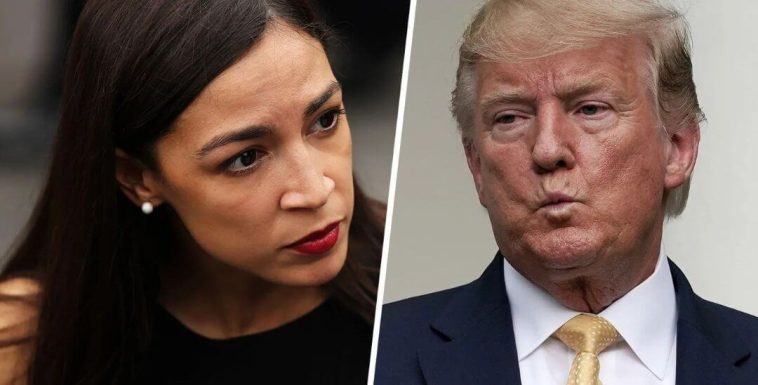
The remark was widely interpreted as a swipe at former President Donald Trump, underscoring the sharp partisan divide that continues to shape America’s political discourse.
For conservatives, the episode reinforced longstanding concerns about the progressive wing of the Democratic Party and its readiness to lead in matters of national security. For supporters, it was yet another example of a young lawmaker being relentlessly scrutinized by ideological opponents.
Either way, the Munich appearance ensured that Ocasio-Cortez remains exactly where she often finds herself: at the center of a national debate — praised by allies, criticized by opponents, and very much in the public eye.

