
>> Continued From the Previous Page <<
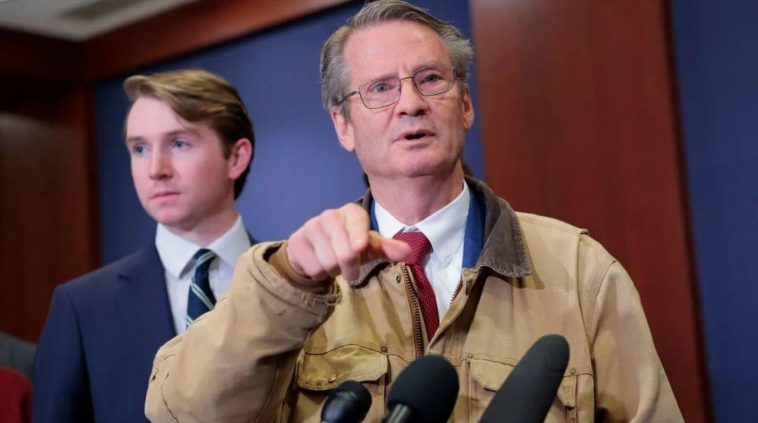
During an appearance on Piers Morgan Uncensored, Burchett did not hesitate when asked about extraterrestrial life. His answer was direct.
“Yes, sir, I do.”

He went on to describe reports from military personnel, including highly trained pilots who have encountered unidentified objects during flight missions. These are not fringe accounts. According to Burchett, they come from credible individuals with everything to lose by speaking out.
One such account involved a Navy serviceman witnessing a massive craft moving silently overhead before vanishing without any detectable disturbance. Another involved sonar tracking of an object the size of a football field traveling underwater at speeds exceeding 200 miles per hour.
“We don’t have anything of that capability or that size,” Burchett said.
These claims raise serious questions about technological capabilities that appear far beyond current U.S. or foreign military systems.
But perhaps more troubling than the sightings themselves is what Burchett says happens to those who report them.
“When they make a sighting like this, they’re pulled off the line and they will get a psych evaluation.”
Instead of being treated as valuable intelligence sources, pilots are allegedly sidelined and scrutinized, creating what critics argue is a chilling effect that discourages others from coming forward.
Burchett also raised concerns about how information is controlled within the federal government. In one briefing, he said he asked about the president’s access to UFO-related intelligence and was told that even the commander-in-chief operates on a “need-to-know basis.”
That claim suggests that unelected officials may be gatekeeping sensitive information at the highest levels.
The issue has taken on added urgency following directives from Donald Trump, who previously ordered the Pentagon to review and release files related to UFOs and extraterrestrial life. Reports indicate that internal reviews uncovered “many very interesting documents,” with potential disclosures expected.
Still, Burchett remains skeptical.
“I have no faith in our federal government will release any of this stuff,” he said.
He has urged full transparency, arguing that the American people have a right to know what their government has uncovered over decades of investigation.
His warnings took a darker turn when he referenced individuals connected to aerospace and defense research who have died under unclear circumstances.
“The people that know are dying or disappearing, as the case may be,” Burchett said. “And for the record – I’m not suicidal. And I don’t take risks.”
That statement, delivered publicly, has raised eyebrows and intensified speculation about the stakes involved.
Burchett also revealed that during a recent classified briefing, he was exposed to information so alarming he stopped short of fully describing it.
“It would have set the earth on – this country would have come unglued, I think, if they would have heard all that I heard.”
For critics of government secrecy, these remarks reinforce long-standing concerns that key information about UAPs has been withheld for decades. For others, they raise deeper questions about national security, technological unknowns, and the limits of public disclosure.
What is clear is that the conversation is no longer confined to conspiracy circles. It is now being driven by lawmakers with direct access to classified intelligence, bringing the issue into the national spotlight in a way that is difficult to ignore.

