
>> Continued From the Previous Page <<
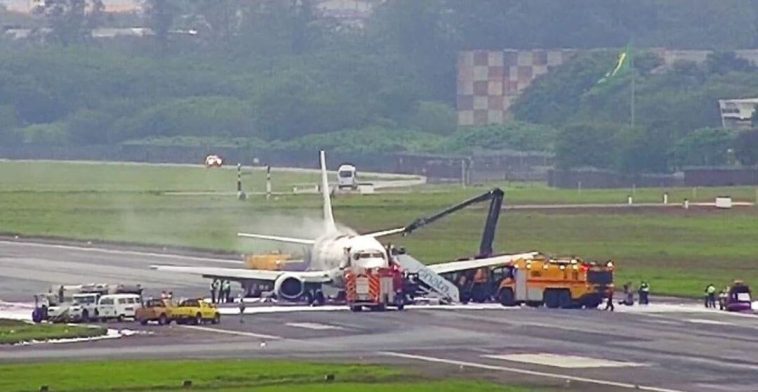
This blaze in Brazil wasn’t the only Boeing 737 to have a harrowing experience over the weekend. Just a day prior, another Boeing 737 was forced into an emergency landing—this time in Australia. The Qantas 737-800, en route to Brisbane, had to be redirected to Sydney due to a “contained engine failure,” as described by Qantas after inspection. Fortunately, no injuries were reported, and the plane was cleared of any immediate hazards.
But it hasn’t been an easy year for Boeing’s 737 series, especially after a Boeing 737 MAX lost a door panel mid-flight in January, raising significant concerns about quality control. This and other incidents have placed Boeing’s safety standards under a harsh spotlight, and federal regulators are taking note.

In response to mounting incidents and concerns, the Federal Aviation Administration (FAA) has pledged to heighten its scrutiny of Boeing’s safety protocols. Following the resolution of a lengthy strike, which kept Boeing workers off production lines for 53 days, the FAA stated that it “will further strengthen and target our oversight as the company begins its return-to-work plan.”
The FAA’s scrutiny isn’t without reason. In a February audit, the agency identified 97 incidents of noncompliance within Boeing’s operations, indicating a troubling trend of quality lapses. FAA Administrator Mike Whitaker noted that Boeing may face a daunting timeline, with experts suggesting it could take three to five years for the company to bring its production standards back to acceptable levels. Whitaker’s statement underscores the urgency of the situation: safety improvements are not optional but essential for the company’s continued operation.
Boeing is not only racing against the clock on quality but also scrambling to regain financial footing. The recent strike has dealt a substantial blow to Boeing’s finances, halting the production of their key revenue generator, the 737, and cutting off essential income. With production resuming, Boeing aims to manufacture approximately 30 aircraft monthly, but industry insiders say that number needs to rise to over 50 per month to meet demand and secure profitability.
What are the best concealed carry holsters for ultimate security?
“Even for a company the size of Boeing, it is a life-threatening problem,” stated Gautam Mukunda, a lecturer at the Yale School of Management. Boeing is hopeful that the recently returned workforce, the backbone of its production line, can make up for lost time and push production levels back to where they need to be. Mukunda noted, “They must get that number over 50. They have to do it. And the people who are going to do that are the workers on the factory floor.”
Boeing’s troubles come at a challenging moment in the aviation industry. As one of the world’s most well-known aircraft manufacturers, Boeing’s reputation is closely tied to its reliability and safety record. But with recent incidents stacking up, Boeing must take definitive action to address these safety concerns and restore public trust.
The company’s challenges are also compounded by the FAA’s increased oversight and stricter safety mandates. For now, Boeing faces a long road to recovery, with the future hinging on its ability to ramp up production, ensure the highest safety standards, and reassure customers and regulators alike.

