
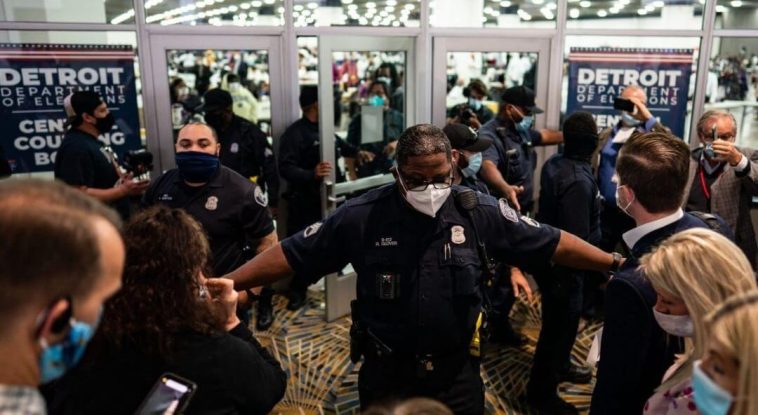
In the aftermath of the 2020 election, questions surrounding absentee ballots and voting irregularities continue to stir concern among conservatives. One such issue revolves around the UOCAVA votes—ballots cast by U.S. citizens living abroad, military personnel, and their families. Despite the importance of these votes, a growing number of Republican poll challengers, especially those in battleground states like Michigan, were left wondering why they were denied access to observe the counting of these ballots.
A pivotal moment occurred in Detroit, where GOP poll challengers were allegedly kicked out of the absentee ballot counting room at the TCF Center just one day after the election. “COVID!” was the official reason given by election officials, claiming that for health and safety reasons, Republican observers needed to stay six feet away from these “military” ballots. The real question on many minds is—what were these ballots, and why did the process need to be hidden from view?
🚨Your free Trump Watch is waiting! Claim it now before it’s too late.⏰

The absentee ballots in question were UOCAVA votes. For many, the term UOCAVA may be unfamiliar, but it stands for the Uniformed and Overseas Citizens Absentee Voting Act. This act allows military personnel and U.S. citizens living overseas to cast absentee ballots in federal elections. But does the average American even know what UOCAVA is? And more importantly, should they? According to some conservative commentators, understanding UOCAVA might just be the key to ensuring election integrity moving forward.
>> Click Here To Continue Reading <<

