
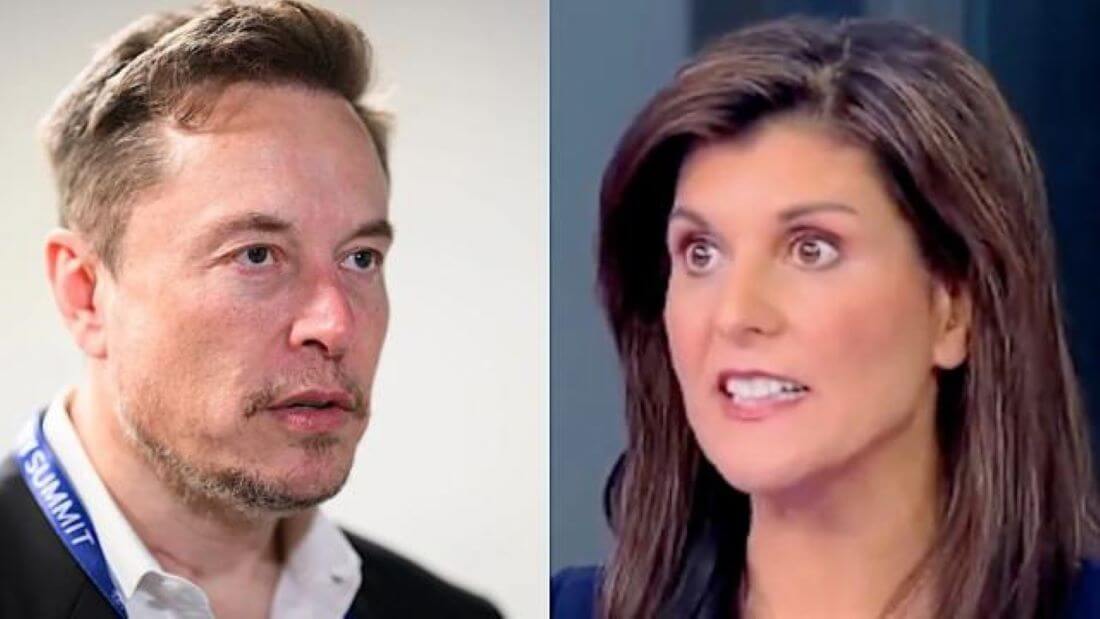
It’s not only Vivek Ramaswamy who is criticizing Nikki Haley’s divisive idea to authenticate social media users by their true identities. Elon Musk has also voiced worries about the proposal’s constitutionality.
In response to reports that Haley had pledged to reveal the identities of every social media user, Ramaswamy wrote on X on Tuesday, stating, “This is disgusting.”
Don’t miss this! Carry faith with you everywhere with the Exclusive National Prayer Coin!

“Super messed up,” Musk replied. “She can stop pretending to run for president now.”
That same day, Haley stated on Fox News that requiring social media firms to “show Americans their algorithms” would be among her top priorities as president.
At first look innocent enough, but her second item on the itinerary has put her in danger.

“Every person on social media should be verified by their name,” she said. “First of all, it’s a national security threat. When you do that, all of a sudden people have to stand by what they say, and it gets rid of the Russian bots, the Iranian bots, and the Chinese bots. And then you’re going to get some civility when people know their name is next to what they say and they know their pastor and their family members are going to see it. It’s going to help our kids and it’s going to help our country.”
Musk has faced criticism for allegedly failing to monitor the social media network for offensive content after taking over Twitter and renaming as X. Racism, misogyny, gore, and other offensive material, according to critics, have gone unreported. But when a BBC reporter failed to produce any proof of racism on X that Musk hadn’t handled, he fiercely defended himself.
ALERT! Major Water Restrictions In Effect!
The Biden administration’s attempts to restrict social media political discourse have been declared unlawful. A significant order imposed by a federal judge prevents authorities from coercing Big Tech into shutting down or banning particular accounts. Proponents of free speech believe that this action is essential to safeguarding viewpoints that oppose government monitoring.

