
>> Continued From the Previous Page <<
According to researchers, warming coastal conditions are pushing the bacteria steadily northward. New York’s coastal waters have been warming at roughly three times the global average during summer months over the last two decades, creating ideal conditions for the pathogen to expand its range. Scientists estimate that its habitat has been shifting north by about 30 miles every year.
That shift is no longer theoretical. In 2024 alone, Rhode Island, Connecticut, and New York all reported confirmed fatalities linked to the bacteria. A New Yorker also died from the infection in 2023. Meanwhile, Florida recorded 82 cases and 19 deaths in 2024, a surge that alarmed public health officials.

The bacteria spreads in two primary ways, both of which can turn a routine summer activity into a medical emergency.
The first is through open wounds exposed to contaminated water—anything from a small cut or scrape to a recent tattoo or surgical incision. Once inside the body, the infection can escalate with terrifying speed.
As explained by Stony Brook University’s Christopher Gobler, “The organism needs a route of entry into the body, which is usually an open and unprotected wound,” Gobler told Fox News Digital.

The second major risk comes from consuming raw or undercooked shellfish, especially oysters harvested from contaminated waters.
Once infection takes hold—particularly in individuals with weakened immune systems—the consequences can be catastrophic. Doctors report fatality rates approaching 50 percent in high-risk patients, including those with liver disease, diabetes, cancer, or those taking immune-suppressing medications.
In practical terms, that means an older adult enjoying a beach weekend or a family member recovering from surgery could be far more vulnerable than they realize.
What makes Vibrio vulnificus especially dangerous is how quickly it progresses. Early symptoms can appear within hours. Skin around the infection site may redden, swell, and darken rapidly as tissue damage spreads outward. Medical experts stress that treatment delays of even a few hours can significantly worsen outcomes.
Not all coastal waters carry the same level of risk. Open ocean beaches tend to be less dangerous. The real concern lies in brackish environments—bays, estuaries, and ponds where saltwater mixes with freshwater runoff. Heavy rainfall can further increase contamination levels by flushing nutrients and bacteria into these areas.
Despite the seriousness of the threat, public awareness remains relatively low. Data shows the bacteria’s presence has expanded dramatically over time, with documented increases of nearly eightfold in eastern U.S. waters between 1988 and 2018. National infection rates also rose by roughly 70 percent over the following two decades.
What was once considered a regional Gulf Coast issue has now been documented as far north as Connecticut and New York, marking a major geographic shift in a dangerous pathogen’s range.
Yet the broader public conversation has lagged behind the science. While past years saw intense media coverage of viral outbreaks and public health emergencies, this slower-moving but deadly bacterial threat has received far less attention.
That gap leaves many summer travelers unaware of the risks. Wealthy vacation communities may have access to private doctors and rapid emergency care, but average families heading to the shore often do not.
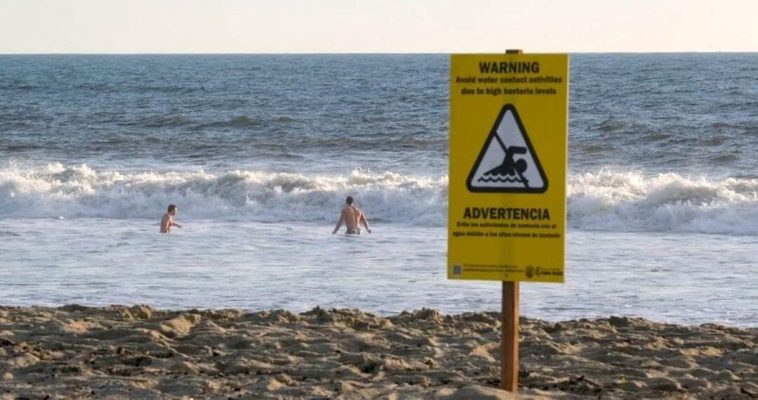
Health officials emphasize simple precautions that can significantly reduce risk: keep all open cuts covered with waterproof bandages before entering coastal waters, avoid swimming in bays and estuaries after heavy rainfall, and steer clear of raw shellfish, especially oysters. Individuals recovering from surgery or with weakened immune systems are advised to avoid brackish water exposure entirely.
Most importantly, any rapidly worsening skin infection following water exposure should be treated as a medical emergency, not something to “wait out.”
Vibrio vulnificus remains one of the most lethal naturally occurring bacteria linked to seafood and coastal exposure in the United States, with a reported fatality rate of around 35 percent once infection is confirmed.
For families heading to the beach this summer, the warning is simple but urgent: what looks like calm, beautiful coastal water can sometimes carry a threat that moves far faster than most people realize.

