
>> Continued From the Previous Page <<
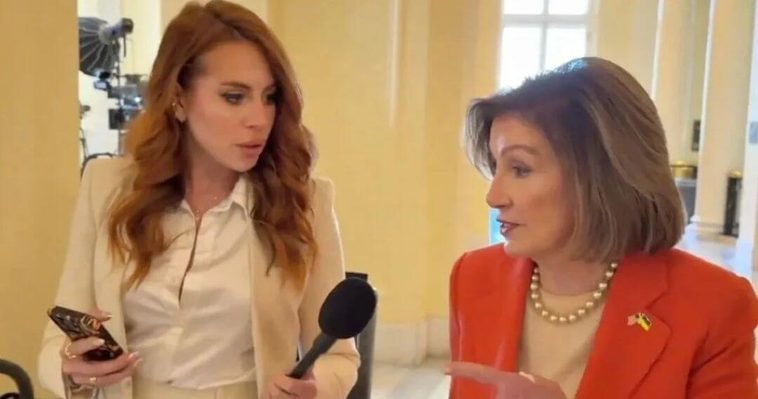
The reporter attempted to continue her questioning and even referenced a previous encounter between the two, showing Pelosi footage from an earlier confrontation in October 2025 where the same “shut up” remark had already been directed at her. Rather than defuse the situation, Pelosi doubled down and escalated further.
“I don’t even think you’re a real journalist,” Pelosi said. “You work for Mike the Pillow Man.”

She then concluded the confrontation with, “Get away from me.”
The clip, which quickly spread online after the earlier October 2025 incident, had already accumulated more than a million views. Thursday’s exchange only intensified the attention, as viewers noted Pelosi appeared willing to repeat the same hostile behavior on camera without hesitation.
Observers say the moment raises broader concerns about how powerful political figures respond when confronted with uncomfortable questions—especially when those questions involve prior recorded statements.
The controversy is not occurring in a vacuum. In 2024, the House Oversight Committee released previously recorded footage of Pelosi speaking candidly with her then-chief of staff regarding the Capitol security response on January 6. In the recording, Pelosi is heard questioning why security was not in place sooner and acknowledging responsibility for preparedness decisions.
“We did not have any accountability for what was going on there – and we should have.”
She is also heard asking directly, “Why weren’t the National Guard there to begin with?”
Moments later, Pelosi adds, “I take responsibility for not having them just prepare for more.”
That footage has become a focal point for critics who argue it directly contradicts the public narrative that has been promoted for years regarding responsibility for the Capitol’s security posture that day.
Yet when Steinberg brought those same remarks back to Pelosi during Thursday’s Capitol Hill exchange, the response was not clarification or elaboration—it was confrontation, personal insult, and dismissal.
Critics argue that reaction stands in stark contrast to how media outlets and political commentators respond depending on who is involved.
For example, when President Donald Trump made a remark in the Oval Office to CNN’s Kaitlan Collins noting he had “never seen her smile,” the reaction across much of the media ecosystem was immediate and intense. The comment was widely framed as inappropriate and sparked commentary about respect toward journalists.
Anderson Cooper went on air arguing, “This would never happen to a man.” Within hours, Jake Tapper praised Collins, calling her “one of the very best journalists around.”
But in the Pelosi exchange, where a female reporter was told to “shut up” twice on camera and questioned personally about her legitimacy as a journalist, that same level of public commentary was largely absent.
The silence has fueled criticism that media outrage is often selectively applied depending on the political alignment of those involved. Supporters of that view argue that confrontations involving Democratic leaders are frequently downplayed, while similar or lesser incidents involving Republicans are elevated into national controversies.
Beyond the personalities involved, the underlying issue continues to circle back to transparency around January 6 security decisions and the political sensitivity surrounding the National Guard’s deployment timeline.
As long as those questions remain unresolved in the public eye, moments like Thursday’s confrontation are likely to continue drawing attention—and criticism—not just toward elected officials, but also toward the media institutions deciding which controversies are amplified and which are ignored.

