
>> Continued From the Previous Page <<
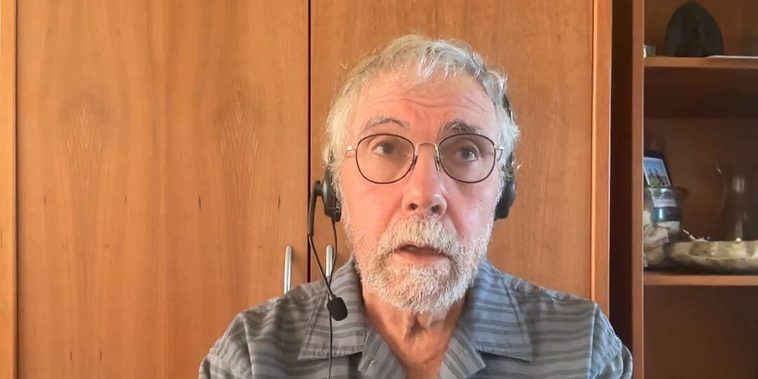
From there, Krugman shifted into broader political territory, arguing that the United States requires sweeping structural change aimed not only at Trump himself, but at the political movement behind him.
So, he argues, “we really need to do a thorough purging of the United States. We need a deMAGAfication.”

He further doubled down on the comparison to historical postwar Germany, adding, “I’m not going over the top by using a word that’s very similar to the denazification that we pursued successfully after World War Two in Germany.”
Krugman went on to expand his argument, suggesting that political change alone would not be sufficient and that deeper systemic restructuring was necessary. He said, “Obviously, we need to defang Trump as much as possible, and make sure that neither he nor anybody who follows in his footsteps has power after the next two elections. But beyond that, we really need to do a thorough purging of the United States. We need a deMAGAfication, and that is, you know, I’m not going over the top by using a word that’s very similar to the denazification that we pursued successfully after World War Two in Germany.”
He also warned that, in his view, the underlying political and economic systems must be addressed, stating, “And we need something, it’s not just the mock ideology, but the whole structure of hugely unequal power, hugely unequal wealth that made this horrific moment possible. It’s not going to be easy, but, and maybe it’s not going to be doable. We have to try.”
Krugman added that failure to enact such sweeping changes, in his opinion, would lead to repetition of the current political moment. “This has to be turned around, and we should not, above all, whitewash or forget this moment. This is where a lot of forces in America have been leading. And if we don’t do something beyond just getting rid of Trump, it’s going to happen again,” he further argued.
The comments quickly sparked criticism online, with opponents arguing that Krugman’s rhetoric promotes political division rather than unity, and that comparisons to historical “purges” and denazification campaigns are deeply inappropriate in the American context. Critics say such language risks inflaming tensions at a time of already heightened political polarization.
This is not the first time Krugman has drawn controversy for his political commentary. Over the years, he has frequently been criticized by conservatives for his sharply partisan rhetoric and outspoken opposition to Republican figures and policies.
He has also been accused by critics of promoting extreme political narratives in past commentary, including remarks directed at Republican voters and controversial interpretations of election-related disputes. Supporters, however, argue that Krugman’s commentary reflects strong disagreement with Trump-era politics rather than literal calls for harm or exclusion.
Regardless, the latest remarks have once again placed Krugman at the center of a heated national debate over political language, free expression, and the boundaries of acceptable rhetoric in public discourse.

