
>> Continued From the Previous Page <<
Initially, the county approved it.
But within 48 hours, officials reversed course and revoked the accommodation.

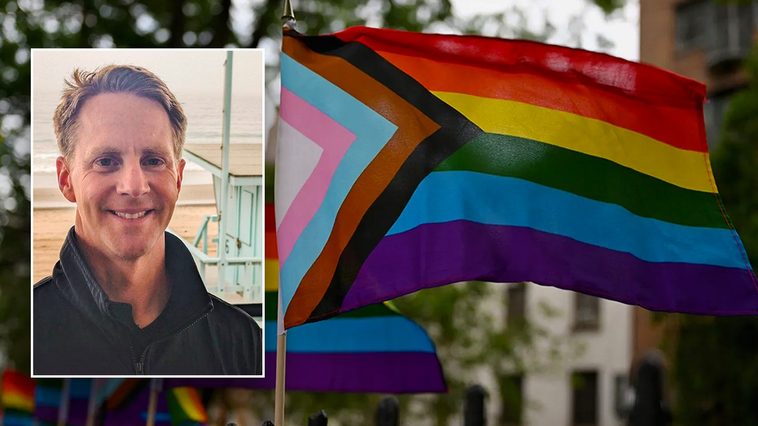
Attorney Paul Jonna of the Thomas More Society, a legal organization focused on religious liberty cases, told Fox News that Little believed he was still operating under an approved exemption when he removed several flags. Jonna also noted that some facilities lacked required mounting hardware under county rules, raising additional questions about enforcement consistency.
Shortly afterward, Little was suspended without pay for 15 days.
Allegations of Unequal Treatment Inside the Lifeguard Division
The lawsuit has drawn additional attention due to claims of inconsistent discipline within the department.
Court arguments allege that other employees reportedly vandalized or desecrated the same Pride flag during the same period but faced little to no punishment—or penalties significantly lighter than the suspension issued to Little.
That disparity is now expected to be a central issue for the jury.
Attorney Jonna has also alleged that Lifeguard Division Chief Fernando Boiteux told Little at one point that his “religious beliefs don’t matter.”
The county disputes that statement, and no final factual determination has been made. The upcoming trial will allow a jury to weigh conflicting accounts and determine what was actually said and how disciplinary decisions were made.
Last week’s federal court ruling partially granted Little’s motions while denying the county’s attempt to fully dismiss the case, signaling that the judge found sufficient factual disputes to move forward.
Major Supreme Court Shift in Religious Accommodation Standards
The legal backdrop for the case has changed significantly in recent years.
The U.S. Supreme Court’s unanimous decision in Groff v. DeJoy reshaped how employers must evaluate religious accommodation requests under federal law.
For decades, employers could reject such requests if they caused even minor inconvenience or limited operational disruption. However, the Court raised the standard dramatically, ruling that employers must now demonstrate that granting an accommodation would result in “substantial increased costs” or serious operational burden.
In Little’s case, his legal team argues that allowing a senior fire captain to opt out of personally handling flag-related duties would create no meaningful cost or disruption to county operations—undermining the justification for discipline.
Political and Policy Context Adds Pressure
The case also arrives amid broader political changes affecting federal enforcement priorities.
In early 2025, President Donald Trump issued Executive Order 14202, which directed federal agencies to crack down on what it described as discrimination against religious Americans in government settings. The order also established a Department of Justice task force focused on religious liberty enforcement, led by Attorney General Pam Bondi.
Supporters of Little’s case argue the policy environment now strongly favors stricter protection of religious accommodation rights, especially in government employment.
A Trial That Could Carry Significant Consequences
For its part, Los Angeles County maintains it acted appropriately and followed internal policy when it suspended Little. The county disputes key allegations, including claims about statements made by supervisors.
However, the federal judge’s decision to allow the case to proceed suggests that a jury will now decide whose version of events is credible.
The Thomas More Society has indicated it is confident in its case, suggesting the legal issues involved are substantial and could have wider implications for public employers nationwide.
At its core, Captain Little’s lawsuit is not asking the county to change its flag policy. Instead, he argues he should not be forced to personally participate in actions that conflict with his religious beliefs.
Now, after years of legal back-and-forth, a federal jury will decide whether Los Angeles County crossed a constitutional line—or whether it simply enforced its workplace rules.

