
>> Continued From the Previous Page <<
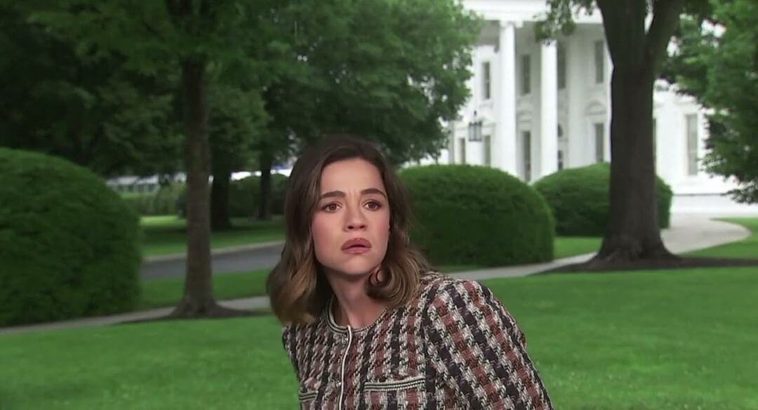
While security personnel reacted immediately, Tsirkin—already on location for coverage—was still in live-shot mode when the sound of gunfire broke through the background noise.
Turning toward the direction of the shots, visibly confused, she asked a question that would soon define the entire incident.

“What is that?”
Her cameraman, also seemingly uncertain about the severity of the moment at first, responded: “Sounds like fireworks.”
It was not fireworks.

Within hours, the clip exploded online, reaching millions of views before Sunday morning. The moment Tsirkin stood still on camera while gunfire erupted off-screen became instant meme material, shared across platforms with everything from movie edits to historical battle reenactments layered over her reaction.
The Moment That Went Viral
By the next day, Tsirkin had unintentionally become the most talked-about reporter in the country.
Social media users remixed the footage into countless formats, placing her expression into everything from action films to disaster scenes. The image of a confused reporter standing calmly on the North Lawn while a real security incident unfolded behind her became a viral shorthand for disbelief.
One user summed up the online reaction bluntly, writing:
“Hilarious. You couldn’t have been more chill and/or oblivious. The memes wrote themselves,”
The internet response was largely humorous rather than hostile, with many users acknowledging that the surreal nature of the moment made it almost inevitable that it would go viral.
Tsirkin herself appeared to take the attention in stride, even sharing a Spartan-themed meme referencing the incident and thanking viewers for the engagement while encouraging audiences to continue following her reporting.
The Suspect Behind the Shooting
While the online world focused on the viral clip, investigators were dealing with a far more serious reality.
The suspect, identified as Nasire Best of Dundalk, Maryland, had previously been flagged by federal authorities. According to available information, Best had already come to the attention of the Secret Service multiple times in 2025.
In June of that year, he allegedly blocked a White House entry lane and made alarming claims about his identity, leading to an involuntary psychiatric commitment for evaluation. He later returned in July 2025, attempting again to access a restricted area, which resulted in his arrest and a court-issued stay-away order.
Despite that order, authorities say he continued to violate restrictions, leading to a bench warrant.
Reports also indicate Best posted online threats directed at President Trump and made various disturbing claims about his identity, including assertions that he was a divine figure and other erratic statements.
He was ultimately shot and killed by Secret Service personnel during Saturday’s confrontation. No agents required hospitalization.
A Pattern of Escalating Security Incidents
The shooting also comes amid heightened concern over recent security incidents near the White House complex and surrounding federal areas. In the past month, there have been multiple reported shootings or firearm-related incidents in proximity to high-security zones in Washington, D.C., raising renewed questions about perimeter security and threat detection.
While officials have not publicly linked the incidents, the frequency has drawn attention from security analysts and federal observers.
For the United States Secret Service, Saturday’s incident marks another high-pressure engagement in an already intensified operational environment.
Tsirkin’s Reaction and the Aftermath
Tsirkin, a seasoned White House correspondent covering the beat since 2019, ultimately did evacuate the area once agents moved press personnel into secure locations inside the briefing room.
But it was her initial reaction—standing on the lawn, asking “What is that?”—that defined the public narrative far more than the unfolding security response.
The contrast between routine press coverage and sudden live gunfire created a moment that blurred the line between journalism and real-time crisis response.
Still, despite the viral attention, the underlying event remained a serious security breach involving an armed individual engaging federal officers on restricted government grounds.
And while the internet moved quickly to memes, the footage also served as a reminder of how quickly situations at high-security federal sites can escalate—with cameras rolling, and reporters sometimes closer to danger than they expect.

