
>> Continued From the Previous Page <<
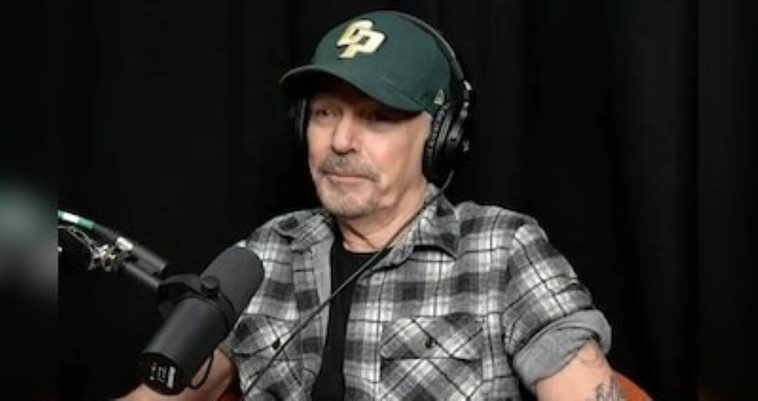
The comments stood out precisely because they are so uncommon in modern entertainment circles, where public figures often use high-profile appearances to signal political alignment or social messaging. Thornton’s approach, by contrast, was one of deliberate distance from the spotlight politics that dominate awards shows.
He expanded further on the idea that entertainers should be careful about speaking beyond their expertise, especially in spaces meant for performance rather than policy debate. His remarks suggested that restraint itself has become something of a countercultural stance in today’s Hollywood environment.

Thornton then referenced a well-known moment in entertainment history, pointing back to comedian Ricky Gervais’s infamous Golden Globes monologue, which criticized Hollywood celebrities for lecturing audiences.
“It’s like Ricky Gervais said – get your little award and f*** off,” he added.
Gervais, in that earlier speech, had famously told the room: “You’re in no position to lecture the public about anything. You know nothing about the real world.”

Thornton’s remarks suggest that sentiment still resonates with many viewers years later, particularly those who feel alienated by celebrity political commentary during entertainment broadcasts.
Meanwhile, Hollywood’s award shows continue to feature increasingly explicit political messaging. At the 2026 Grammys, Billie Eilish and Bad Bunny used portions of their acceptance speeches to criticize ICE, the federal immigration enforcement agency. The moment immediately sparked debate across social media platforms.
At the 2026 Oscars, some attendees reportedly appeared on the red carpet carrying accessories emblazoned with “F*** ICE,” further fueling controversy over the blending of activism and entertainment.
Other celebrities have also remained active in political spaces. Actor Mark Ruffalo participated in public demonstrations in New York in 2025 opposing President Trump’s administration, while actress Susan Sarandon appeared alongside him during the event.
These continued displays of activism have drawn praise from supporters but frustration from critics who argue that award shows and entertainment platforms are not the appropriate venues for political messaging.
Thornton’s response to this broader trend was blunt in its simplicity and tone, particularly when discussing wealth, influence, and public messaging.
“If you have a billion dollars and you want to save the badgers, save them,” he said. “You got plenty of money to save the badgers, trust me. That’s barely gonna cut into your budget.”
The point, he implied, is that if celebrities feel strongly about causes, they have the means to contribute directly rather than turning award ceremonies into political stages.
The conversation also touched on broader questions about Hollywood’s relationship with middle America and whether audiences still respond to celebrity-driven political messaging in the way they once did. Industry figures like Jennifer Lawrence, who previously made outspoken political remarks, have notably become less vocal in recent years, reflecting what some observers see as a cultural shift.
Musician Gene Simmons has also publicly suggested that entertainers should focus on performance rather than political commentary, echoing a sentiment shared by others in the industry.
Country-rap artist Jelly Roll similarly drew attention when he said backstage at the 2026 Grammys that “people shouldn’t care” about his political opinions—comments that reportedly sparked criticism from other celebrities.
Thornton, however, has remained consistent in his outlook. Reflecting on his career and identity, he once told Fox News:
“A guy from the Bronx can play a guy from Mississippi in the movies,” he told Fox News. “But a guy from Mississippi can’t really play a guy from the Bronx.”
That observation, while simple, underscores a broader theme in his worldview: Hollywood is built on performance and storytelling, not political instruction.
In an era where awards shows increasingly double as platforms for activism, Thornton’s comments land as a reminder of an older Hollywood ethos—one where entertainers entertained, and audiences were not expected to be lectured from the stage. Whether that approach returns to the mainstream remains to be seen, but his remarks make clear where he stands in the ongoing cultural divide.

