
>> Continued From the Previous Page <<
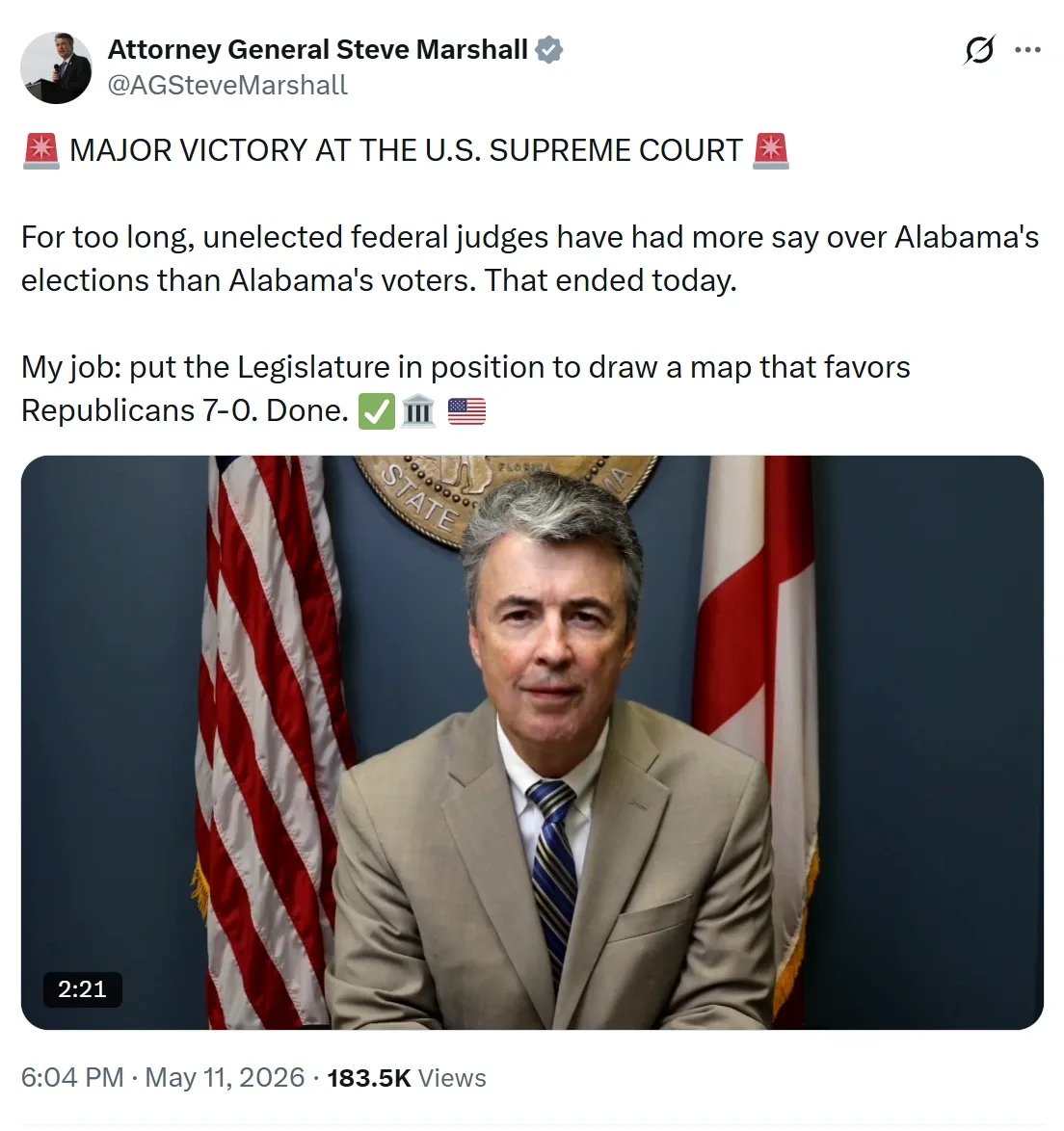
Reacting immediately to the decision, Alabama Attorney General Steve Marshall celebrated the outcome and emphasized a renewed focus on legislative control of redistricting. He wrote on X: “For too long, unelected federal judges have had more say over Alabama’s elections than Alabama’s voters. That ended today. My job: put the Legislature in position to draw a map that favors Republicans 7-0. Done.”
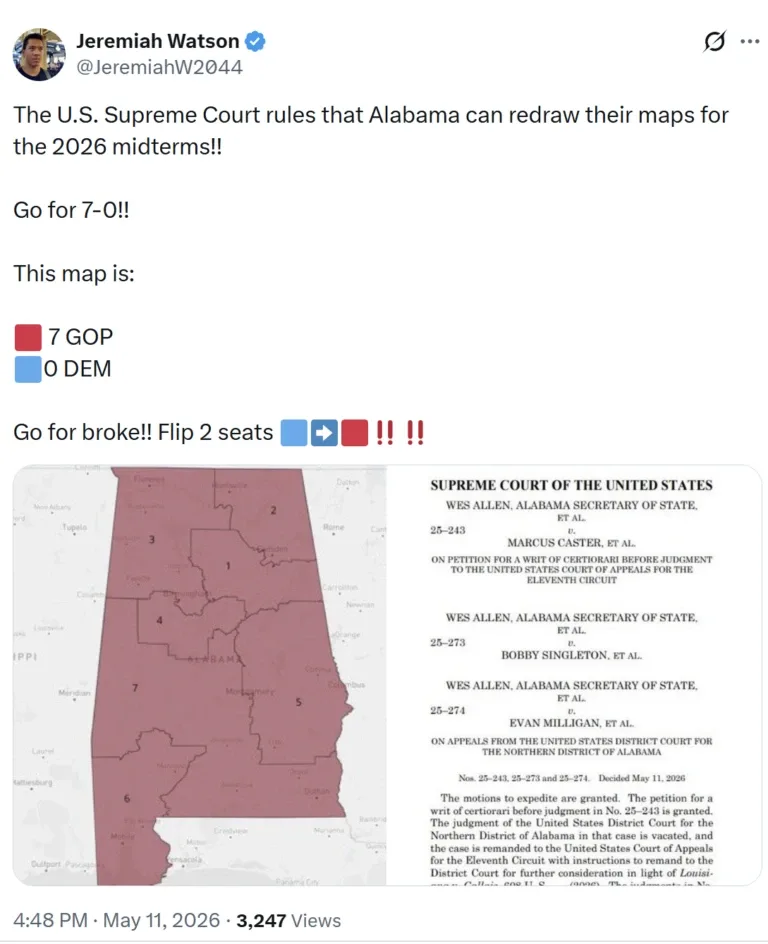
The ruling builds on the Court’s earlier decision in Louisiana v. Callais, which struck down Louisiana’s congressional map as an unconstitutional racial gerrymander and limited the use of race as a dominant factor in redistricting decisions. That case centered on Louisiana and has since become a key reference point in ongoing election law disputes nationwide.

In the Alabama case, the Supreme Court directed the lower court to revisit its earlier ruling using the legal framework established in Callais, signaling that similar redistricting challenges across the country may now be viewed through a more restrictive lens regarding race-based district design.
Notably, the Court’s liberal bloc—Justices Sonia Sotomayor, Elena Kagan, and Ketanji Brown Jackson—dissented from the Alabama decision, underscoring the ideological divide on how voting rights law should be applied in redistricting cases.
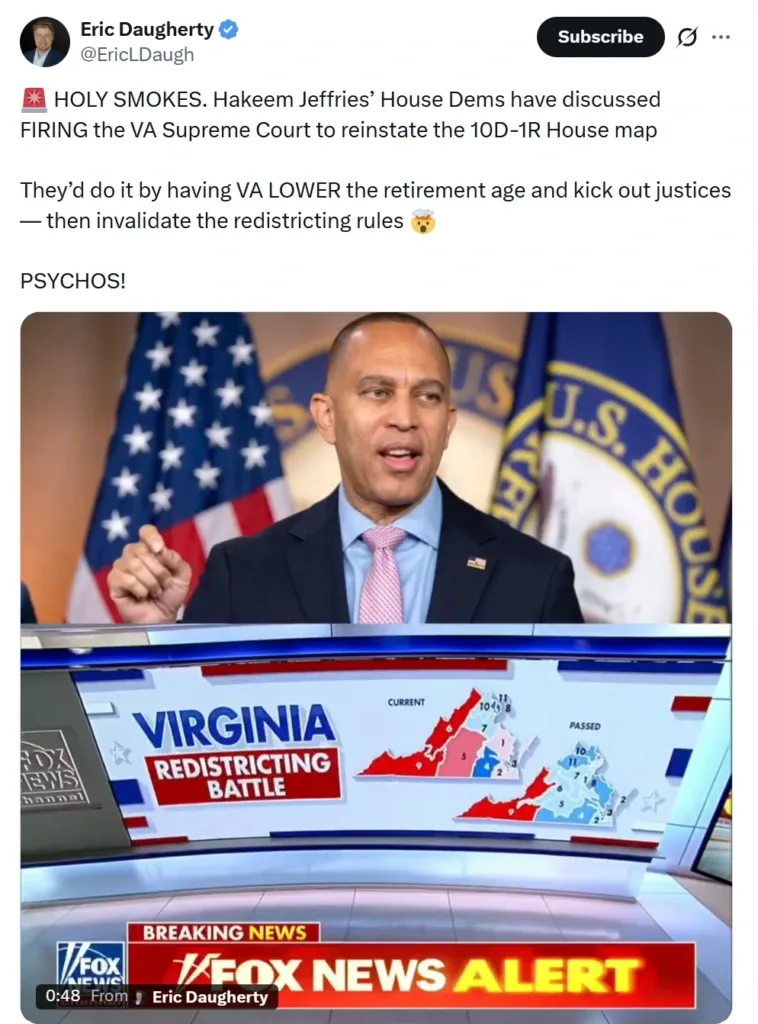
Election officials in Alabama are now preparing for rapid changes. Governor Kay Ivey previously stated the state was “ready to quickly act” should the Court’s rulings open the door for new maps. State planners are reportedly considering a return to congressional district lines adopted in 2023, along with state Senate maps approved in 2021.
While Alabama’s May 19 primary election is still expected to move forward on schedule, state law provides the governor authority to call special elections in districts that may be affected by post-primary redistricting adjustments.
The broader national implications are already taking shape. Alabama is just one of several states preparing or actively pursuing new congressional maps ahead of November. Republicans, in particular, see the current legal environment as an opportunity to make gains in closely divided districts.
Across the country, GOP-led states including Texas, Missouri, North Carolina, Ohio, Florida, and Tennessee are all either reviewing or advancing redistricting plans that could shift the balance of power in the U.S. House of Representatives.
Meanwhile, last week’s Supreme Court actions in the Louisiana case triggered additional debate among the justices themselves. The Court allowed its prior ruling to take effect immediately, rather than waiting the usual 32-day period before sending the case back to lower courts.
The plaintiffs had argued that “time is … of the essence” given the proximity of upcoming elections and urged the Court to expedite the process so that revised maps could be implemented in time. The justices agreed, noting that the standard waiting period is “subject to adjustment” when circumstances require urgency.
That procedural decision prompted a sharp dissent from Justice Ketanji Brown Jackson, who described the 8–1 ruling as “unwarranted and unwise.” Jackson argued that the Court should “stay on the sidelines” to avoid appearing partial during an election cycle, pointing to long-standing judicial caution around election-year interventions.
“And just like that, those principles give way to power,” she wrote, expressing concern over the timing of the Court’s involvement.
However, Justice Samuel Alito, who authored the majority opinion in Callais, pushed back strongly in a separate concurrence joined by Justices Clarence Thomas and Neil Gorsuch, defending the Court’s approach and emphasizing the legal necessity of addressing unconstitutional maps without delay.
As these rulings continue to ripple through state legislatures, the fight over redistricting is expected to intensify, with both parties preparing for what could become one of the most consequential election map battles in recent memory.

