
>> Continued From the Previous Page <<
The current 9th Congressional District is approximately 61% Black and heavily Democratic. Under the proposed plan, Republicans argue Tennessee’s congressional delegation would better reflect the state’s overall conservative voting patterns.
State Senator Jon Stevens, one of the architects of the proposal, defended the maps by arguing that partisan considerations, not race, were guiding the process.

Republicans insist the plan was specifically crafted to comply with the Supreme Court’s new legal standard by removing race as a primary factor in district construction.
That explanation did little to satisfy Abrams.
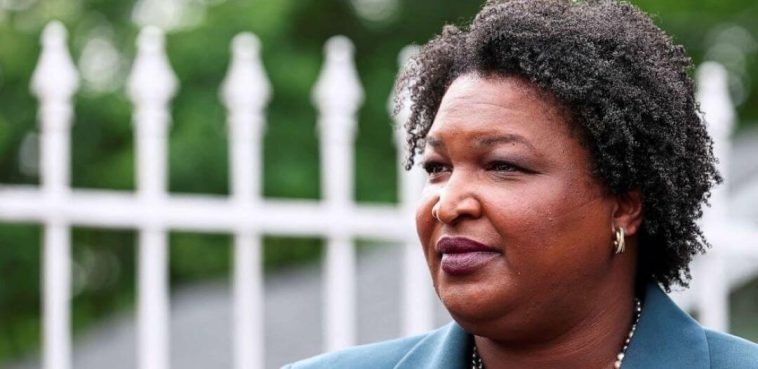
Appearing before the Tennessee Senate Judiciary Committee, Abrams accused Republicans of “intentionally eroding Black voting power” and argued the proposal amounted to racial discrimination disguised as legal compliance.
Her appearance quickly became a flashpoint in the growing national war over redistricting.
Critics noted that Abrams admitted during an MSNBC interview that lawmakers had not yet even finalized legislative text for the proposal at the time of the hearing. Instead, debate centered largely around preliminary district maps and political strategy.
Meanwhile, access to portions of the hearing reportedly became restricted as lawmakers worked through the proposal behind closed doors, fueling outrage from Democrats and activist groups.
Still, Republicans maintain the legal argument is straightforward.
If states are prohibited from drawing maps based primarily on race, they argue, then race-neutral maps cannot suddenly become unconstitutional simply because Democrats dislike the political outcome.
That contradiction now sits at the center of the national redistricting fight.
Abrams, however, has become one of the Democratic Party’s most vocal figures on election law and voting rights issues since narrowly losing Georgia’s 2018 gubernatorial race to Brian Kemp.
Following that defeat, Abrams repeatedly argued voter suppression played a decisive role in the outcome and launched her organization, Fair Fight, to challenge Georgia election laws in federal court.
Those claims ultimately failed in court.
Abrams later ran against Kemp again in 2022 and lost by an even wider margin, nearly eight percentage points.
Earlier this year, she confirmed she would not seek the governorship again in 2026.
Instead, Abrams has increasingly positioned herself as a national activist and Democratic surrogate focused on election issues, voting laws, and redistricting battles across the country.
Tennessee Republicans argue that gives her no authority to lecture their legislature about constitutional compliance.
Supporters of the Tennessee proposal also point to similar actions by Democrats in states like Virginia, where lawmakers pursued aggressive mid-cycle redistricting efforts designed to maximize Democratic congressional gains.
Republicans say Democrats routinely defend partisan redistricting when it benefits their side while condemning identical tactics when Republicans do the same thing.
The Tennessee battle is also unfolding against the backdrop of intense pressure from Donald Trump and national Republicans, who are working aggressively to protect the GOP’s narrow majority in the U.S. House ahead of the 2026 elections.
For conservatives, the controversy surrounding Abrams’ testimony highlights what they see as a broader Democratic strategy: frame unfavorable political outcomes as illegitimate while ignoring legal standards when they no longer produce the desired result.
And in this case, Republicans say the timing could not be more striking.
The Supreme Court had already issued its answer before Abrams ever entered the hearing room.

