
>> Continued From the Previous Page <<
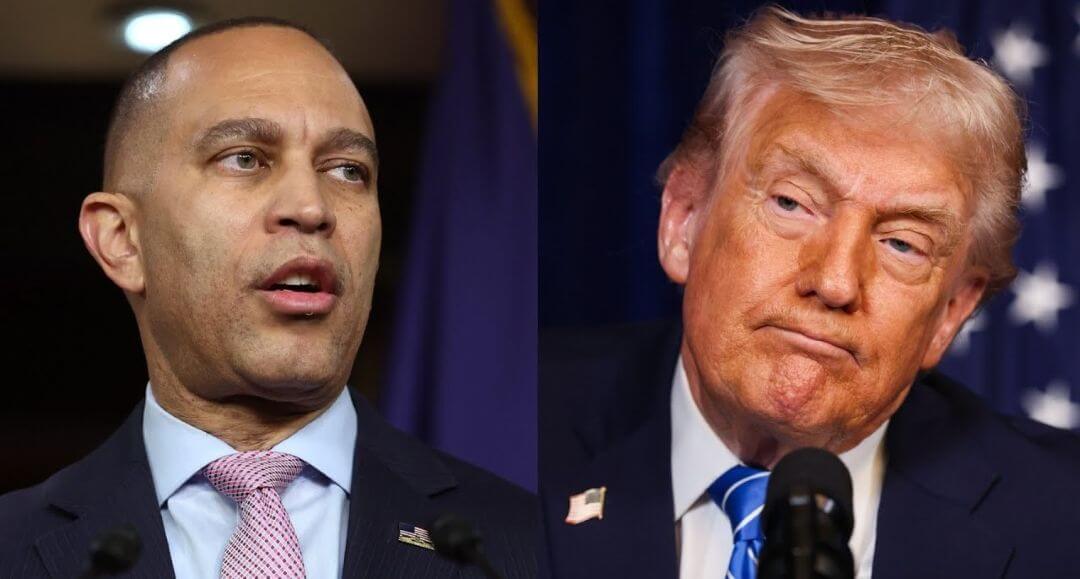
Rather than de-escalating, Jeffries leaned further into the confrontation. On Saturday, he reposted Trump’s message on X and responded with just three words: “Jeffries Derangement Syndrome.” The phrase was clearly a play on the long-used “Trump Derangement Syndrome,” flipping the insult back toward the former president and his supporters.
But the exchange wasn’t happening in a vacuum. Jeffries’ earlier comments about the Supreme Court were part of a broader political posture he has taken in recent months. In a separate interview, he made clear that if Democrats regain control of Congress, “everything is on the table” when it comes to what he described as the “corrupt MAGA majority.” That phrase has fueled even more speculation about what legislative and structural changes Democrats might pursue.

Among the possibilities being openly discussed by some in the party is court expansion—often referred to as “court-packing”—a move that would add additional justices to the Supreme Court in order to shift its ideological balance.
Historically, such a move is not without precedent debates. In 1937, President Franklin D. Roosevelt attempted a similar expansion of the Court. The proposal, however, faced immediate resistance—even within his own party. At the time, the Senate Judiciary Committee condemned it as “an invasion of judicial power such as has never before been attempted in this country.” Even Roosevelt’s own Vice President quietly worked behind the scenes to help derail the effort.
Fast forward to today, and critics argue the tone from modern Democratic leadership is far more open to structural changes than in Roosevelt’s era. Jeffries’ allies, including Rep. Ayanna Pressley and Rep. Rashida Tlaib, have echoed similar frustrations with the Court, reinforcing the idea that major institutional reforms are at least being discussed at high levels.

The online back-and-forth continued into the weekend. Jeffries, instead of focusing on legislative messaging, highlighted Trump’s criticism by posting a screenshot and adding the remark: “Do you need a hug? Be Best.” The line appeared to borrow from former First Lady Melania Trump’s anti-bullying initiative, turning it into a pointed social media jab.
He followed that up on Sunday with another post: “Jeffries Derangement Syndrome.” The exchange underscored how quickly high-level political debate has increasingly shifted into the realm of social media insults and viral moments.
Even critics of the Supreme Court debate have weighed in. Legal analyst Dan Abrams did not mince words, saying: “Shame on Hakeem Jeffries! Shame on him for referring to this court as illegitimate!” His comments highlighted the discomfort some moderates and legal commentators feel over rhetoric that questions the legitimacy of the judiciary itself.
As the 2026 midterm elections approach, the stakes are becoming clearer. Jeffries is widely viewed as a potential future Speaker of the House if Democrats reclaim the majority. And his recent comments suggest that major institutional battles—including potential changes to the Supreme Court—could be on the horizon.
Supporters see his stance as a push for reform. Critics argue it signals an effort to reshape the judiciary for political advantage. Either way, the rhetoric has intensified, and the divide between the parties appears wider than ever.
At the center of it all remains a simple question: is this just political messaging for the campaign trail—or a preview of how far lawmakers are willing to go if they gain control of Congress?

